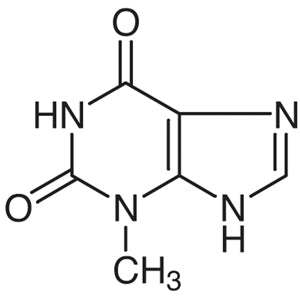
TCI D4055 9,9-Dimethylxanthene is a heterocyclic compound built on the xanthene skeleton: two benzene rings joined through an oxygen bridge and an sp3 carbon carrying two methyl groups. As a heterocyclic building block, this compound provides a framework of considerable importance in organometallic chemistry and materials chemistry. Its principal role in the laboratory is as a precursor toward xanthene-backbone diphosphine ligands, and as a rigid core for functional molecules that require a defined geometry and electronic separation between two parts of the molecule.
The properties that make it a frequently chosen material are the rigidity of its framework and its geometric angles. The gem-dimethyl bridge locks the two aromatic rings into a relatively fixed arrangement, so that substituents installed at particular positions sit at a controlled distance and orientation from one another. This is the basis of the advantage offered by xanthene-backbone ligands, which are known for their wide bite angle and their ability to stabilise transition metal complexes in catalytic reactions. In addition, the bridging oxygen atom interrupts full conjugation between the two rings, giving electronic characteristics useful for light-emitting materials and charge-transport materials.
In Indonesian laboratories, this building block is typically used in synthetic organic and organometallic research settings, including university research groups and institutional laboratories working on ligand preparation, catalysis, and functional organic materials. It is generally handled at the bench scale for multi-step synthesis, where a defined and reproducible starting framework matters more than bulk quantity. Ordering the material as a characterised commercial building block spares the laboratory the effort of preparing and purifying the xanthene core in-house.
Related TCI products
- TCI B4454 666816-98-4 8-Bromo-7-(2-butyn-1-yl)-3-methylxanthine
- TCI M2432 6136-37-4 1-Methylxanthine
- TCI M2073 1076-22-8 3-Methylxanthine
- TCI B5239 940934-47-4 4,5-Bis(dicyclohexylphosphino)-9,9-dimethylxanthene
- TCI B2709 161265-03-8 4,5-Bis(diphenylphosphino)-9,9-dimethylxanthene
- TCI D5696 611-59-6 1,7-Dimethylxanthine
- Diphosphine ligand synthesis: serves as the precursor to xanthene-backbone phosphine ligands, whose rigid core sets the donor atoms at a controlled separation.
- Homogeneous catalysis research: ligands derived from this core stabilise transition metal complexes, making it relevant to laboratories developing and studying catalytic transformations.
- Organometallic chemistry studies: the fixed geometry of the gem-dimethyl bridged framework allows systematic investigation of how wide bite angles influence metal centre behaviour.
- Functional materials preparation: acts as a rigid core for molecules requiring defined geometry and electronic separation between two distinct parts of the structure.
- Light-emitting and charge-transport materials: the bridging oxygen interrupts conjugation between the aromatic rings, giving electronic characteristics useful for developing optoelectronic organic materials.
| Brand | TCI |
|---|---|
| CAS number | 19814-75-6 |
| Molecular formula | — |
| Purity | — |
| Category | Chemistry > Building Blocks > Heterocyclic Building Blocks |
| Pack sizes | available in the standard research-scale pack sizes offered by the manufacturer for this catalogue item |
| Physical form | — |
| Storage | store in a closed original container under the conditions stated on the manufacturer's label and safety data sheet |
- Chemical name: 9,9-Dimethylxanthene
- Product code: D4055
Store the material in its original tightly closed container, kept in a cool, dry and well-ventilated area away from direct sunlight, heat sources, and incompatible substances. Follow the storage temperature and any special conditions indicated on the manufacturer's label and safety data sheet, since these take precedence over general guidance. Handle the compound in a fume hood using standard laboratory personal protective equipment, including a laboratory coat, chemical-resistant gloves, and safety glasses. Weigh and transfer the solid carefully to limit dust generation, and reseal the container promptly after use to prevent moisture uptake and contamination. Keep the label legible, record the opening date, and dispose of residues and contaminated materials as chemical waste in accordance with the applicable institutional and national regulations.
—
Produk Terkait
-
8-Bromo-7-(2-butyn-1-yl)-3-methylxanthine TCI B4454
Regular price Rp 1.405.950,00Regular price -
1-Methylxanthine TCI M2432
Regular price From Rp 2.174.550,00Regular price -
3-Methylxanthine TCI M2073
Regular price From Rp 980.700,00Regular price -
4,5-Bis(dicyclohexylphosphino)-9,9-dimethylxanthene TCI B5239
Regular price From Rp 1.378.650,00Regular price -
4,5-Bis(diphenylphosphino)-9,9-dimethylxanthene TCI B2709
Regular price From Rp 1.298.850,00Regular price -
1,7-Dimethylxanthine TCI D5696
Regular price From Rp 3.075.450,00Regular price -
8-Bromo-3-methylxanthine TCI B4134
Regular price Rp 1.776.600,00Regular price