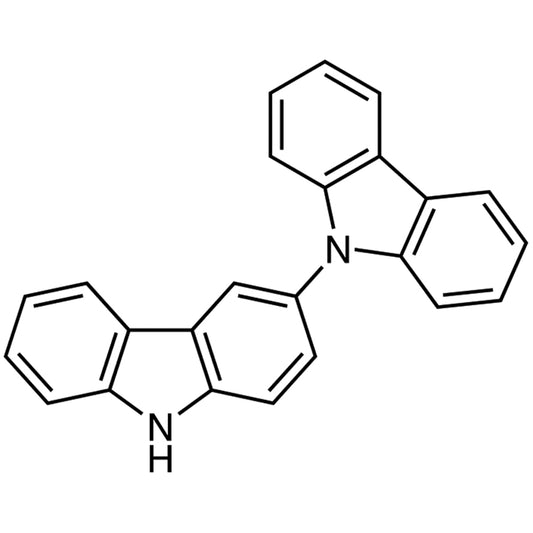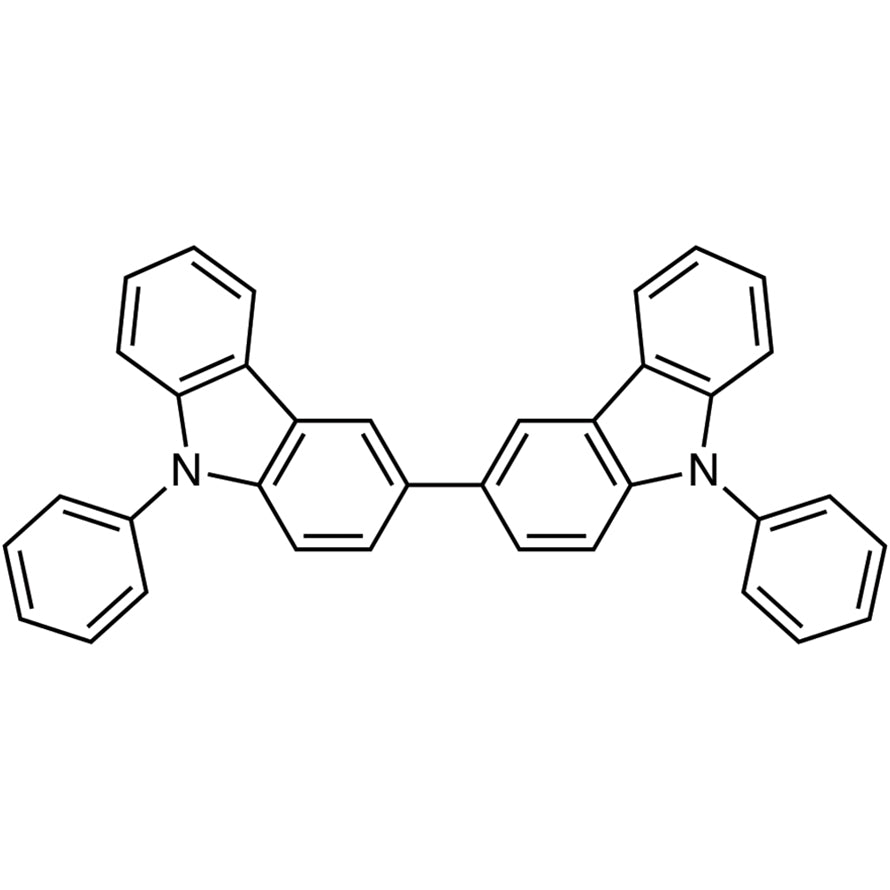
9,9'-Diphenyl-9H,9'H-3,3'-bicarbazole is an organic compound widely used in electronic material research, particularly in the development of OLED (Organic Light-Emitting Diode) materials. This compound plays a crucial role in the fabrication of active layers within OLED devices, where it contributes to efficient light emission. Its molecular structure is designed to facilitate electron transport, making it a key component in the pursuit of high-performance organic light-emitting technologies. In laboratory settings, this material is essential for advancing research in optoelectronic applications and sustainable lighting solutions.
The compound is prized for its high electrical conductivity, excellent chemical stability, and ability to produce light with high efficiency. These properties make it an ideal choice for developing OLED materials that offer both longevity and energy efficiency. Its stability under various conditions ensures consistent performance, while its ability to be processed into thin films or coatings enhances its versatility in laboratory applications. This combination of properties supports the creation of advanced display technologies and lighting systems.
In Indonesian laboratories, 9,9'-Diphenyl-9H,9'H-3,3'-bicarbazole is commonly used in research focused on organic light-emitting technologies, especially in the development of OLED devices for display and illumination applications. It is a fundamental material in the study of organic semiconductors and is frequently employed in projects aimed at improving the efficiency and durability of optoelectronic devices. Its widespread use underscores its importance in the field of materials science and electronic engineering.
TCI brochures (PDF)
- Organic Light-Emitting Diode (OLED) Materials 2026-08-18 · p. 3
- Carbazoles 2025-06-27 · p. 5
Related TCI products
- TCI D5303 57102-51-9 9,9'-Di([1,1'-biphenyl]-4-yl)-9H,9'H-3,3'-bicarbazole
- TCI B6951 1454567-05-5 9-([1,1'-Biphenyl]-4-yl)-9'-phenyl-9H,9'H-3,3'-bicarbazole
- TCI P2512 1207176-84-8 2-(9,9'-Spirobi[fluoren]-2-yl)-4,6-diphenyl-1,3,5-triazine
- TCI N1139 16152-10-6 4-(1-Naphthyl)-3,5-diphenyl-1,2,4-triazole
- TCI D4980 354135-75-4 6,6'-Dibromo-9,9'-diphenyl-3,3'-bicarbazole
- TCI D5387 20466-00-6 9,9'-Diethyl-9H,9'H-3,3'-bicarbazole
- OLED Material Development: This compound is ideal for creating high-efficiency OLEDs due to its excellent electron transport properties and light-emitting capabilities.
- Organic Semiconductor Research: Its molecular structure supports studies on charge transport and electron mobility in organic materials.
- Thin Film Fabrication: The compound can be easily processed into thin films, making it suitable for coating applications in optoelectronic devices.
- Lighting Technology Innovation: It is used in research to develop sustainable and energy-efficient lighting solutions for various industrial and consumer applications.
- Display Technology Advancement: Its role in OLEDs makes it a key material for developing next-generation display technologies with improved brightness and longevity.
| Brand | TCI |
|---|---|
| CAS number | 57102-62-2 |
| Molecular formula | — |
| Purity | — |
| Category | Materials Science > Electronic Materials > Organic Light-Emitting Diode (OLED) Materials |
| Pack sizes | Available in various quantities as per supplier specifications |
| Physical form | Solid powder |
| Storage | Store in a cool, dry place away from light and moisture |
This compound should be stored in a cool, dry environment, away from direct light and moisture to maintain its chemical stability. It is recommended to use airtight containers made of materials such as glass or high-density polyethylene to prevent contamination and degradation. In laboratory settings, proper personal protective equipment (PPE) should be worn when handling the material to ensure safety. The compound should be kept in a well-ventilated area to minimize exposure to vapors. Regular monitoring of storage conditions is advised to ensure the material remains in optimal condition for research applications.
—
Produk Terkait
-
9,9'-Di([1,1'-biphenyl]-4-yl)-9H,9'H-3,3'-bicarbazole TCI D5303
Regular price Rp 2.254.350,00Regular price -
9-([1,1'-Biphenyl]-4-yl)-9'-phenyl-9H,9'H-3,3'-bicarbazole TCI B6951
Regular price Rp 2.121.000,00Regular price -
2-(9,9'-Spirobi[fluoren]-2-yl)-4,6-diphenyl-1,3,5-triazine TCI P2512
Regular price From Rp 1.749.300,00Regular price -
4-(1-Naphthyl)-3,5-diphenyl-1,2,4-triazole TCI N1139
Regular price From Rp 1.378.650,00Regular price -
6,6'-Dibromo-9,9'-diphenyl-3,3'-bicarbazole TCI D4980
Regular price From Rp 2.041.200,00Regular price -
9,9'-Diethyl-9H,9'H-3,3'-bicarbazole TCI D5387
Regular price Rp 2.916.900,00Regular price -
3,9'-Bicarbazole TCI B4811
Regular price From Rp 3.525.900,00Regular price -
3,3'-Bicarbazole TCI B4646
Regular price From Rp 2.094.750,00Regular price
![9,9'-Di([1,1'-biphenyl]-4-yl)-9H,9'H-3,3'-bicarbazole (CAS 57102-51-9) - TCI D5303 - AMI Scientific](http://amiscientific.com/cdn/shop/files/TCI2510D5303.jpg?v=1768818376&width=533)
![9-([1,1'-Biphenyl]-4-yl)-9'-phenyl-9H,9'H-3,3'-bicarbazole (CAS 1454567-05-5) - TCI B6951 - AMI Scientific](http://amiscientific.com/cdn/shop/files/TCI2510B6951.jpg?v=1769144603&width=533)
![1207176-84-8 2-(9,9'-Spirobi[fluoren]-2-yl)-4,6-diphenyl-1,3,5-triazine - AMI Scientific](http://amiscientific.com/cdn/shop/files/TCI2510P2512.jpg?v=1771057879&width=533)
![1207176-84-8 2-(9,9'-Spirobi[fluoren]-2-yl)-4,6-diphenyl-1,3,5-triazine - AMI Scientific](http://amiscientific.com/cdn/shop/files/TCI2510P2512_a855fd13-2df7-4368-b847-fc4878394665.jpg?v=1771058377&width=533)