

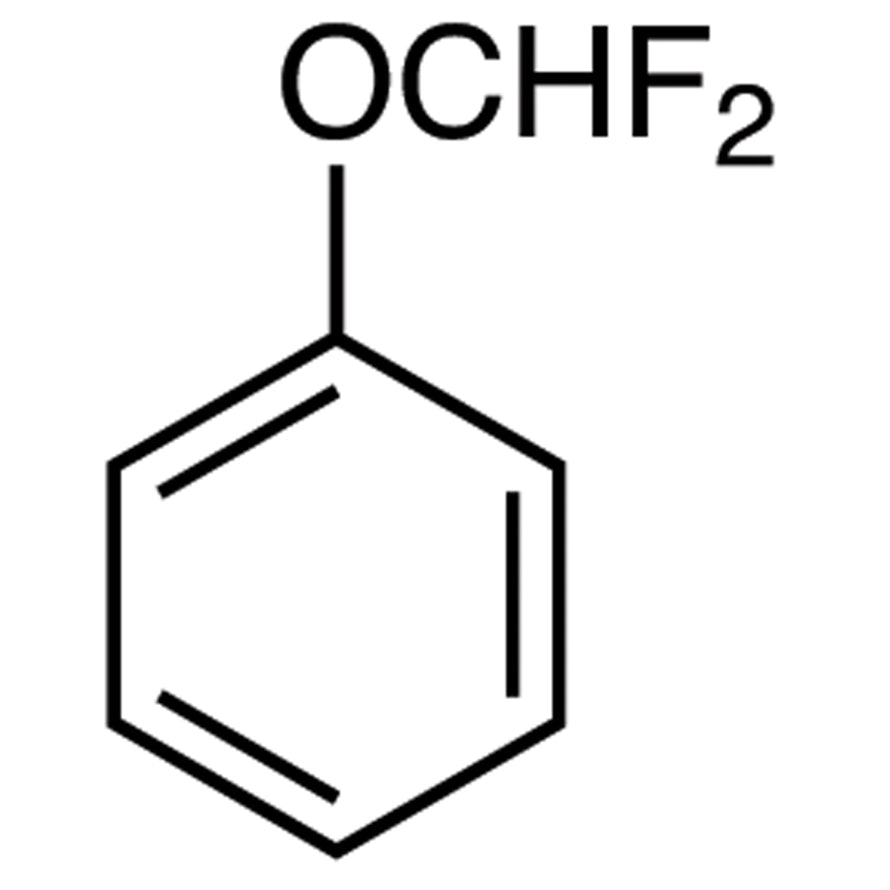
Difluoromethoxy)benzene is a chemical compound widely used as a building block in the synthesis of complex organic molecules. It serves as a fundamental component in organic chemistry laboratories, where it is employed to construct compounds with specific functional groups and desired chemical properties. This compound is particularly valued for its ability to introduce fluorine atoms into molecular structures, which can significantly influence the reactivity and stability of the final product. Its role in laboratory research is critical, especially in the development of new pharmaceuticals and specialty chemicals.
The unique properties of Difluoromethoxy)benzene make it a preferred choice for chemists. The presence of fluorine atoms in its structure enhances the stability of the resulting compounds while also introducing specific reactivity patterns. This dual nature allows researchers to tailor the chemical behavior of synthesized materials for various applications. Additionally, its chemical stability under controlled conditions ensures reliable results in experimental processes, making it a versatile tool in synthetic chemistry.
In Indonesian laboratories, Difluoromethoxy)benzene is commonly used in scientific research aimed at developing new compounds, particularly in the fields of pharmacology and food chemistry. Its availability in the local market supports researchers in conducting experiments that require precise chemical building blocks. This compound is an essential resource for advancing scientific knowledge and innovation in the region.
Related TCI products
- TCI D4956 3447-53-8 4-(Difluoromethoxy)benzyl Bromide
- TCI D4955 90446-25-6 4-(Difluoromethoxy)benzonitrile
- TCI D4837 71653-64-0 2-(Difluoromethoxy)benzaldehyde
- TCI D4778 874781-09-6 4-(Difluoromethoxy)benzenesulfonamide
- TCI D4762 4837-20-1 4-(Difluoromethoxy)benzoic Acid
- TCI D4760 83882-67-1 4'-(Difluoromethoxy)acetophenone
- Organic synthesis of fluorinated compounds due to its ability to introduce fluorine atoms into molecular structures.
- Development of pharmaceuticals where fluorine substitution enhances drug efficacy and stability.
- Research in food chemistry for creating flavor compounds and stabilizing food ingredients.
- Creation of specialty chemicals requiring controlled reactivity and molecular stability.
- Academic research in organic chemistry for teaching and experimental studies on fluorinated building blocks.
| Brand | TCI |
|---|---|
| CAS number | 458-92-4 |
| Molecular formula | — |
| Purity | — |
| Category | Chemistry > Building Blocks > Fluorinated Building Blocks |
| Pack sizes | Available in various quantities as per supplier specifications |
| Physical form | Liquid |
| Storage | Store in a cool, dry place away from light and incompatible materials |
Difluoromethoxy)benzene should be stored in a cool, dry environment, away from direct sunlight and sources of heat. It is recommended to use airtight containers made of materials compatible with organic solvents to prevent contamination and evaporation. Due to its chemical reactivity, it should be kept separate from strong oxidizing agents and reactive metals. In laboratory settings, proper ventilation and personal protective equipment should always be used when handling this compound to ensure safety. Regular monitoring of storage conditions is essential to maintain the integrity and effectiveness of the material.
—
Produk Terkait
-
4-(Difluoromethoxy)benzylBromide TCI D4956
Regular price From Rp 1.538.250,00Regular price -
4-(Difluoromethoxy)benzonitrile TCI D4955
Regular price From Rp 1.035.300,00Regular price -
2-(Difluoromethoxy)benzaldehyde TCI D4837
Regular price From Rp 795.900,00Regular price -
4-(Difluoromethoxy)benzenesulfonamide TCI D4778
Regular price From Rp 1.696.800,00Regular price -
4-(Difluoromethoxy)benzoicAcid TCI D4762
Regular price From Rp 823.200,00Regular price -
4'-(Difluoromethoxy)acetophenone TCI D4760
Regular price From Rp 1.749.300,00Regular price -
4-(Difluoromethoxy)benzaldehyde TCI D4334
Regular price From Rp 477.750,00Regular price -
4-(Difluoromethoxy)nitrobenzene TCI D2601
Regular price Rp 903.000,00Regular price


