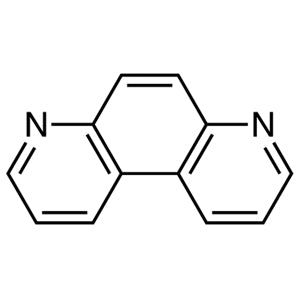
2,9-Di(naphthalen-2-yl)-4,7-diphenyl-1,10-phenanthroline is a complex organic compound widely used in chemical reactions for the synthesis of heterocyclic compounds. This compound plays a crucial role in laboratory settings where researchers are focused on organic chemistry and the development of complex molecular structures. As a key member of the phenanthroline family, it is valued for its unique structural characteristics and versatility in chemical applications. Its ability to act as a ligand or intermediate in various reactions makes it an essential tool for chemists working on advanced synthetic pathways.
The compound is known for its chemical stability, which allows it to be used reliably in a wide range of experimental conditions. Its structural features enable it to interact effectively with various reagents, making it a preferred choice for substitution and coupling reactions. The compound’s stability and reactivity make it suitable for applications in both academic and industrial research environments. Its role in the synthesis of bioactive compounds further enhances its importance in the field of medicinal and pharmaceutical chemistry.
In Indonesian laboratories, this compound is commonly used by researchers in educational and research institutions for fundamental studies. Its relevance in the development of new compounds with potential medical or industrial applications makes it a valuable resource for scientists working on innovative projects. The compound’s availability and reliability ensure that it remains a key component in the chemical toolkit of Indonesian research facilities.
Advantages (TCI brochure)
- High electron mobility
- HOMO -5.8 eV, LUMO -2.6 eV
- Can be used as an exciplex host
TCI brochures (PDF)
- Electron Transport Material for OLED NBPhen 2025-02-27 · p. 1
- Organic Light-Emitting Diode (OLED) Materials 2026-08-18 · p. 6
Related TCI products
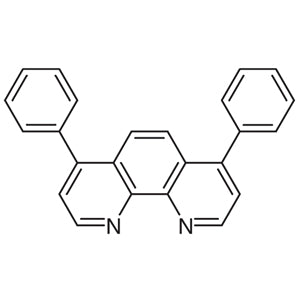
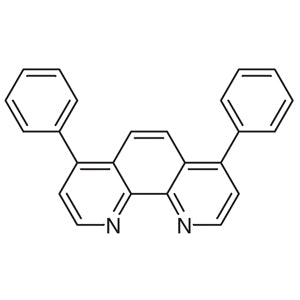
- TCI B2695 1662-01-7 Bathophenanthroline (purified by sublimation)
- TCI D0905 1662-01-7 Bathophenanthroline
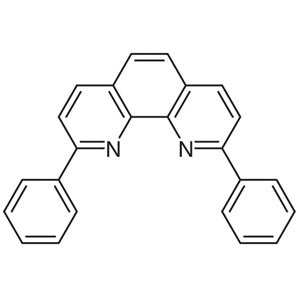
- TCI D3849 25677-69-4 2,9-Diphenyl-1,10-phenanthroline
- TCI A2977 54258-41-2 5-Amino-1,10-phenanthroline
- TCI T0847 1660-93-1 3,4,7,8-Tetramethyl-1,10-phenanthroline
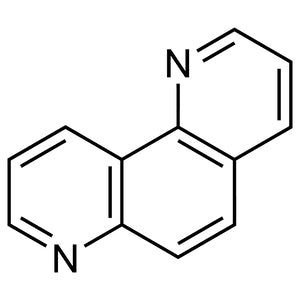
- TCI P3288 230-46-6 1,7-Phenanthroline
- Organic synthesis applications benefit from this compound due to its ability to act as a ligand and its structural versatility in complex molecule formation.
- Medicinal chemistry research utilizes this compound for the development of bioactive compounds with potential therapeutic applications.
- Heterocyclic compound synthesis relies on this material for its role in creating complex molecular frameworks with unique chemical properties.
- Industrial chemical research employs this compound for the synthesis of specialized materials with tailored chemical functionalities.
- Advanced analytical studies use this compound as a reference standard for evaluating reaction mechanisms and chemical interactions.
From the TCI brochure
- Electron transport material for OLED
- Exciplex host
| Brand | TCI |
|---|---|
| CAS number | 1174006-43-9 |
| Molecular formula | — |
| Purity | — |
| Category | Chemistry > Building Blocks > Heterocyclic Building Blocks |
| Pack sizes | Available in various quantities as per supplier specifications |
| Physical form | Solid (as per standard chemical product description) |
| Storage | Store in a cool, dry place away from light and moisture |
Data from the TCI brochure
| Electron mobility | 4.2 × 10⁻⁴ cm2/Vs |
|---|---|
| HOMO | -5.8 eV |
| LUMO | -2.6 eV |
Source: TCI brochure FF142 (2025-02-27)
This compound should be stored in a cool, dry environment, away from direct light and moisture to maintain its chemical stability. It is recommended to use airtight containers to prevent exposure to air and potential degradation. Due to its chemical nature, it should be handled with appropriate personal protective equipment such as gloves and safety goggles. Proper ventilation is necessary when working with this compound to ensure safe laboratory practices. The compound is not classified as hazardous under standard safety classifications, but standard chemical handling protocols should be followed to ensure safe usage and storage.
—
Product Categories
- Electronic MaterialsOrganic Light-Emitting Diode (OLED) MaterialsElectron Transport Materials (ETM) [Organic Light-Emitting Diode (OLED) Materials]
- Electronic MaterialsPerovskite Solar Cell (PSC) MaterialsCarrier Transport Materials [Perovskite Solar Cell (PSC) Materials]
- Material Building BlocksLigands for Functional Metal ComplexesPhenanthroline Ligands
Produk Terkait
-
Bathophenanthroline(purifiedbysublimation) TCI B2695
Regular price Rp 5.485.200,00Regular priceRp 3.851.400,00Sale price Rp 5.485.200,00 -
Bathophenanthroline TCI D0905
Regular price From Rp 3.207.750,00Regular priceRp 2.258.550,00Sale price From Rp 3.207.750,00 -
2,9-Diphenyl-1,10-phenanthroline TCI D3849
Regular price Rp 9.698.850,00Regular priceRp 6.797.700,00Sale price Rp 9.698.850,00 -
5-Amino-1,10-phenanthroline TCI A2977
Regular price Rp 3.790.500,00Regular priceRp 2.665.950,00Sale price Rp 3.790.500,00 -
3,4,7,8-Tetramethyl-1,10-phenanthroline TCI T0847
Regular price From Rp 2.147.250,00Regular priceRp 1.517.250,00Sale price From Rp 2.147.250,00 -
1,7-Phenanthroline TCI P3288
Regular price From Rp 1.618.050,00Regular priceRp 1.146.600,00Sale price From Rp 1.618.050,00 -
4,7-Phenanthroline TCI P2684
Regular price From Rp 2.518.950,00Regular priceRp 1.776.600,00Sale price From Rp 2.518.950,00 -
1,10-Phenanthroline-5,6-dione TCI P1973
Regular price From Rp 3.472.350,00Regular priceRp 2.443.350,00Sale price From Rp 3.472.350,00