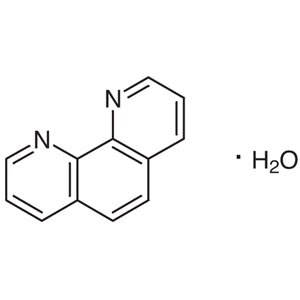
2,9-Diphenyl-1,10-phenanthroline is a chemical compound widely used in laboratory settings for the synthesis of complex organic molecules. This heterocyclic building block plays a crucial role in various chemical reactions, particularly in the development of new compounds with specific functional properties. Its unique molecular structure allows it to participate in multiple reaction types, making it a versatile reagent in synthetic chemistry. In Indonesian laboratories, it is a key component in research projects aimed at creating novel materials and pharmaceutical compounds.
The compound is valued for its chemical stability under controlled conditions and its ability to act as a ligand or reactive intermediate in substitution and oxidation reactions. Its high reactivity and compatibility with a range of substrates make it a preferred choice for chemists working on advanced synthetic routes. Additionally, its capacity to form complexes with transition metals enhances its utility in coordination chemistry. These properties make it an essential tool for researchers seeking to explore new chemical interactions and molecular architectures.
In Indonesian laboratories, 2,9-Diphenyl-1,10-phenanthroline is commonly used in pharmaceutical and materials science research. Its application extends to analytical chemistry, where it serves as a reagent for detecting and quantifying specific compounds. Due to its reactivity and stability, it is also employed in the development of new chemical processes and the optimization of existing synthetic methods. Its role in these applications underscores its importance in the chemical research landscape of Indonesia.
TCI brochures (PDF)
- Ligands 2025-12-01 · p. 15
Related TCI products
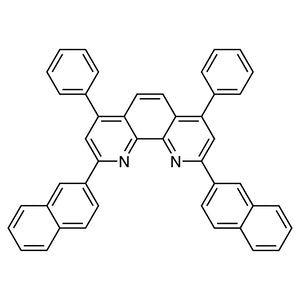
- TCI D5581 1174006-43-9 2,9-Di(naphthalen-2-yl)-4,7-diphenyl-1,10-phenanthroline
- TCI A2977 54258-41-2 5-Amino-1,10-phenanthroline
- TCI T0847 1660-93-1 3,4,7,8-Tetramethyl-1,10-phenanthroline
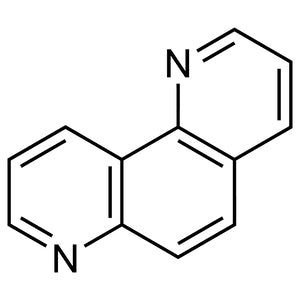
- TCI P3288 230-46-6 1,7-Phenanthroline
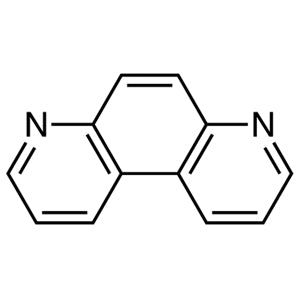
- TCI P2684 230-07-9 4,7-Phenanthroline
- TCI P1973 27318-90-7 1,10-Phenanthroline-5,6-dione
- Pharmaceutical research utilizes this compound for the synthesis of drug molecules due to its reactivity and ability to form stable complexes.
- Materials science applications benefit from its role in creating organic compounds with unique physical and chemical properties.
- Analytical chemistry uses it as a reagent for detecting and quantifying specific compounds in complex mixtures.
- Coordination chemistry studies leverage its ability to form complexes with transition metals, aiding in the study of metal-ligand interactions.
- Organic synthesis projects rely on its versatility in various reaction types, enhancing the efficiency of synthetic pathways.
| Brand | TCI |
|---|---|
| CAS number | 25677-69-4 |
| Molecular formula | — |
| Purity | — |
| Category | Chemistry > Building Blocks > Heterocyclic Building Blocks |
| Pack sizes | Available in various quantities as per standard laboratory supply |
| Physical form | Solid |
| Storage | Store in a cool, dry place away from light and moisture |
This compound should be stored in a cool, dry environment, away from direct light and moisture to maintain its chemical stability. It is recommended to use airtight containers to prevent exposure to air and humidity, which could affect its reactivity. In laboratory settings, proper ventilation is essential when handling this material to minimize inhalation risks. Due to its potential reactivity, it should be kept away from incompatible substances such as strong oxidizers or acids. Always wear appropriate personal protective equipment, including gloves and safety goggles, when handling or storing this compound. Regular monitoring of storage conditions ensures the compound remains suitable for use in chemical reactions and research applications.
—
Product Categories
Produk Terkait
-
2,9-Di(naphthalen-2-yl)-4,7-diphenyl-1,10-phenanthroline TCI D5581
Regular price From Rp 3.207.750,00Regular priceRp 2.258.550,00Sale price From Rp 3.207.750,00 -
5-Amino-1,10-phenanthroline TCI A2977
Regular price Rp 3.790.500,00Regular priceRp 2.665.950,00Sale price Rp 3.790.500,00 -
3,4,7,8-Tetramethyl-1,10-phenanthroline TCI T0847
Regular price From Rp 2.147.250,00Regular priceRp 1.517.250,00Sale price From Rp 2.147.250,00 -
1,7-Phenanthroline TCI P3288
Regular price From Rp 1.618.050,00Regular priceRp 1.146.600,00Sale price From Rp 1.618.050,00 -
4,7-Phenanthroline TCI P2684
Regular price From Rp 2.518.950,00Regular priceRp 1.776.600,00Sale price From Rp 2.518.950,00 -
1,10-Phenanthroline-5,6-dione TCI P1973
Regular price From Rp 3.472.350,00Regular priceRp 2.443.350,00Sale price From Rp 3.472.350,00 -
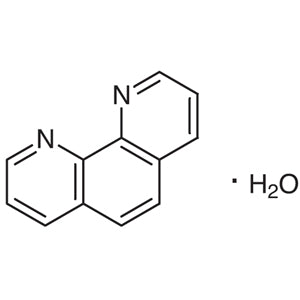
1,10-PhenanthrolineMonohydrate TCI P0879
Regular price Rp 1.510.950,00Regular priceRp 1.072.050,00Sale price Rp 1.510.950,00 -
1,10-PhenanthrolineMonohydrate TCI P0221
Regular price From Rp 557.550,00Regular priceRp 405.300,00Sale price From Rp 557.550,00