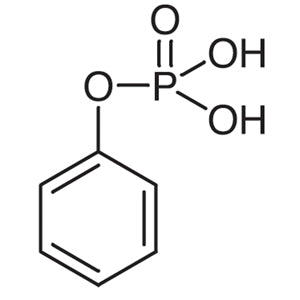
Diethyl phenyl phosphate is a chemical compound widely used in laboratory settings for the synthesis of complex organic molecules. It serves as a versatile building block in organic chemistry, enabling the formation of new compounds through substitution or esterification reactions. This compound is commonly found in chemical laboratories as a raw material for the production of organic compounds with specific structural features. Its role in connecting different functional groups makes it an essential tool for chemists working on synthetic pathways.
The compound is valued for its chemical stability and controlled reactivity, which allows for precise manipulation in various synthetic processes. Its molecular structure, consisting of a phosphate group and two ethyl groups, enables it to react with a variety of substrates such as alcohols and amines. This reactivity, combined with its stability, makes it a preferred choice for applications requiring high precision and reliability. The ability to maintain consistent performance under controlled conditions further enhances its appeal in laboratory environments.
In Indonesian laboratories, diethyl phenyl phosphate is frequently used by researchers and students in organic chemistry and the synthesis of new compounds. Its availability and reliability make it a primary choice for laboratories needing high-quality chemical reagents. The compound supports a wide range of experimental protocols, contributing to the advancement of chemical research in the region.
Related TCI products
- TCI D6132 598-02-7 Diethyl Hydrogen Phosphate
- TCI T4247 513-08-6 Tripropyl Phosphate
- TCI B1098 645-15-8 Bis(4-nitrophenyl) Phosphate [for Phosphodiesterase Substrate]
- TCI B0026 701-64-4 Phenyl Phosphate
- TCI T1002 3871-20-3 Tris(4-nitrophenyl) Phosphate
- TCI P2797 33494-80-3 Potassium Di-tert-butyl Phosphate
- Organic synthesis applications benefit from its role as a versatile building block for creating complex molecular structures.
- It is ideal for esterification reactions due to its reactivity with alcohols and its ability to form stable ester intermediates.
- In substitution reactions, its stability allows for controlled chemical transformations under various reaction conditions.
- It supports the development of new compounds in research projects requiring precise chemical manipulation.
- Indonesian laboratories use it extensively in teaching and research to train students in synthetic chemistry techniques.
| Brand | TCI |
|---|---|
| CAS number | 2510-86-3 |
| Molecular formula | — |
| Purity | — |
| Category | Chemistry > Building Blocks > Non-Heterocyclic Building Blocks |
| Pack sizes | Available in various quantities as per standard laboratory supply |
| Physical form | Liquid |
| Storage | Store in a cool, dry place away from direct sunlight and moisture |
Diethyl phenyl phosphate should be stored in a cool, dry place, away from direct sunlight and moisture. It is recommended to use airtight containers made of glass or polyethylene to prevent contamination and maintain chemical integrity. Due to its chemical nature, it should be handled in a well-ventilated area, and appropriate personal protective equipment should be worn. Avoid contact with incompatible materials such as strong bases or oxidizing agents. Regular monitoring of storage conditions ensures the compound remains stable and suitable for use in laboratory applications. Proper storage practices help maintain its effectiveness and safety in chemical experiments.
—
Produk Terkait
-
DiethylHydrogenPhosphate TCI D6132
Regular price Rp 2.121.000,00Regular price -
TripropylPhosphate TCI T4247
Regular price From Rp 1.644.300,00Regular price -
Bis(4-nitrophenyl)Phosphate[forPhosphodiesteraseSubstrate] TCI B1098
Regular price From Rp 5.327.700,00Regular price -
PhenylPhosphate TCI B0026
Regular price From Rp 4.240.950,00Regular price -
Tris(4-nitrophenyl)Phosphate TCI T1002
Regular price Rp 3.763.200,00Regular price -
PotassiumDi-tert-butylPhosphate TCI P2797
Regular price Rp 1.724.100,00Regular price -
DibenzylPhosphate TCI P1120
Regular price From Rp 1.749.300,00Regular price -
DidodecylHydrogenPhosphate TCI P1068
Regular price From Rp 2.386.650,00Regular price

![645-15-8 Bis(4-nitrophenyl) Phosphate [for Phosphodiesterase Substrate] - AMI Scientific](http://amiscientific.com/cdn/shop/files/TCI2510B1098.jpg?v=1768193282&width=533)