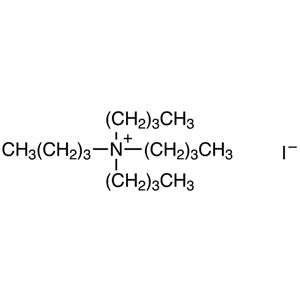
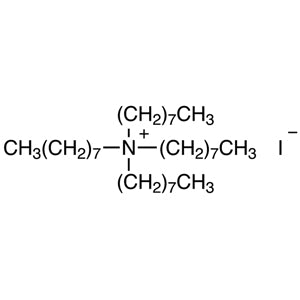
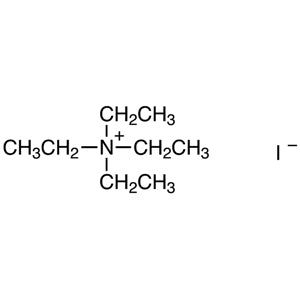
Ethyltrimethylammonium Iodide (ETAI), with the CAS number 51-93-4, is a chemical compound widely used as a phase transfer catalyst in laboratory settings. It plays a crucial role in facilitating chemical reactions by enabling the transfer of ions between non-polar and polar phases. This property makes it particularly valuable in reactions that require efficient ion movement without the need for extreme conditions. Its effectiveness in accelerating reactions while maintaining the integrity of reactants has made it a staple in synthetic chemistry.
ETAI is preferred due to its high solubility in both organic solvents and water, allowing it to be versatile in various reaction environments. Its stability under laboratory conditions ensures consistent performance, making it a reliable choice for researchers. Additionally, ETAI is environmentally friendly, as it does not produce significant hazardous waste, aligning with modern laboratory safety and sustainability standards. These characteristics contribute to its widespread use in both academic and industrial research.
In Indonesian laboratories, ETAI is commonly used in educational institutions and research centers for a variety of chemical processes. Its role in promoting efficient and clean chemical reactions makes it an essential component in the synthesis of organic compounds. Its availability through reputable suppliers like AMI Scientific ensures that Indonesian researchers have access to this important reagent for their experiments and studies.
TCI brochures (PDF)
- Solar Cell Materials 2026-04-21 · p. 12
- Quaternary Ammonium Salts 2025-11-10 · p. 7
- Colloidal Quantum Dot (QD) Research Reagents 2026-05-21 · p. 8
- Hydrolysis reactions benefit from ETAI's ability to transfer ions efficiently, enhancing reaction rates without altering reactant composition.
- Esterification processes are accelerated by ETAI's role in facilitating the transfer of nucleophilic species between phases.
- Nucleophilic substitution reactions utilize ETAI to improve the accessibility of reactive intermediates in polar and non-polar environments.
- Organic synthesis applications rely on ETAI's stability and solubility to support diverse reaction conditions and solvent systems.
- Environmental studies use ETAI as a model compound to assess the impact of phase transfer catalysts on chemical reaction efficiency and waste generation.
| Brand | TCI |
|---|---|
| CAS number | 51-93-4 |
| Molecular formula | — |
| Purity | — |
| Category | Chemistry > Synthetic Reagents > Phase Transfer Catalysts |
| Pack sizes | Available in various quantities as per supplier specifications |
| Physical form | Solid powder |
| Storage | Store in a cool, dry place away from moisture and direct sunlight |
ETAI should be stored in a cool, dry environment to maintain its chemical stability and prevent degradation. It is recommended to keep it in airtight containers to avoid moisture absorption, which can affect its performance. Due to its chemical nature, it should be handled with appropriate personal protective equipment, such as gloves and safety goggles, to ensure laboratory safety. While it is not classified as a hazardous material under standard guidelines, proper ventilation is advised during handling. Its non-toxic and non-flammable properties make it suitable for routine use in laboratory settings, provided standard safety protocols are followed.
—
Product Categories
Produk Terkait
-
TetrahexylammoniumIodide TCI T1010
Regular price From Rp 1.167.600,00Regular priceRp 831.600,00Sale price From Rp 1.167.600,00 -
TetrapropylammoniumIodide TCI T0172
Regular price From Rp 1.405.950,00Regular priceRp 998.550,00Sale price From Rp 1.405.950,00 -
TetramethylammoniumIodide TCI T0139
Regular price From Rp 900.900,00Regular priceRp 645.750,00Sale price From Rp 900.900,00 -
TetrabutylammoniumIodide TCI T0057
Regular price From Rp 769.650,00Regular priceRp 553.350,00Sale price From Rp 769.650,00 -
Tetra-n-octylammoniumIodide TCI T1155
Regular price Rp 6.598.200,00Regular priceRp 4.629.450,00Sale price Rp 6.598.200,00 -
TetraamylammoniumIodide TCI T1011
Regular price From Rp 1.643.250,00Regular priceRp 1.164.450,00Sale price From Rp 1.643.250,00 -
TetraethylammoniumIodide TCI T0097
Regular price From Rp 1.033.200,00Regular priceRp 738.150,00Sale price From Rp 1.033.200,00 -
EthyltripropylammoniumIodide TCI E0191
Regular price Rp 1.881.600,00Regular priceRp 1.331.400,00Sale price Rp 1.881.600,00