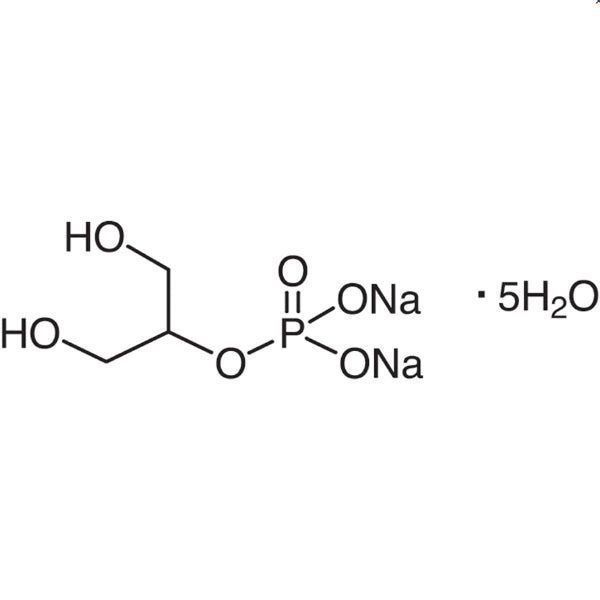
Disodium beta-Glycerophosphate Pentahydrate is a chemical compound widely used in life science research, particularly in cell biology and neuroscience. It serves as a phosphate donor in various biochemical reactions, playing a crucial role in cellular signaling and signal transduction pathways. This compound is essential for maintaining the integrity of biological systems and is frequently employed in laboratory settings to support experimental protocols. Its presence in cell culture media and buffer solutions ensures optimal conditions for enzymatic activity and cellular function.
The compound is valued for its solubility in water and its chemical stability under standard laboratory conditions. These properties make it a reliable choice for researchers requiring consistent performance in experimental setups. Additionally, its non-toxic nature enhances its safety profile, allowing for use in biomedical applications and research without significant health risks. This combination of stability, solubility, and safety makes it a preferred material in both academic and industrial research environments.
In Indonesian laboratories, Disodium beta-Glycerophosphate Pentahydrate is commonly used in cell biology, neuroscience, and pharmacology studies. It supports a wide range of applications, from basic research to drug development, due to its versatility and reliability. Its role in maintaining the chemical environment of experimental systems makes it an indispensable component in many research protocols across various scientific disciplines.
- Cell Culture: Used to enhance growth media by providing essential phosphate ions for cellular metabolism and signaling.
- Buffer Preparation: Acts as a phosphate source in buffer solutions to maintain pH stability during enzymatic reactions.
- Signal Transduction Studies: Supports the activation of intracellular signaling pathways by supplying phosphate groups to key molecules.
- Neuropharmacology Research: Facilitates the study of neuronal signaling and neurotransmitter interactions in experimental models.
- Drug Development: Incorporated into formulations to assess the efficacy and stability of pharmaceutical compounds in vitro.
| Brand | TCI |
|---|---|
| CAS number | 13408-09-8 |
| Molecular formula | — |
| Purity | — |
| Category | Life Science > Cell Biology > Cell Signaling and Neuroscience |
| Pack sizes | Available in various quantities as per supplier specifications |
| Physical form | Crystalline solid |
| Storage | Store in a cool, dry place away from moisture and direct sunlight |
This compound should be stored in a cool, dry environment to maintain its chemical stability and prevent degradation. It is recommended to use airtight containers to protect it from moisture and contaminants. Since it is non-toxic, general laboratory safety protocols should be followed, including proper labeling and handling procedures. Avoid exposure to high temperatures or direct sunlight, as these conditions may affect its solubility and performance. Always ensure that it is stored separately from incompatible substances to maintain a safe laboratory environment. Regular checks on storage conditions are advised to ensure the compound remains in optimal condition for use in research applications.
—
Produk Terkait
-
Disodiumalpha-Glycerophosphate TCI G0096
Regular price From Rp 769.650,00Regular price -
Disodiumbeta-GlycerophosphatePentahydrate[forBiochemicalResearch] TCI D3964
Regular price From Rp 743.400,00Regular price -
CalciumGlycerophosphate TCI G0095
Regular price From Rp 505.050,00Regular price -
ThionicotinamideAdenineDinucleotideDisodiumSaltreducedform[forBiochemicalResearch] TCI T2980
Regular price Rp 8.745.450,00Regular price -
beta-NicotinamideAdenineDinucleotideDisodiumSalt,reducedform[forBiochemicalResearch] TCI D0920
Regular price From Rp 664.650,00Regular price -
L-ThyroxineSodiumSaltPentahydrate TCI T0245
Regular price Rp 1.035.300,00Regular price -
SodiumTelluritePentahydrate TCI S0965
Regular price Rp 1.167.600,00Regular price -
D-(+)-RaffinosePentahydrate TCI R0002
Regular price Rp 795.900,00Regular price

![Disodium beta-Glycerophosphate Pentahydrate [for Biochemical Research] (CAS 13408-09-8) - TCI D3964 - AMI Scientific](http://amiscientific.com/cdn/shop/files/TCI2510D3964.jpg?v=1769141935&width=533)
![Thionicotinamide Adenine Dinucleotide Disodium Salt reduced form [for Biochemical Research] - AMI Scientific](http://amiscientific.com/cdn/shop/files/TCI2510T2980.jpg?v=1767143593&width=533)