


Hemin is a chemical compound widely utilized in catalytic reactions and organic chemistry processes. As a catalyst, hemin plays a crucial role in accelerating chemical reactions without being consumed in the final product. Its ability to facilitate complex chemical transformations makes it a valuable tool in both academic and industrial research settings. Hemin is particularly favored for its effectiveness in non-precious metal catalysis, offering a cost-effective and sustainable alternative to more expensive catalysts. Its versatility and efficiency have made it a staple in modern laboratory practices, especially in environments where precise control over reaction conditions is essential.
Hemin is distinguished by its stable chemical properties under controlled conditions, making it a reliable choice for a wide range of applications. Its molecular structure allows for interactions with various substrates, enhancing its adaptability across different reaction types. Additionally, hemin has the ability to bind with a variety of metal ions, further expanding its utility in catalytic systems. These characteristics make hemin an ideal candidate for applications requiring both flexibility and precision. Its sensitivity to environmental factors also ensures that it can be tailored to specific experimental needs, allowing for optimized reaction outcomes.
In Indonesian laboratories, hemin is frequently used in chemical research and educational settings. Its relevance in both teaching and applied research underscores its importance in the scientific community. Hemin's role in catalytic processes supports the development of new synthetic methods and the refinement of existing ones. As a result, it remains a key component in the toolkit of chemists and researchers working in Indonesia.
- Hemin is ideal for catalytic oxidation reactions due to its ability to facilitate electron transfer and stabilize reactive intermediates.
- It is commonly used in organic synthesis for promoting selective transformations, especially in reactions involving aromatic compounds.
- Hemin supports the development of green chemistry protocols by offering a non-toxic and environmentally friendly alternative to traditional catalysts.
- It is suitable for enzymatic mimicry studies, where its structural similarity to heme proteins allows for the investigation of biological processes.
- Hemin is applied in the study of metalloenzyme mechanisms, providing insights into how metal ions interact with biological systems.
| Brand | TCI |
|---|---|
| CAS number | 16009-13-5 |
| Molecular formula | — |
| Purity | — |
| Category | Chemistry > Catalysis and Inorganic Chemistry > Non-Precious Metal Catalysis |
| Pack sizes | Available in various quantities as per standard laboratory requirements |
| Physical form | Solid powder |
| Storage | Store in a cool, dry place away from direct sunlight and moisture |
Hemin should be stored in a cool, dry environment to maintain its chemical stability and prevent degradation. It is recommended to keep it in airtight containers to minimize exposure to moisture and air, which can affect its catalytic activity. Proper labeling of storage containers is essential to ensure safe handling and prevent cross-contamination. In laboratory settings, it should be handled with appropriate personal protective equipment, such as gloves and safety goggles, to avoid direct contact. Regular monitoring of storage conditions is advised to ensure optimal performance and safety during use.
—
Product Categories
- Biochemicals and ReagentsPharmaceutical Research Reagents (for Experimental Use)Pharmaceutical Research Reagents (Others)
- Biochemicals and ReagentsPorphyrins [Biochemicals and Reagents]
- Biochemicals and ReagentsProteins and DerivativesPlasma and Blood Proteins
- Cell BiologyMetabolomicsMetabolic Pathways
- Pharmaceutical Development and Drug Discovery ResearchPharmaceutical Research Reagents (for Experimental Use)Pharmaceutical Research Reagents (Others)
Produk Terkait
-
AcetylcholineChloride TCI A0084
Regular price From Rp 1.353.450,00Regular price -
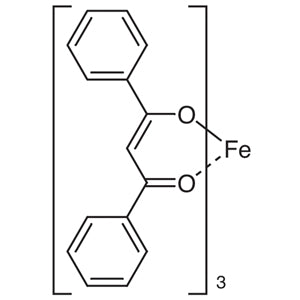
Tris(dibenzoylmethanato)Iron(III) TCI T1686
Regular price From Rp 2.837.100,00Regular price -
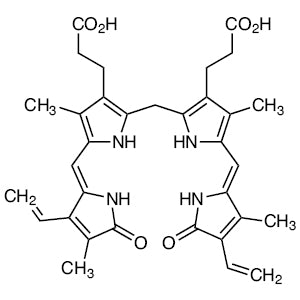
Bilirubin TCI B0460
Regular price From Rp 903.000,00Regular price -
Iron(III)TetraphenylporphyrinChloride TCI I0937
Regular price From Rp 1.881.600,00Regular price -
Tris(2,4-pentanedionato)iron(III) TCI I0079
Regular price From Rp 743.400,00Regular price -
Hydrocortisone TCI H0533
Regular price From Rp 769.650,00Regular price -
Dichloro[8-(diisopropylphosphino)-5-fluoro-2-(2-pyridinyl)quinoline]iron(II) TCI D5886
Regular price Rp 7.154.700,00Regular price -
2-Aminoethanol TCI A0297
Regular price From Rp 610.050,00Regular price



![Dichloro[8-(diisopropylphosphino)-5-fluoro-2-(2-pyridinyl)quinoline]iron(II) (CAS 2247605-87-2) - TCI D5886 - AMI Scientific](http://amiscientific.com/cdn/shop/files/TCI2510D5886.jpg?v=1767109391&width=533)
