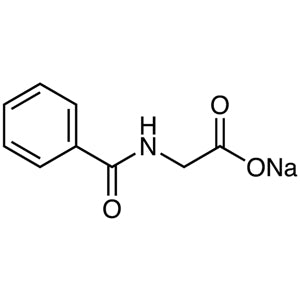
Sodium Hippurate is the sodium salt of hippuric acid, supplied by TCI under catalogue code H0144. As a salt form, the compound retains the N-benzoylglycine skeleton of the parent acid while showing far better solubility in water than the free acid does. That single property is what makes it so useful at the bench, particularly in work that calls for aqueous solutions at a defined concentration without having to add an adjusting base. Its principal laboratory roles cover microbiological testing, the preparation of enzyme substrate solutions, and the making up of standard solutions for a range of analytical purposes.
The characteristics that lead laboratories to choose this material are straightforward. High water solubility means that working solutions can be brought up quickly and reproducibly, with no dissolution aids and no drift in pH from added base. The stable solid form is easy to handle and easy to weigh accurately, which matters whenever a solution has to be prepared to a stated concentration. Reactivity is predictable in hydrolysis of the amide bond, so the compound behaves consistently as a substrate and gives results that can be compared from one run to the next.
In microbiology, those properties are put to work in the hippurate hydrolysis test, one of the classic differential tests used to identify certain bacteria on the basis of their ability to cleave this compound into benzoate and glycine. This is routine work in Indonesian clinical, food, and teaching laboratories. The two pack sizes offered, 25 g and 500 g, reflect two patterns of use: limited-scale testing on the one hand, and routine consumption in laboratories with a steady workload on the other.
- Hippurate hydrolysis testing — the compound serves as the defining substrate for this classic differential test, and its predictable amide bond cleavage into benzoate and glycine gives clear, comparable results between runs.
- Enzyme substrate solution preparation — high water solubility allows substrate solutions to be made up rapidly at a chosen concentration without dissolution aids that could interfere with enzymatic activity.
- Analytical standard solution preparation — the stable, easily weighed solid supports accurate gravimetric measurement, so standards can be prepared reproducibly for a range of routine analytical determinations.
- Bacterial identification workflows — laboratories rely on this material where organisms must be separated on the basis of their capacity to break the compound down, supporting confirmatory identification schemes.
- General aqueous chemistry work — because the salt dissolves readily without added base, it suits any procedure where a defined aqueous concentration is needed without shifting the solution pH.
| Brand | TCI, catalogue code H0144 |
|---|---|
| CAS number | 532-94-5 |
| Molecular formula | — |
| Purity | — |
| Category | Chemistry > Chemical Biology > Peptide Chemistry |
| Pack sizes | 25 g and 500 g |
| Physical form | stable solid, readily soluble in water |
| Storage | keep in a closed container in a cool, dry place |
Store the material in a tightly closed original container, kept in a cool, dry place and away from moisture, since a readily water-soluble solid will pick up humidity if left open. Glass or chemically compatible plastic containers with well-sealing caps are suitable for any solutions prepared from it. Handle the powder in a well-ventilated area, using gloves, safety glasses, and a laboratory coat as standard practice, and avoid generating dust when weighing. Close the container immediately after dispensing, label all prepared solutions with their concentration and preparation date, and follow your laboratory's usual chemical waste procedures for disposal.
—
Produk Terkait
-
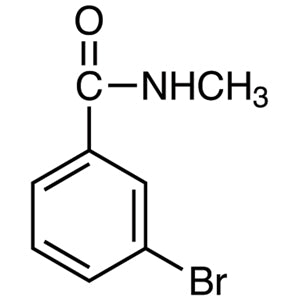
3-Bromo-N-methylbenzamide TCI B5644
Regular price From Rp 1.431.150,00Regular price -
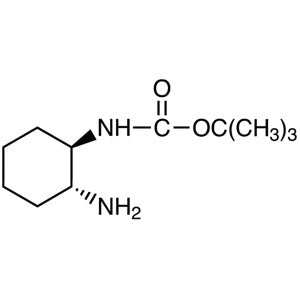
(1R,2R)-N1-(tert-Butoxycarbonyl)-1,2-cyclohexanediamine TCI B5647
Regular price Rp 3.367.350,00Regular price -
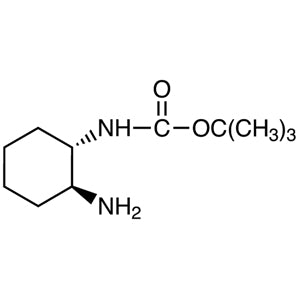
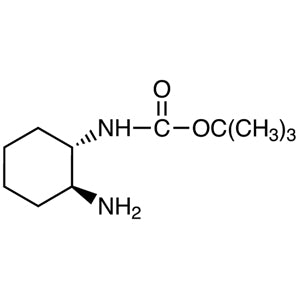
(1S,2S)-N1-(tert-Butoxycarbonyl)-1,2-cyclohexanediamine TCI B5648
Regular price From Rp 2.809.800,00Regular price -
N-Benzyl-2,2,2-trifluoroacetamide TCI B5705
Regular price From Rp 1.326.150,00Regular price -
SB-366791 TCI B5762
Regular price From Rp 5.485.200,00Regular price -
N-Carbobenzoxypropargylamine TCI B5958
Regular price Rp 4.849.950,00Regular price -
tert-Butyl(3-Oxo-3-phenylpropyl)carbamate TCI B5981
Regular price Rp 4.584.300,00Regular price -
SB297006 TCI B6053
Regular price From Rp 3.710.700,00Regular price