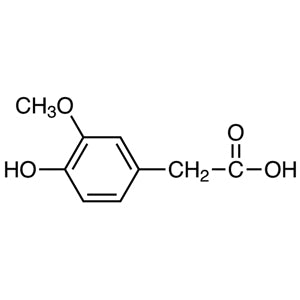
4-Hydroxy-3-methoxyphenylacetic Acid is a versatile organic compound widely used in laboratory settings for synthetic reactions. It serves as a key building block in the development of complex chemical structures, including pharmaceuticals, pesticides, and industrial chemicals. Its aromatic structure, combined with hydroxyl, methoxy, and carboxylic acid functional groups, allows it to participate in various chemical transformations. This compound is essential for chemists and researchers aiming to synthesize new compounds with specific properties. Its reactivity makes it a valuable tool in organic synthesis, particularly in substitution and esterification reactions.
The compound’s chemical stability under controlled conditions, along with its solubility in organic solvents, makes it a preferred choice for laboratory use. Its physical characteristics, such as solid form and white color, ensure ease of handling and identification. The presence of multiple functional groups enhances its reactivity, enabling it to interact with a wide range of reagents. These properties make it suitable for both academic and industrial research applications. Its ability to form stable intermediates in synthetic pathways further supports its utility in chemical synthesis.
In Indonesian laboratories, 4-Hydroxy-3-methoxyphenylacetic Acid is commonly used in organic chemistry, pharmaceutical, and environmental research. It plays a crucial role in the development of new compounds and the study of chemical reactions. Many research institutions and universities rely on this compound for their experimental work. Its availability through suppliers like AMI Scientific ensures that it remains a key component in the chemical research toolkit of Indonesian scientists.
Related TCI products
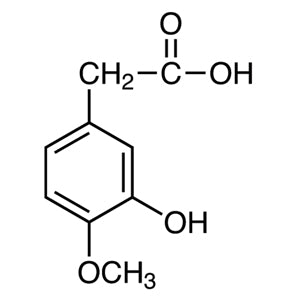
- TCI H1455 1131-94-8 3-Hydroxy-4-methoxyphenylacetic Acid
- TCI V0052 776-99-8 3,4-Dimethoxyphenylacetone
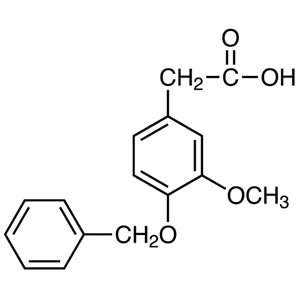
- TCI B4800 29973-91-9 4-Benzyloxy-3-methoxyphenylacetic Acid
- TCI B4742 4547-57-3 4-Butoxyphenylacetic Acid
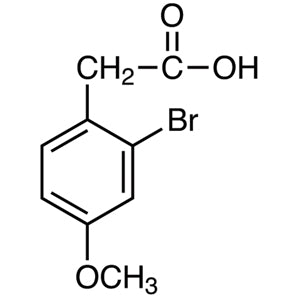
- TCI B4737 66916-99-2 2-Bromo-4-methoxyphenylacetic Acid
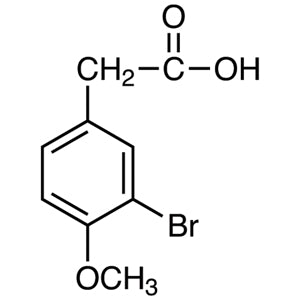
- TCI B4677 774-81-2 3-Bromo-4-methoxyphenylacetic Acid
- Organic synthesis is a primary application, as this compound serves as a building block for creating complex molecules with specific functional groups.
- Pharmaceutical research benefits from its use in the development of drug compounds, where its reactivity and structural versatility are highly valued.
- Environmental studies often incorporate this compound to analyze the behavior of aromatic compounds in various ecosystems and chemical processes.
- Industrial chemistry applications rely on its ability to participate in esterification and substitution reactions, making it useful in the production of specialty chemicals.
- Academic research in chemistry and related fields uses this compound to explore reaction mechanisms and synthetic pathways in laboratory settings.
| Brand | TCI |
|---|---|
| CAS number | 306-08-1 |
| Molecular formula | — |
| Purity | — |
| Category | Chemistry > Building Blocks > Non-Heterocyclic Building Blocks |
| Pack sizes | Available in various quantities as per supplier specifications |
| Physical form | Solid |
| Storage | Store in a cool, dry place away from moisture and air exposure |
This compound should be stored in a cool, dry environment to maintain its chemical stability. It is recommended to use airtight containers to prevent exposure to moisture and air, which can affect its reactivity. Due to its sensitivity, it should be handled in a well-ventilated area to minimize inhalation risks. Laboratory personnel should wear appropriate personal protective equipment, such as gloves and safety goggles, when working with this material. It is important to keep it away from incompatible substances to avoid potential chemical reactions. Proper labeling and storage conditions ensure the safety and effectiveness of the compound in laboratory applications.
—
Produk Terkait
-
3-Hydroxy-4-methoxyphenylaceticAcid TCI H1455
Regular price Rp 1.670.550,00Regular price -
3,4-Dimethoxyphenylacetone TCI V0052
Regular price From Rp 1.193.850,00Regular price -
4-Benzyloxy-3-methoxyphenylaceticAcid TCI B4800
Regular price Rp 2.518.950,00Regular price -
4-ButoxyphenylaceticAcid TCI B4742
Regular price From Rp 1.060.500,00Regular price -
2-Bromo-4-methoxyphenylaceticAcid TCI B4737
Regular price From Rp 848.400,00Regular price -
3-Bromo-4-methoxyphenylaceticAcid TCI B4677
Regular price From Rp 689.850,00Regular price -
3-BenzyloxyphenylaceticAcid TCI B4674
Regular price Rp 1.618.050,00Regular price -
4-BenzyloxyphenylaceticAcid TCI B1779
Regular price Rp 2.969.400,00Regular price