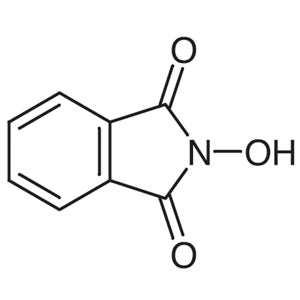
N-Hydroxyphthalimide (NHP) is a chemical compound widely used in various laboratory applications, particularly in peptide chemistry and chemical biology. It serves as a key reagent in the synthesis of peptides and their derivatives, playing a crucial role in molecular conjugation and modification processes. Its reactivity allows it to participate in reactions with amines, amino acids, and other substrates, making it indispensable in biochemical research. Due to its stability and controlled reactivity, NHP is a preferred choice for experiments requiring precise chemical interactions.
One of the main reasons NHP is favored in laboratories is its ability to undergo nucleophilic reactions while maintaining structural integrity. This property ensures consistent results in complex synthetic procedures. Additionally, NHP exhibits good solubility in organic solvents, which simplifies mixing and separation during experiments. These characteristics make it highly suitable for use in both academic and industrial research settings.
In Indonesian laboratories, NHP is commonly utilized in peptide synthesis, biomedical compound development, and pharmaceutical research. Its reliability and effectiveness in chemical reactions make it a valuable tool for scientists working in the fields of chemistry and biology. The compound's versatility supports a wide range of experimental needs, contributing to the advancement of scientific research in Indonesia.
Advantages (TCI brochure)
- Used to prepare an RAE for photoredox catalyst-free decarboxylative cross-coupling
TCI brochures (PDF)
- N-Hydroxyphthalimide Derivatives for the Synthesis of Redox Active Esters 2024-02-06 · p. 1
- Ligands for Reductive Cross Electrophile Coupling Capable of C(sp2)-C(sp3) Bond Formation 2024-02-06 · p. 2
- Oxidizing Agents 2025-06-11 · p. 8
- Condensing Agents 2025-11-18 · p. 4
- Amino Acids and Peptide Synthesis Reagents 2025-08-14 · p. 40
Related TCI products
- TCI B0249 6066-82-6 N-Hydroxysuccinimide [Coupling Reagent for Peptide]
- TCI T0681 658-78-6 4-Nitrophenyl Trifluoroacetate
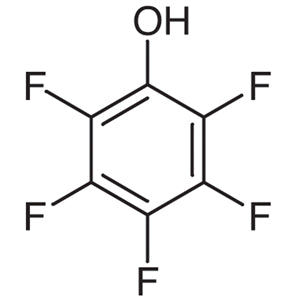
- TCI P0919 771-61-9 Pentafluorophenol
- TCI M3572 214754-50-4 2-Hydroxy-5-methoxyisoindoline-1,3-dione
- TCI M3571 173962-59-9 2-Hydroxy-5-methylisoindoline-1,3-dione
- TCI H0623 6066-82-6 N-Hydroxysuccinimide
- Peptide Synthesis: NHP is used to facilitate peptide bond formation through nucleophilic reactions, enhancing the efficiency of peptide synthesis processes.
- Biomedical Compound Development: Its reactivity and solubility make it ideal for synthesizing complex biologically active compounds.
- Pharmaceutical Research: NHP supports the development of pharmaceuticals by enabling controlled chemical modifications of molecular structures.
- Molecular Conjugation Studies: The compound's ability to react with various substrates aids in the study of molecular interactions and conjugation mechanisms.
- Organic Chemistry Experiments: NHP is a preferred reagent in reactions requiring stable and reactive intermediates, supporting a broad range of chemical investigations.
From the TCI brochure
- Photoredox catalyst-free decarboxylative cross-coupling of bicyclo[1.1.1]pentane carboxylic acid active ester with aryl bromide
| Brand | TCI |
|---|---|
| CAS number | 524-38-9 |
| Molecular formula | — |
| Purity | — |
| Category | Chemistry > Chemical Biology > Peptide Chemistry |
| Pack sizes | Available in standard laboratory quantities |
| Physical form | Solid |
| Storage | Store in a cool, dry place away from moisture and light |
Data from the TCI brochure
| Ep (vs. Fc+/Fc) of RAE | -1.690 V (RAE with R = phenylcyclopropyl group as drawn in brochure) |
|---|
Source: TCI brochure RR190 (2024-02-06)
N-Hydroxyphthalimide should be stored in a cool, dry environment to maintain its chemical stability. It is recommended to keep the compound in airtight containers to prevent exposure to moisture and air, which could affect its reactivity. Due to its solid form, it is best stored in a sealed container made of inert material such as glass or polyethylene to avoid chemical interactions. Laboratory personnel should handle NHP with care, using appropriate personal protective equipment when necessary. Proper storage ensures the compound remains effective for use in various biochemical and chemical applications.
References cited in the TCI brochure
- Daniel C. Salgueiro. Control of Redox‐Active Ester Reactivity Enables a General Cross‐Electrophile Approach to Access Arylated Strained Rings** Angewandte Chemie International Edition, 2022. doi:10.1002/anie.202205673
- Viktor C. Polites. Nickel-Catalyzed Decarboxylative Cross-Coupling of Bicyclo[1.1.1]pentyl Radicals Enabled by Electron Donor–Acceptor Complex Photoactivation Organic Letters, 2021. doi:10.1021/acs.orglett.1c01558
Product Categories
- Chemical BiologyPeptide ChemistryPeptide Coupling Agents
- Synthetic ReagentsCoupling [Synthetic Reagents]Active Esters, Additives [Coupling Reagents]
- Synthetic ReagentsOxidation [Synthetic Reagents]Oxidants (Other) [Oxidation]
- Pharmaceutical Development and Drug Discovery Research ReagentsPeptide ChemistryPeptide Coupling Agents
Produk Terkait
-
N-Hydroxysuccinimide[CouplingReagentforPeptide] TCI B0249
Regular price From Rp 1.988.700,00Regular priceRp 1.405.950,00Sale price From Rp 1.988.700,00 -
4-NitrophenylTrifluoroacetate TCI T0681
Regular price From Rp 662.550,00Regular priceRp 478.800,00Sale price From Rp 662.550,00 -
Pentafluorophenol TCI P0919
Regular price From Rp 1.590.750,00Regular priceRp 1.111.950,00Sale price From Rp 1.590.750,00 -
2-Hydroxy-5-methoxyisoindoline-1,3-dione TCI M3572
Regular price From Rp 1.246.350,00Regular priceRp 887.250,00Sale price From Rp 1.246.350,00 -
2-Hydroxy-5-methylisoindoline-1,3-dione TCI M3571
Regular price From Rp 1.246.350,00Regular priceRp 887.250,00Sale price From Rp 1.246.350,00 -
N-Hydroxysuccinimide TCI H0623
Regular price From Rp 1.220.100,00Regular priceRp 868.350,00Sale price From Rp 1.220.100,00 -
1-Ethoxycarbonyl-2-ethoxy-1,2-dihydroquinoline TCI E0363
Regular price Rp 2.013.900,00Regular priceRp 1.423.800,00Sale price Rp 2.013.900,00 -
Di(N-succinimidyl)Carbonate TCI D1662
Regular price From Rp 1.934.100,00Regular priceRp 1.368.150,00Sale price From Rp 1.934.100,00