

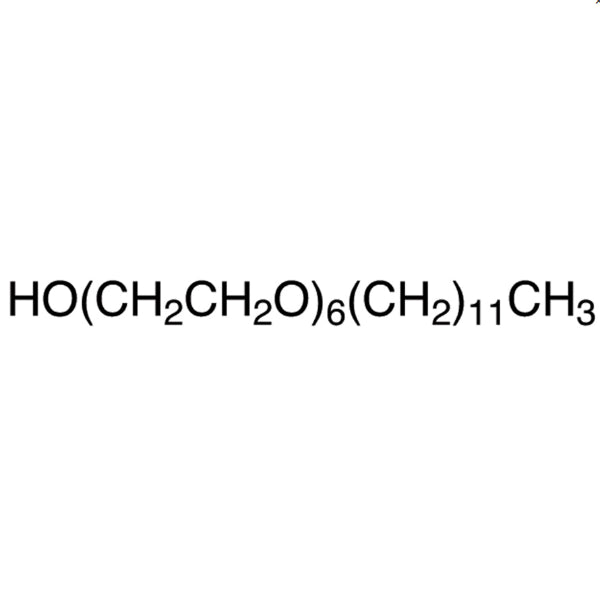
Hexaethylene Glycol Monododecyl Ether (HEG-MDE), with CAS number 3055-96-7, is a chemical compound widely used in scientific and industrial applications, particularly in the fields of materials science and polymer chemistry. As a polymer additive, it plays a crucial role in laboratory settings by enhancing the mechanical and thermal stability of polymer-based products. Its unique molecular structure enables it to act as both a solvent and a modifier, making it an essential component in the development of advanced materials. In research and development environments, HEG-MDE is a key ingredient in formulations aimed at improving the performance and durability of various polymer systems.
HEG-MDE is favored for its stable chemical properties and its ability to interact effectively with a wide range of polymers. The long ethylene glycol chain combined with a dodecyl alkyl group provides excellent solubility and compatibility with different polymer matrices. This makes it an ideal choice for applications requiring consistent performance and reliability. Its non-reactive nature ensures that it does not interfere with the chemical integrity of the materials it is used with, making it a preferred additive in both academic and industrial laboratory settings.
In Indonesian laboratories, HEG-MDE is commonly used in research related to composite materials, coatings, and biodegradable substances. It supports innovation in manufacturing and environmental technologies by enabling the creation of more sustainable and durable materials. Its versatility and effectiveness make it a valuable tool for scientists and engineers working on advanced material development projects.
- Polymer Modification: HEG-MDE is used to enhance the mechanical properties of polymers, making it ideal for research into advanced composite materials.
- Coating Formulation: Its excellent solubility and compatibility with various polymers make it suitable for developing high-performance coatings and surface treatments.
- Biodegradable Material Development: HEG-MDE contributes to the creation of environmentally friendly materials by improving the stability and performance of biodegradable polymers.
- Solvent Compatibility Testing: The compound's ability to dissolve a wide range of materials makes it useful for testing the compatibility of new polymer formulations.
- Thermal Stability Studies: Its role in improving thermal stability makes it a key component in research focused on high-temperature applications and material durability.
| Brand | TCI |
|---|---|
| CAS number | 3055-96-7 |
| Molecular formula | — |
| Purity | — |
| Category | Materials Science > Polymer/Macromolecule Reagents > Polymer Additives |
| Pack sizes | Available in various quantities as per standard laboratory supply |
| Physical form | Liquid |
| Storage | Store in a cool, dry place away from direct sunlight and incompatible materials |
HEG-MDE should be stored in a cool, dry environment, away from direct sunlight and sources of heat. It is recommended to keep the compound in a sealed container made of materials compatible with its chemical properties, such as glass or high-density polyethylene. Due to its chemical stability, it does not require refrigeration but should be protected from moisture and contaminants. In laboratory settings, it is important to handle the compound with appropriate personal protective equipment, including gloves and safety goggles, to ensure safe usage. Proper labeling and storage practices help maintain the integrity of the material and reduce the risk of accidental exposure or contamination.
—
Produk Terkait
-
3,5-Bis(methoxymethyloxy)benzylAlcohol TCI B5583
Regular price From Rp 1.724.100,00Regular price -
1-(tert-Butoxy)-2-propanol TCI B5840
Regular price From Rp 1.510.950,00Regular price -
1,1-Bis(4-methoxyphenyl)prop-2-yn-1-ol TCI B5946
Regular price Rp 2.837.100,00Regular price -
7-(Benzyloxy)heptan-1-ol TCI B6163
Regular price Rp 2.306.850,00Regular price -
2-[2-(2-Chloroethoxy)ethoxy]ethanol TCI C1416
Regular price From Rp 1.298.850,00Regular price -
1-Chloro-3-methoxy-2-propanol TCI C1472
Regular price Rp 2.254.350,00Regular price -
3-(4-Chlorophenoxy)propane-1,2-diol TCI C3659
Regular price From Rp 505.050,00Regular price


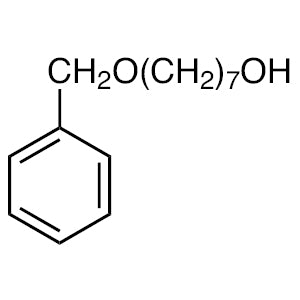
![2-[2-(2-Chloroethoxy)ethoxy]ethanol (CAS 5197-62-6) - TCI C1416 - AMI Scientific](http://amiscientific.com/cdn/shop/files/TCI2510C1416.jpg?v=1768816517&width=533)

