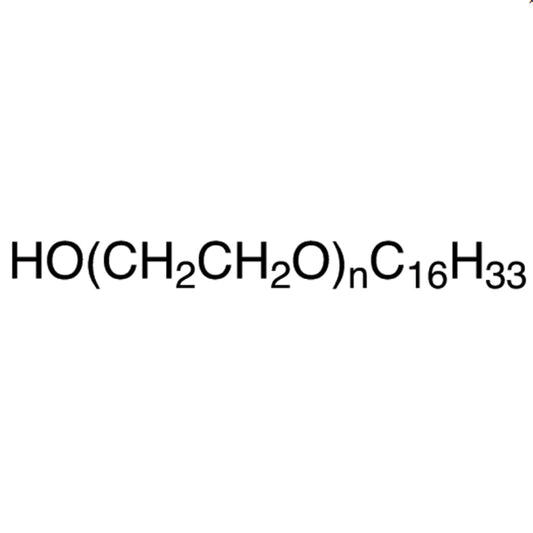
Pentaethylene Glycol Monododecyl Ether (PEG-MeDodecyl Ether) is a chemical compound widely utilized in scientific and industrial applications, particularly within the field of materials science. This compound plays a crucial role in laboratory settings as a solvent, emulsifier, and polymer additive. Its unique molecular structure, consisting of a pentaethylene glycol chain connected to a dodecyl group, enables it to modify the mechanical and chemical properties of polymers. It is commonly employed in the synthesis of polymers to enhance their stability and performance. Its versatility makes it a valuable tool for researchers and industrial chemists alike.
The compound is characterized by its non-iodine and colorless nature, which ensures it does not interfere with chemical analysis results. It exhibits excellent solubility in organic solvents such as ethyl acetate and toluene, making it ideal for applications requiring consistent and clear solutions. These properties contribute to its widespread use in various laboratory processes, including formulation and stabilization of polymer-based materials. Its non-toxic profile further enhances its safety for use in laboratory environments, aligning with modern safety standards.
In Indonesian laboratories, Pentaethylene Glycol Monododecyl Ether is extensively used in material and chemical research. It supports a wide range of experimental activities, from polymer synthesis to formulation of advanced materials. Its reliability and performance make it a preferred choice for both academic and industrial research institutions in Indonesia. Its role in enhancing the properties of polymers and improving the stability of mixtures is vital in advancing scientific innovation in the region.
TCI brochures (PDF)
- Polymer Additives 2026-04-16 · p. 12
Related TCI products
- TCI T0768 3055-94-5 Triethylene Glycol Monododecyl Ether
- TCI P0671 9002-92-0 Polyethylene Glycol Monododecyl Ether (n=approx 25)
- TCI O0139 3055-98-9 Octaethylene Glycol Monododecyl Ether
- TCI N1204 3055-99-0 Nonaethylene Glycol Monododecyl Ether [for Biochemical Research]
- TCI H0444 3055-96-7 Hexaethylene Glycol Monododecyl Ether
- TCI P3064 9005-00-9 Polyethylene Glycol Monostearyl Ether (n=approx. 20)
- Polymer synthesis and modification where it acts as a compatibilizer to improve interfacial adhesion between different polymer components.
- Emulsification processes in the formulation of polymer-based products to ensure homogeneity and stability of the final product.
- Solvent systems for dissolving and dispersing polymer materials in organic solvents, enhancing the efficiency of chemical reactions.
- Stabilization of polymer blends to prevent phase separation and maintain the integrity of the material over time.
- Research applications in material science for studying the effects of additives on polymer properties and performance.
| Brand | TCI |
|---|---|
| CAS number | 3055-95-6 |
| Molecular formula | — |
| Purity | — |
| Category | Materials Science > Polymer/Macromolecule Reagents > Polymer Additives |
| Pack sizes | Available in various quantities as per standard laboratory supply |
| Physical form | Liquid |
| Storage | Store in a cool, dry place away from direct sunlight and incompatible materials |
Pentaethylene Glycol Monododecyl Ether should be stored in a cool, dry environment, away from direct sunlight and sources of heat. It is recommended to keep it in a tightly sealed container to prevent evaporation and contamination. The compound is non-toxic and does not emit harmful vapors, making it safe for routine laboratory handling. However, it is advisable to use appropriate personal protective equipment such as gloves and safety goggles when working with it. Due to its solubility in organic solvents, it should be stored separately from incompatible substances to avoid chemical interactions. Proper storage ensures the compound remains effective and safe for use in laboratory settings.
—
Product Categories
Produk Terkait
-
TriethyleneGlycolMonododecylEther TCI T0768
Regular price Rp 18.680.550,00Regular priceRp 13.078.800,00Sale price Rp 18.680.550,00 -
PolyethyleneGlycolMonododecylEther(n=approx25) TCI P0671
Regular price From Rp 530.250,00Regular priceRp 386.400,00Sale price From Rp 530.250,00 -
OctaethyleneGlycolMonododecylEther TCI O0139
Regular price From Rp 3.895.500,00Regular priceRp 2.739.450,00Sale price From Rp 3.895.500,00 -
NonaethyleneGlycolMonododecylEther[forBiochemicalResearch] TCI N1204
Regular price From Rp 1.033.200,00Regular priceRp 738.150,00Sale price From Rp 1.033.200,00 -
HexaethyleneGlycolMonododecylEther TCI H0444
Regular price Rp 5.777.100,00Regular priceRp 4.055.100,00Sale price Rp 5.777.100,00 -
PolyethyleneGlycolMonostearylEther(n=approx.20) TCI P3064
Regular price From Rp 505.050,00Regular priceRp 352.800,00Sale price From Rp 505.050,00 -
PolyethyleneGlycolMono-4-octylphenylEther(n=approx.10) TCI P0873
Regular price From Rp 610.050,00Regular priceRp 442.050,00Sale price From Rp 610.050,00 -
PolyethyleneGlycolMonocetylEther(n=approx.23) TCI P0841
Regular price From Rp 477.750,00Regular priceRp 333.900,00Sale price From Rp 477.750,00