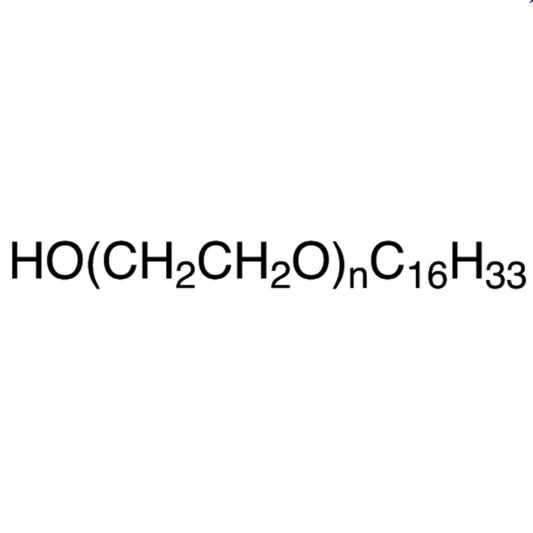
![3055-99-0 Nonaethylene Glycol Monododecyl Ether [for Biochemical Research] - AMI Scientific](http://amiscientific.com/cdn/shop/files/TCI2510N1204.jpg?v=1768362176&width=1946)
![3055-99-0 Nonaethylene Glycol Monododecyl Ether [for Biochemical Research] - AMI Scientific](http://amiscientific.com/cdn/shop/files/TCI2510N1204.jpg?v=1768362176&width=1445)
Nonaethylene Glycol Monododecyl Ether (N1204) is a chemical compound widely used in biochemical and materials science research. It serves as a solvent, emulsifier, and diluent in various chemical reactions, making it an essential component in laboratory settings. This compound is particularly valued for its ability to facilitate the mixing of immiscible liquids and enhance the efficiency of chemical processes. Its versatility allows it to be applied in diverse experimental scenarios, from synthesis to analytical procedures. Due to its non-reactive and stable nature, N1204 is a reliable choice for experiments requiring consistency and safety.
The properties of N1204 that make it a preferred choice include its excellent solubility in organic solvents such as ethyl acetate and acetone. This solubility ensures ease of use in a wide range of chemical reactions. Additionally, its non-corrosive nature and relatively safe handling profile make it suitable for laboratories prioritizing safety. The compound’s resistance to degradation also contributes to its stability under varying experimental conditions, ensuring reliable results over time. These characteristics collectively enhance its appeal in scientific research environments.
In Indonesian laboratories, N1204 is commonly used in biochemical and pharmaceutical research. It plays a crucial role in facilitating the synthesis of complex compounds and in the preparation of reagents for analytical procedures. Its application in these contexts underscores its importance in supporting scientific innovation and research activities. The compound’s reliability and safety profile make it a favored choice among researchers in Indonesia.
TCI brochures (PDF)
- Polymer Additives 2026-04-16 · p. 13
Related TCI products
- TCI T0768 3055-94-5 Triethylene Glycol Monododecyl Ether
- TCI P0671 9002-92-0 Polyethylene Glycol Monododecyl Ether (n=approx 25)
- TCI P0372 3055-95-6 Pentaethylene Glycol Monododecyl Ether
- TCI O0139 3055-98-9 Octaethylene Glycol Monododecyl Ether
- TCI H0444 3055-96-7 Hexaethylene Glycol Monododecyl Ether
- TCI P3064 9005-00-9 Polyethylene Glycol Monostearyl Ether (n=approx. 20)
- Biochemical Research: N1204 is used to facilitate the mixing of immiscible liquids and improve the efficiency of chemical reactions, making it ideal for biochemical experiments.
- Polymer Synthesis: Its role as a solvent and emulsifier makes it suitable for polymer synthesis, aiding in the creation of macromolecular structures.
- Emulsification Processes: N1204 is effective in stabilizing emulsions, making it useful in experiments requiring the combination of oil and water phases.
- Analytical Chemistry: Its solubility in organic solvents allows it to be used in analytical procedures, aiding in the preparation of reagents and samples.
- Material Science Studies: N1204 supports the study of polymer additives and their effects on material properties, aiding in the development of new materials.
| Brand | TCI |
|---|---|
| CAS number | 3055-99-0 |
| Molecular formula | — |
| Purity | — |
| Category | Materials Science > Polymer/Macromolecule Reagents > Polymer Additives |
| Pack sizes | Available in various sizes as per standard laboratory supply |
| Physical form | Liquid |
| Storage | Store in a cool, dry place away from direct sunlight |
Nonaethylene Glycol Monododecyl Ether should be stored in a cool, dry place away from direct sunlight to maintain its stability and effectiveness. It is recommended to use suitable containers that are resistant to chemical reactions and ensure the integrity of the compound. Laboratory personnel should handle the material with care, using appropriate personal protective equipment such as gloves and safety goggles. While it is generally safe to use, it is important to follow standard laboratory safety protocols to prevent any potential exposure. Proper labeling and storage conditions help ensure the material remains safe and usable for research purposes.
—
Product Categories
Produk Terkait
-
TriethyleneGlycolMonododecylEther TCI T0768
Regular price Rp 18.680.550,00Regular priceRp 13.078.800,00Sale price Rp 18.680.550,00 -
PolyethyleneGlycolMonododecylEther(n=approx25) TCI P0671
Regular price From Rp 530.250,00Regular priceRp 386.400,00Sale price From Rp 530.250,00 -
PentaethyleneGlycolMonododecylEther TCI P0372
Regular price Rp 18.602.850,00Regular priceRp 13.024.200,00Sale price Rp 18.602.850,00 -
OctaethyleneGlycolMonododecylEther TCI O0139
Regular price From Rp 3.895.500,00Regular priceRp 2.739.450,00Sale price From Rp 3.895.500,00 -
HexaethyleneGlycolMonododecylEther TCI H0444
Regular price Rp 5.777.100,00Regular priceRp 4.055.100,00Sale price Rp 5.777.100,00 -
PolyethyleneGlycolMonostearylEther(n=approx.20) TCI P3064
Regular price From Rp 505.050,00Regular priceRp 352.800,00Sale price From Rp 505.050,00 -
PolyethyleneGlycolMono-4-octylphenylEther(n=approx.10) TCI P0873
Regular price From Rp 610.050,00Regular priceRp 442.050,00Sale price From Rp 610.050,00 -
PolyethyleneGlycolMonocetylEther(n=approx.23) TCI P0841
Regular price From Rp 477.750,00Regular priceRp 333.900,00Sale price From Rp 477.750,00