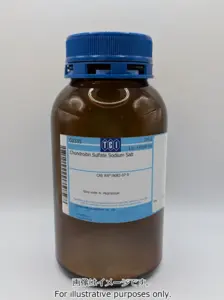
Tci H1739 95507-66-7 Hyaluronic Acid, High-Sulfated is a specialized carbohydrate compound widely used in chemical and biological research. This material plays a crucial role in laboratory settings where the study of glycoscience, molecular interactions, and cellular responses is essential. Its unique structure, composed of a polymer chain of uronic acid, enables it to exhibit high viscosity and strong water-absorbing properties, making it a versatile tool for various experimental applications. Due to its chemical stability and solubility in water, it is a reliable choice for researchers working in both academic and industrial environments.
The high sulfation level of this hyaluronic acid variant significantly influences its ability to interact with proteins and cells. This characteristic makes it particularly suitable for studies involving molecular binding, cellular responses, and enzymatic activity. Its chemical stability and solubility in aqueous solutions further enhance its usability in a wide range of laboratory procedures. These properties ensure that it remains a preferred material for experiments requiring precise and consistent results.
In Indonesian laboratories, Tci H1739 95507-66-7 Hyaluronic Acid, High-Sulfated is commonly used in applied research related to skincare product development, degenerative disease studies, and biomedical applications. Its unique properties make it an essential component in the formulation of cosmetics, pharmaceuticals, and biotechnology products. Researchers in Indonesia rely on this compound for its reliability and effectiveness in various scientific investigations.
Advantages (TCI brochure)
- Maintains the undifferentiated state of hiPS cells under feeder-free and bFGF-free conditions.
- Has a greater capacity to preserve bFGF than heparin.
TCI brochures (PDF)
- Sulfated Hyaluronic Acids 2023-06-08 · p. 1
- Polysaccharides 2025-02-13 · p. 2
- Cancer Research Reagents 2025-04-01 · p. 7
- Biomaterials Research Reagents 2025-02-19 · p. 5
- Reagents for Biological Research 2025-03-11 · p. 42
Related TCI products
- TCI H1740 95507-66-7 Hyaluronic Acid, Low-Sulfated
- TCI H1807 9004-61-9 Hyaluronic Acid from Bacteria
- TCI H1791 9067-32-7 Hyaluronic Acid Sodium Salt from Bacteria
- TCI H0595 9004-61-9 Hyaluronic Acid from Cockscomb
- TCI D3672 54328-33-5 Dermatan Sulfate Sodium Salt
- TCI C0335 9082-07-9 Chondroitin Sulfate Sodium Salt
- Skin care product development benefits from its high water retention and viscoelastic properties, making it ideal for formulating moisturizers and anti-aging treatments.
- Degenerative disease research utilizes its ability to interact with proteins and cells, aiding in the study of inflammation and tissue repair mechanisms.
- Biomedical applications leverage its chemical stability and solubility for drug delivery systems and tissue engineering experiments.
- Molecular binding studies take advantage of its high sulfation level to investigate interactions between biomolecules and cellular components.
- Enzymatic activity research benefits from its role in modulating biochemical reactions and cellular responses in controlled environments.
From the TCI brochure
- Maintaining the undifferentiated state of hiPS cells
- Stabilization of bFGF
| Brand | TCI |
|---|---|
| CAS number | 95507-66-7 |
| Molecular formula | — |
| Purity | — |
| Category | Chemistry > Chemical Biology > Glycoscience |
| Pack sizes | Available in various quantities as per standard laboratory supply options |
| Physical form | Powder |
| Storage | Store in a cool, dry place away from direct sunlight |
Data from the TCI brochure
| Stabilization of bFGF ratio relative to heparin | Higher than heparin (no numeric value printed) (bFGF with hyaluronic acid, incubated at 37°C for 3 days, SDS-PAGE and image analysis) |
|---|
Source: TCI brochure GG031 (2023-06-08)
This compound should be stored in a cool, dry environment to maintain its chemical integrity and prevent degradation. It is recommended to use airtight containers to minimize exposure to moisture and contaminants. Due to its hygroscopic nature, it is important to ensure that the storage area is well-ventilated and free from sources of humidity. When handling, researchers should wear appropriate personal protective equipment, including gloves and safety goggles, to avoid direct contact. The material is not flammable, but it should be kept away from incompatible substances such as strong acids or bases. Proper labeling and storage conditions are essential to ensure the safety and effectiveness of the compound in laboratory settings.
References cited in the TCI brochure
- Taichi Miura. Highly sulfated hyaluronic acid maintains human induced pluripotent stem cells under feeder-free and bFGF-free conditions Biochemical and Biophysical Research Communications, 2019. doi:10.1016/j.bbrc.2019.08.082
- Monika Michalczyk. Hyaluronic Acid as a Modern Approach in Anticancer Therapy-Review International Journal of Molecular Sciences, 2022. doi:10.3390/ijms24010103
Product Categories
Produk Terkait
-
HyaluronicAcid,Low-Sulfated TCI H1740
Regular price Rp 3.630.900,00Regular price -
HyaluronicAcidfromBacteria TCI H1807
Regular price Rp 6.042.750,00Regular price -
HyaluronicAcidSodiumSaltfromBacteria TCI H1791
Regular price From Rp 1.936.200,00Regular price -
HyaluronicAcidfromCockscomb TCI H0595
Regular price Rp 8.692.950,00Regular price -
DermatanSulfateSodiumSalt TCI D3672
Regular price From Rp 2.491.650,00Regular price -
ChondroitinSulfateSodiumSalt TCI C0335
Regular price From Rp 2.068.500,00Regular price -
PotassiumHyaluronatefromBacteria TCI H1808
Regular price Rp 7.234.500,00Regular price -
PotassiumHyaluronatefromCockscomb TCI H0652
Regular price Rp 9.406.950,00Regular price