Tris(2,4-pentanedionato)indium(III), more commonly known as indium(III) acetylacetonate, is a coordination complex consisting of a single indium center bound by three acetylacetonate ligands in a bidentate fashion. This chelate structure yields a metal compound that is considerably more stable and easier to handle than simple indium salts, while remaining soluble in organic solvents. In the laboratory, the compound is widely used as an indium precursor — a source of indium atoms that can be delivered in a controlled manner into reactions for the synthesis of materials, thin films, and nanoparticles.
The characteristics that make this compound a preferred choice are its adequate thermal stability combined with its ability to evaporate or sublime on heating, properties that are highly valued in chemical vapor deposition and atomic layer deposition techniques. The chelate character also renders the compound more resistant to hydrolysis than many other metal precursors, so handling is friendlier for laboratories that do not yet have a fully equipped inert glovebox facility. Its solubility in organic solvents makes it straightforward to prepare precursor solutions at measured concentrations.
In Indonesian laboratories, this precursor is typically encountered in materials chemistry and nanomaterials groups working on thin films and functional coatings. Prepared solutions at defined concentrations serve methods such as sol-gel processing, spin coating, or hot injection in nanoparticle synthesis. Because the compound tolerates ordinary bench handling better than many metal precursors, it fits well in university and institutional laboratories where full inert-atmosphere infrastructure is not always available.
Related TCI products
- Chemical vapor deposition of indium-containing films — the compound's thermal stability paired with its ability to volatilize on heating allows it to be delivered to the substrate in the vapor phase.
- Atomic layer deposition processes — the same combination of sublimation behavior and thermal stability makes it suitable as a metal source dosed in controlled cycles onto a growing layer.
- Sol-gel preparation of indium-based materials — its solubility in organic solvents allows precursor solutions of measured concentration to be prepared for subsequent processing.
- Spin coating of thin layers — solutions of the complex in organic solvent can be dispensed and spread onto substrates, delivering indium uniformly across the coated surface.
- Hot injection synthesis of nanoparticles — the complex acts as a controlled indium source that can be introduced into a heated reaction to build indium-containing nanostructures.
| Brand | TCI |
|---|---|
| CAS number | 14405-45-9 |
| Molecular formula | — |
| Purity | — |
| Category | Chemistry > Catalysis and Inorganic Chemistry > Main-group Elements [Catalysis and Inorganic Chemistry] |
| Pack sizes | available in the pack sizes listed for this catalog item |
| Physical form | — |
| Storage | keep the container tightly closed in a cool, dry place away from moisture |
- Catalog reference: I0020
Store the material in its original tightly closed container in a cool, dry, well-ventilated area, protected from moisture and away from heat sources. Although the chelate structure gives this compound better hydrolytic resistance than many metal precursors, repeated exposure to humid air should still be avoided so that precursor performance stays consistent. Glass or the supplier's original container is appropriate; transfer and weighing are best carried out in a fume hood using dry spatulas and dry glassware. Wear a laboratory coat, safety glasses, and chemical-resistant gloves during handling, keep the container closed when not in active use, and consult the supplier safety data sheet before first use and before disposal.
—
Produk Terkait
-
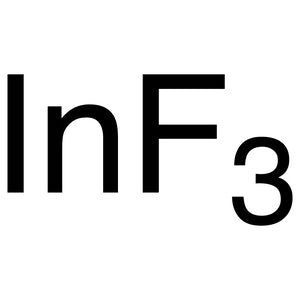
Indium(III)Fluoride TCI I1160
Regular price From Rp 2.889.600,00Regular price -
Indium(III)Oxide TCI I1150
Regular price From Rp 2.306.850,00Regular price -
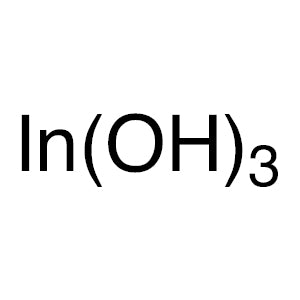
Indium(III)Hydroxide TCI I1147
Regular price From Rp 1.298.850,00Regular price -
Bis(2,4-pentanedionato)zinc(II) TCI Z0002
Regular price From Rp 2.782.500,00Regular price -
Tris(2,4-pentanedionato)gallium(III) TCI T3652
Regular price From Rp 1.856.400,00Regular price -
Bis(2,4-pentanedionato)tin(IV)Dichloride TCI T0650
Regular price Rp 9.116.100,00Regular price -
Bis(2,4-pentanedionato)magnesium(II) TCI M0001
Regular price Rp 980.700,00Regular price -
(2,4-Pentanedionato)lithium TCI L0080
Regular price Rp 1.565.550,00Regular price