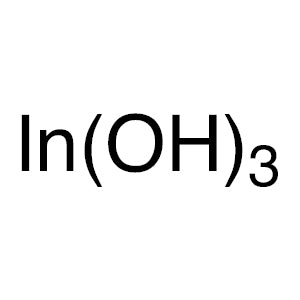
Indium(III) Hydroxide (In(OH)₃), with CAS number 20661-21-6, is a chemical compound widely used in laboratory settings for its catalytic and reactivity properties. As a key component in inorganic chemistry, it plays a vital role in various chemical reactions, particularly in catalytic processes and synthetic pathways. Its ability to act as a catalyst or reagent makes it indispensable in both organic and inorganic synthesis, where the presence of indium ions is essential. This compound is commonly used in research involving redox reactions, where its chemical stability and reactivity contribute to the efficiency of the process.
One of the main reasons for its popularity is its stable yet reactive nature, which allows it to be used in a wide range of experimental conditions. It has a well-defined crystalline structure and is available as a fine powder, making it easy to handle and incorporate into chemical reactions. Additionally, its hydrophobic properties make it suitable for applications where moisture control is critical. These characteristics ensure that it remains a reliable choice for laboratory research, especially in environments requiring precise chemical control.
In Indonesian laboratories, Indium(III) Hydroxide is frequently utilized in inorganic chemistry and catalysis research. It is a preferred material for studies involving the synthesis of new compounds and the development of catalytic systems. Its availability through suppliers like AMI Scientific ensures that researchers in Indonesia have access to high-quality reagents for their experiments. This compound is essential for advancing chemical research in both academic and industrial settings.
- Inorganic synthesis reactions benefit from Indium(III) Hydroxide due to its catalytic properties and ability to facilitate complex chemical transformations.
- Redox reactions often utilize this compound as a reagent, leveraging its redox-active indium ions to drive chemical changes efficiently.
- Catalytic processes in chemical synthesis rely on Indium(III) Hydroxide as a stable and reactive catalyst, enhancing reaction rates and selectivity.
- Analytical chemistry applications use this compound as a standard or reagent for testing and characterizing other chemical substances.
- Industrial chemical processes incorporate Indium(III) Hydroxide for its role in producing specialized materials and compounds in controlled environments.
| Brand | TCI |
|---|---|
| CAS number | 20661-21-6 |
| Molecular formula | — |
| Purity | — |
| Category | Chemistry > Catalysis and Inorganic Chemistry > Main-group Elements |
| Pack sizes | Available in various quantities as per supplier specifications |
| Physical form | Fine powder |
| Storage | Store in a cool, dry place away from moisture and direct sunlight |
Indium(III) Hydroxide should be stored in a cool, dry environment to maintain its chemical stability and prevent degradation. It is recommended to use airtight containers to minimize exposure to moisture, as its hydrophobic nature can be affected by high humidity levels. Laboratory personnel should handle the compound with care, using appropriate personal protective equipment to ensure safety. Due to its reactivity, it should be stored separately from incompatible substances to avoid any potential chemical interactions. Proper labeling and storage conditions are essential to maintain the integrity of the material and ensure safe handling in laboratory settings.
—
Produk Terkait
-
TCI B5774 5,10-Bis(4,4,5,5-tetramethyl-1,3,2-dioxaborolan-2-yl)naphtho[1,2-c:5,6-c']bis([1,2,5]oxadiazole)
Regular price Rp 10.255.350,00Regular price -
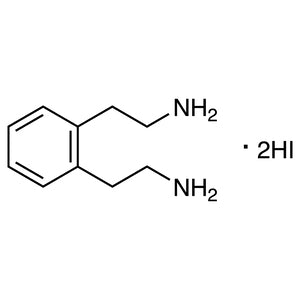
Dihydroiodide TCI B6569
Regular price From Rp 1.936.200,00Regular price -
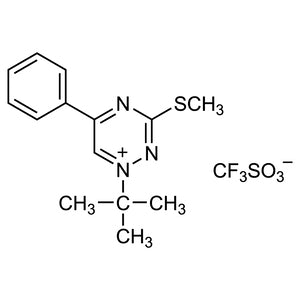
Trifluoromethanesulfonate TCI B7003
Regular price From Rp 1.936.200,00Regular price
![5,10-Bis(4,4,5,5-tetramethyl-1,3,2-dioxaborolan-2-yl)naphtho[1,2-c:5,6-c']bis([1,2,5]oxadiazole) - TCI B5774 - AMI Scientific](http://amiscientific.com/cdn/shop/files/TCI2510B5774.jpg?v=1769180228&width=533)