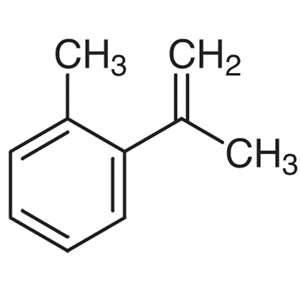
2-Isopropenyltoluene (stabilized with BHT) is a chemical compound widely used as a building block in organic synthesis. It serves as a fundamental component in the creation of more complex organic molecules, playing a crucial role in various chemical reactions. In laboratory settings, this compound is essential for the development of specific molecular structures, including esters, amines, and aromatic compounds. Its versatility makes it a valuable tool for chemists working on diverse research projects.
The stability and controlled reactivity of 2-Isopropenyltoluene make it a preferred choice for laboratory applications. The inclusion of BHT as a stabilizer ensures that the compound remains chemically stable, preventing oxidation and degradation during storage and use. This stability is vital for maintaining the integrity of chemical reactions and ensuring consistent results. Additionally, its non-reactive nature allows for precise control in experimental conditions, making it ideal for high-precision laboratory work.
In Indonesian laboratories, 2-Isopropenyltoluene is commonly used in organic chemistry research. It is particularly favored in studies involving the synthesis of complex molecules and in educational settings where students learn about chemical reactivity and molecular structure. Its availability in liquid form also simplifies handling and integration into various chemical processes, enhancing its practicality in both academic and industrial research environments.
- Organic synthesis applications benefit from this compound's role in constructing complex molecular frameworks, supporting the development of pharmaceuticals and specialty chemicals.
- It is ideal for research in aromatic compound modification, where controlled reactivity and stability are essential for successful chemical transformations.
- In educational laboratories, it serves as a key material for teaching students about chemical reactivity and the importance of stabilizers in preventing unwanted degradation.
- Its use in ester and amine synthesis allows for the exploration of functional group transformations, making it a valuable tool in synthetic chemistry.
- It supports the development of new materials in industrial chemistry, where precise molecular control is required for product innovation.
| Brand | TCI |
|---|---|
| CAS number | 7399-49-7 |
| Molecular formula | — |
| Purity | — |
| Category | Chemistry > Building Blocks > Non-Heterocyclic Building Blocks |
| Pack sizes | Available in standard laboratory quantities |
| Physical form | Liquid |
| Storage | Store in a cool, dark place away from direct sunlight |
This compound should be stored in a cool, dark location to maintain its stability and prevent degradation. It is recommended to use airtight containers to minimize exposure to air and moisture, which can affect its chemical integrity. Due to its stabilized nature, it does not require refrigeration but should be kept away from heat sources. In laboratory settings, it is important to handle this material with care, using appropriate personal protective equipment to ensure safety. Regular monitoring of storage conditions is advised to maintain optimal chemical properties and ensure safe usage in experimental procedures.
—
Produk Terkait
-
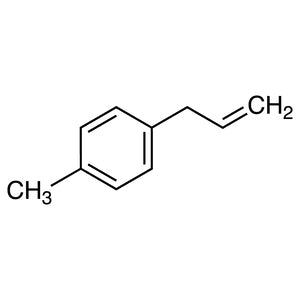
4-Allyltoluene TCI A3685
Regular price Rp 1.644.300,00Regular price -
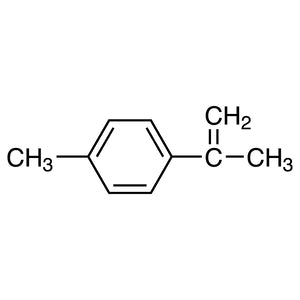
4-Isopropenyltoluene(stabilizedwithTBC) TCI I0693
Regular price From Rp 3.340.050,00Regular price -
IsopropenylAcetate TCI A0035
Regular price From Rp 477.750,00Regular price -
9-Vinylanthracene TCI V0130
Regular price From Rp 2.545.200,00Regular price -
1,4-Bis(4-methylstyryl)benzene TCI B1550
Regular price Rp 5.194.350,00Regular price -
Allylbenzene TCI P0609
Regular price From Rp 1.565.550,00Regular price -
beta-Methylstyrene(cis-andtrans-mixture)(stabilizedwithTBC) TCI P0495
Regular price Rp 4.771.200,00Regular price -
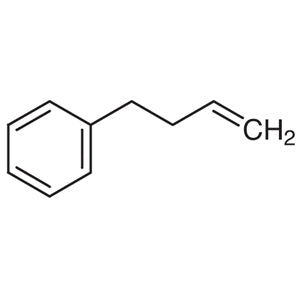
4-Phenyl-1-butene TCI P0161
Regular price From Rp 848.400,00Regular price