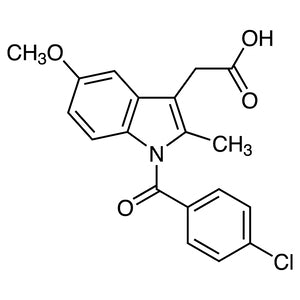
Indomethacin is a chemical compound widely utilized in life sciences research, particularly in the preparation of animal disease models. It is a key reagent in biochemical studies due to its potent anti-inflammatory, antipyretic, and analgesic properties. Its ability to inhibit the synthesis of prostaglandins makes it essential for investigating inflammatory processes and immune responses in biological systems. In laboratory settings, Indomethacin is frequently employed to explore disease mechanisms and the effects of pharmaceutical compounds on biological systems, making it a versatile tool for researchers.
The compound is favored for its stability and availability, which ensure consistent results across experiments. Its chemical structure allows it to effectively inhibit cyclooxygenase (COX) enzymes, a critical factor in the production of prostaglandins. This property makes it highly relevant in drug research and inflammation-related therapies. Additionally, Indomethacin exhibits resistance to degradation under certain environmental conditions, enhancing its reliability for long-term use in experimental studies.
In Indonesian laboratories, Indomethacin is commonly used in studies related to chronic diseases and inflammatory conditions. Its role in creating controlled disease models enables researchers to test new treatments and understand the physiological responses of organisms. The compound's reliability and broad applicability make it a preferred choice for both academic and industrial research in the region.
TCI brochures (PDF)
- Exosome Inhibitors 2025-09-05 · p. 1
- Fluorescent Probes for the Characterization of Two Specific Drug Binding Sites on HSA 2025-04-01 · p. 4
- Regenerative Medicine Research Reagents 2016-03-18 · p. 1
- Anti-Rheumatoid Arthritis Ingredients 2025-01-29 · p. 1
- Lipid Mediator Research Reagents 2026-04-10 · p. 1
- Reagents for Preparing Animal Disease Models 2024-09-13 · p. 2
- Indomethacin is used in inflammation research to study the effects of COX inhibition on prostaglandin synthesis and inflammatory responses.
- It is applied in animal disease modeling to simulate chronic inflammatory conditions and evaluate therapeutic interventions.
- The compound supports immunological studies by helping researchers analyze immune system interactions with inflammatory mediators.
- It is utilized in pharmacological testing to assess the efficacy and safety of new drugs in biological systems.
- Indomethacin is employed in toxicology studies to evaluate the long-term effects of chemical exposure on biological tissues.
| Brand | TCI |
|---|---|
| CAS number | 53-86-1 |
| Molecular formula | — |
| Purity | — |
| Category | Life Science > Biochemicals and Reagents > Animal Disease Models Preparation |
| Pack sizes | Available in various quantities as per standard laboratory requirements |
| Physical form | Solid powder |
| Storage | Store in a cool, dry place away from light and moisture |
Indomethacin should be stored in a cool, dry environment to maintain its chemical stability and prevent degradation. It is recommended to keep the compound in a sealed container to minimize exposure to moisture and air. Due to its potential for chemical reactivity, it should be handled with appropriate personal protective equipment, such as gloves and safety goggles. Storage in a well-ventilated area is essential to avoid any risk of inhalation. The compound should not be stored near incompatible substances to ensure safety in the laboratory. Regular monitoring of storage conditions helps maintain the integrity of the material for reliable experimental results.
References cited in the TCI brochure
- Jong Hyun Kim. Dissecting exosome inhibitors: therapeutic insights into small-molecule chemicals against cancer Experimental & Molecular Medicine, 2022. doi:10.1038/s12276-022-00898-7
- Jamie Ghuman. Structural Basis of the Drug-binding Specificity of Human Serum Albumin Journal of Molecular Biology, 2005. doi:10.1016/j.jmb.2005.07.075
- Masaki OTAGIRI. Study on Binding of Drug to Serum Protein YAKUGAKU ZASSHI, 2009. doi:10.1248/yakushi.129.413
Product Categories
- Biochemicals and ReagentsAnimal Disease Models PreparationReagents for Inflammation and Immunity Disorder Models
- Biochemicals and ReagentsEnzymes, Enzyme Inhibitors, Enzyme SubstratesEnzymes [by Application]
- Biochemicals and ReagentsEnzymes, Enzyme Inhibitors, Enzyme SubstratesEnzyme Inhibitors [Biochemicals and Reagents]
- Biochemicals and ReagentsPharmaceutical Research Reagents (for Experimental Use)Anti-inflammatory Ingredients (for Research and Experimental Use)
- Biochemicals and ReagentsPharmaceutical Research Reagents (for Experimental Use)Anti-rheumatoid Arthritis Ingredients (for Research and Experimental Use)
- Biochemicals and Reagents
- Cell BiologyCancer ResearchAntitumor Agents for Research
- Cell BiologyCancer ResearchChemopreventive Agents [Cancer Research]
- Cell BiologyImmune System, Inflammation, Allergy ResearchCyclooxygenase (COX) Inhibitors
- Cell BiologyStem Cell BiologyRegenerative Medicine Research Reagents
- Cell BiologyExosome ResearchExosome Inhibitors
- Molecular BiologyRegenerative Medicine Research Reagents
- Pharmaceutical Development and Drug Discovery ResearchPharmaceutical Research Reagents (for Experimental Use)Anti-inflammatory Ingredients (for Research and Experimental Use)
- Pharmaceutical Development and Drug Discovery ResearchPharmaceutical Research Reagents (for Experimental Use)Anti-rheumatoid Arthritis Ingredients (for Research and Experimental Use)
Produk Terkait
-
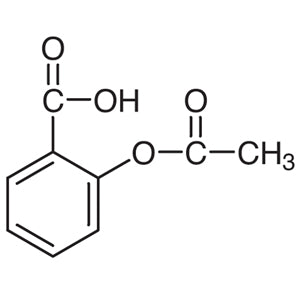
AcetylsalicylicAcid TCI A2262
Regular price Rp 530.250,00Regular priceRp 386.400,00Sale price Rp 530.250,00 -
Etodolac TCI E0858
Regular price Rp 1.618.050,00Regular priceRp 1.146.600,00Sale price Rp 1.618.050,00 -
Piroxicam TCI P1905
Regular price Rp 5.935.650,00Regular priceRp 4.166.400,00Sale price Rp 5.935.650,00 -
Oxaprozin TCI O0377
Regular price Rp 1.643.250,00Regular priceRp 1.164.450,00Sale price Rp 1.643.250,00 -
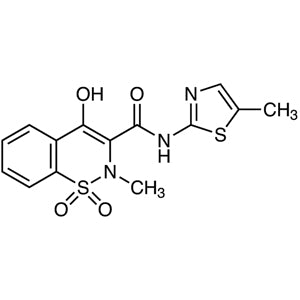
Meloxicam TCI M1959
Regular price Rp 928.200,00Regular priceRp 664.650,00Sale price Rp 928.200,00 -
(S)-(+)-2-(6-Methoxy-2-naphthyl)propionicAcid TCI M1021
Regular price Rp 2.227.050,00Regular priceRp 1.572.900,00Sale price Rp 2.227.050,00 -
KetorolacTromethamine TCI K0053
Regular price Rp 1.431.150,00Regular priceRp 1.016.400,00Sale price Rp 1.431.150,00 -
Ketoprofen TCI K0038
Regular price Rp 2.942.100,00Regular priceRp 2.072.700,00Sale price Rp 2.942.100,00