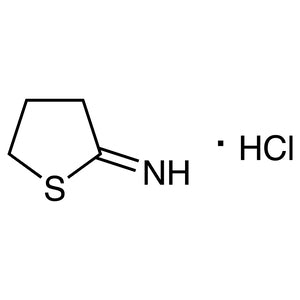
2-Iminothiolane Hydrochloride is a chemical compound widely used in organic chemistry reactions. It belongs to the class of heterocyclic building blocks, which are essential in the synthesis of complex molecules. This compound is known for its ability to participate in various chemical transformations, including substitution reactions and bond formation. Its unique structure allows it to interact with multiple functional groups, making it a versatile reagent in synthetic chemistry. Due to its reactivity and structural versatility, it is frequently used in laboratory settings to develop compounds with specific biological properties.
The compound's high reactivity and structural complexity make it a preferred choice for researchers in both academic and industrial settings. Its ability to form stable intermediates and participate in a wide range of chemical reactions enhances its utility in synthetic pathways. The presence of sulfur atoms in its structure also contributes to its reactivity, enabling it to act as a nucleophile or electrophile depending on the reaction conditions. These properties make it a valuable tool for chemists working on drug development and material synthesis.
In Indonesian laboratories, 2-Iminothiolane Hydrochloride is commonly used in research related to bioactive compounds, pharmaceuticals, and biotechnology. It is particularly favored for its role in the synthesis of antioxidants and antimicrobial agents. Its availability in solid form and ease of handling make it a popular choice among researchers. Its widespread use in both educational and research institutions highlights its importance in advancing scientific knowledge in Indonesia.
- Organic synthesis applications benefit from its reactivity and ability to form complex molecular structures, making it ideal for creating bioactive compounds.
- Pharmaceutical research utilizes this compound for the development of drugs with antioxidant and antimicrobial properties due to its structural versatility.
- Biotecnology experiments often incorporate this reagent for the synthesis of compounds with specific biological functions, supporting innovation in life sciences.
- Educational institutions use it in teaching laboratories to demonstrate heterocyclic chemistry and synthetic methodologies to students.
- Industrial research labs apply it in the production of specialized chemicals, leveraging its chemical properties for advanced material development.
| Brand | TCI |
|---|---|
| CAS number | 4781-83-3 |
| Molecular formula | — |
| Purity | — |
| Category | Chemistry > Building Blocks > Heterocyclic Building Blocks |
| Pack sizes | Available in various quantities as per standard laboratory supply |
| Physical form | Solid |
| Storage | Store in a cool, dry place away from moisture and direct sunlight |
This compound should be stored in a cool, dry environment to maintain its chemical integrity. It is recommended to keep it in a sealed container to prevent exposure to moisture, which can affect its stability. Due to its reactivity, it should be handled with care in a well-ventilated area. Laboratory personnel should wear appropriate personal protective equipment, such as gloves and safety goggles, when working with this substance. It is important to ensure that the storage area is free from incompatible materials to prevent any unwanted chemical interactions. Proper labeling of containers is essential for safe handling and to minimize the risk of accidental exposure.
—
Produk Terkait
-
TCI B5774 5,10-Bis(4,4,5,5-tetramethyl-1,3,2-dioxaborolan-2-yl)naphtho[1,2-c:5,6-c']bis([1,2,5]oxadiazole)
Regular price Rp 10.255.350,00Regular price -
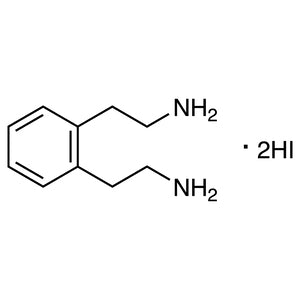
Dihydroiodide TCI B6569
Regular price From Rp 1.936.200,00Regular price -
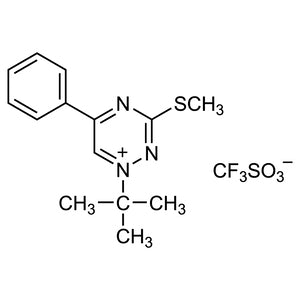
Trifluoromethanesulfonate TCI B7003
Regular price From Rp 1.936.200,00Regular price
![5,10-Bis(4,4,5,5-tetramethyl-1,3,2-dioxaborolan-2-yl)naphtho[1,2-c:5,6-c']bis([1,2,5]oxadiazole) - TCI B5774 - AMI Scientific](http://amiscientific.com/cdn/shop/files/TCI2510B5774.jpg?v=1769180228&width=533)