Iron(III) Hexacyanoferrate(II) is a coordination compound of iron and cyanoferrate that has been historically known as a classic blue pigment, and today serves as an important functional material in inorganic chemistry and electrochemistry research. Its structure takes the form of a porous lattice framework in which iron centres exist in two different oxidation states, bridged by cyano ligands. This arrangement gives the compound its characteristic electron transfer and ion exchange behaviour, which is why it has been widely studied as an electrode material, a redox mediator, and a selective ion sorbent.
The properties that make this material a preferred choice are the stability of its lattice framework, its very intense colour, and its reversible redox behaviour that is readily observed using voltammetric techniques. The cavities within the lattice structure allow cations of a certain size to enter, and this forms the basis of its use in ion sorption and energy storage research. The material comes as a solid powder that is practical to weigh out, requires no complicated handling conditions, and can be dispersed to prepare thin films on electrode surfaces in sensor experiments.
Laboratories in Indonesia make use of this material in analytical electrochemistry research, in the modification of electrode surfaces, and in inorganic and materials chemistry studies. It is typically handled at the laboratory bench in small quantities, weighed directly as a powder, and then dispersed or deposited according to the requirements of the experimental method being followed. Its straightforward handling makes it suitable for both university teaching laboratories and research groups working on sensors and functional materials.
- Chemically modified electrode preparation — the material can be dispersed and deposited as a thin film on an electrode surface, giving a stable redox-active layer for electroanalytical work.
- Redox mediator studies — its reversible and readily observable redox behaviour allows it to shuttle electrons in experiments where direct electron transfer at the bare electrode is slow or poorly defined.
- Electrochemical sensor research — the combination of a stable lattice framework and clear voltammetric response makes it a common platform for developing sensing methods in analytical chemistry laboratories.
- Selective ion sorption studies — the cavities within the porous lattice admit cations of a particular size, making it a useful model material for research on ion uptake and separation.
- Energy storage materials research — the same cation-accommodating lattice structure underpins its study as a functional electrode material in laboratory-scale energy storage investigations.
| Brand | TCI |
|---|---|
| CAS number | 14038-43-8 |
| Molecular formula | — |
| Purity | — |
| Category | Chemistry > Catalysis and Inorganic Chemistry > Transition Elements [Catalysis and Inorganic Chemistry] |
| Pack sizes | available in standard TCI catalogue pack sizes; please refer to the packaging options listed on this page |
| Physical form | solid powder |
| Storage | keep in a tightly closed container in a cool, dry place away from direct sunlight |
- Product code: I0849
Store the material in its original tightly closed container in a cool, dry, and well ventilated place, protected from direct sunlight and from moisture that could affect the powder. Glass or chemically compatible plastic containers with secure closures are suitable for any subsample transferred for routine work, and each container should be clearly labelled with the compound name and CAS number. Handle the powder in a well ventilated area or fume hood to limit the formation and inhalation of airborne dust, and wear standard laboratory personal protective equipment including a laboratory coat, safety glasses, and suitable gloves. Avoid contact with strong acids and other incompatible reagents, weigh the material carefully to minimise dust generation, and close the container promptly after use. Clean any spilled powder immediately, wash hands after handling, and dispose of residues and contaminated materials in accordance with the chemical waste procedures applied in your laboratory.
—
Produk Terkait
-
TCI B5774 5,10-Bis(4,4,5,5-tetramethyl-1,3,2-dioxaborolan-2-yl)naphtho[1,2-c:5,6-c']bis([1,2,5]oxadiazole)
Regular price Rp 10.255.350,00Regular price -
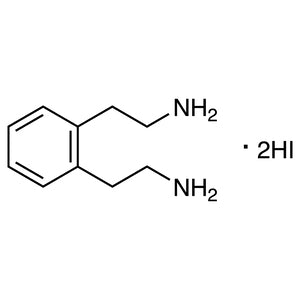
Dihydroiodide TCI B6569
Regular price From Rp 1.936.200,00Regular price -
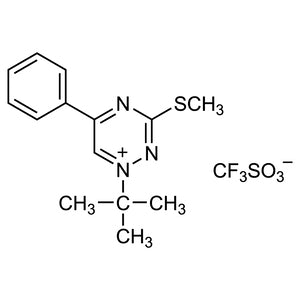
Trifluoromethanesulfonate TCI B7003
Regular price From Rp 1.936.200,00Regular price
![5,10-Bis(4,4,5,5-tetramethyl-1,3,2-dioxaborolan-2-yl)naphtho[1,2-c:5,6-c']bis([1,2,5]oxadiazole) - TCI B5774 - AMI Scientific](http://amiscientific.com/cdn/shop/files/TCI2510B5774.jpg?v=1769180228&width=533)