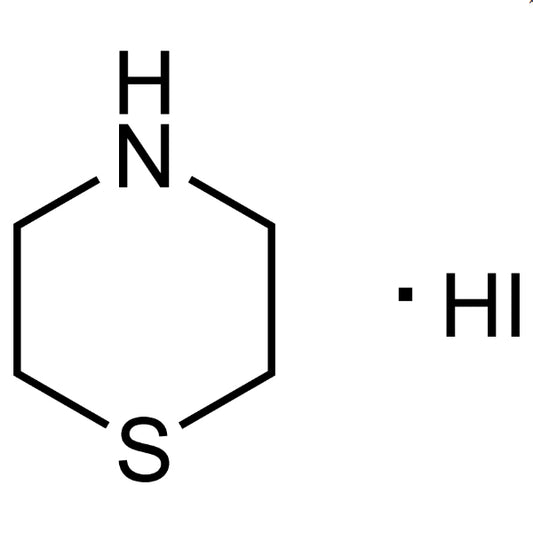
Imidazole Hydroiodide (Low water content) is a chemical compound widely used in materials science research, particularly in the development of perovskite solar cells (PSCs). This material plays a crucial role in the synthesis and modification of perovskite-based materials, which are essential components in next-generation photovoltaic technologies. Its application in laboratories spans across various stages of material fabrication, including precursor preparation and film deposition. Due to its chemical stability and reactivity, it is a valuable reagent for enhancing the performance and durability of solar cell structures.
The key properties that make Imidazole Hydroiodide a preferred choice include its high purity, low water content, and compatibility with both organic and inorganic compounds. These characteristics ensure reliable and reproducible results in experimental settings. The low moisture level is especially important in applications where contamination or unwanted chemical reactions must be minimized. This makes it ideal for use in sensitive material research, where precision and consistency are paramount.
In Indonesian laboratories, Imidazole Hydroiodide is extensively utilized in perovskite solar cell research, particularly in academic and research institutions focused on renewable energy. It is a key component in the development of efficient and stable photovoltaic materials, contributing to the advancement of sustainable energy solutions. Its availability through suppliers like AMI Scientific supports ongoing scientific innovation in the region.
Related TCI products
- TCI A2902 1452099-14-7 Acetamidine Hydroiodide (Low water content)
- TCI M2589 6876-37-5 Methylamine Hydrobromide (Low water content)
- TCI M2556 14965-49-2 Methylamine Hydroiodide (Low water content)
- TCI I1006 101023-55-6 Imidazole Hydrobromide (Low water content)
- TCI F0974 879643-71-7 Formamidine Hydroiodide (Low water content)
- TCI F0973 146958-06-7 Formamidine Hydrobromide (Low water content)
- Perovskite Solar Cell Fabrication: This material is essential for synthesizing perovskite precursors, ensuring high-quality thin films with optimal optical and electronic properties.
- Material Modification and Doping: It is used to modify the chemical composition of perovskite materials, enhancing their conductivity and stability under operational conditions.
- Precursor Solution Preparation: Imidazole Hydroiodide is commonly used to create stable and homogeneous precursor solutions for spin-coating or inkjet printing processes.
- Stability Testing of Photovoltaic Materials: Its low water content helps in maintaining the integrity of perovskite structures during long-term stability and performance evaluations.
- Research in Renewable Energy Technologies: It supports studies focused on improving the efficiency and durability of solar cells, contributing to the development of sustainable energy solutions.
| Brand | TCI |
|---|---|
| CAS number | 68007-08-9 |
| Molecular formula | — |
| Purity | — |
| Category | Materials Science > Electronic Materials > Perovskite Solar Cell (PSC) Materials |
| Pack sizes | Available in various quantities as per standard laboratory requirements |
| Physical form | Solid powder |
| Storage | Store in a cool, dry place away from moisture and direct sunlight |
Imidazole Hydroiodide should be stored in a cool, dry environment to maintain its low water content and chemical stability. It is recommended to use airtight containers made of glass or high-density polyethylene to prevent moisture absorption and contamination. Due to its chemical reactivity, it should be handled with appropriate personal protective equipment, including gloves and safety goggles. Avoid exposure to heat or direct light, as these can affect its purity and performance. In laboratory settings, it is important to ensure proper ventilation when handling this material to minimize any potential health risks. Always follow standard chemical safety protocols to ensure safe usage and storage.
—
Produk Terkait
-
AcetamidineHydroiodide(Lowwatercontent) TCI A2902
Regular price From Rp 1.749.300,00Regular price -
MethylamineHydrobromide(Lowwatercontent) TCI M2589
Regular price From Rp 903.000,00Regular price -
MethylamineHydroiodide(Lowwatercontent) TCI M2556
Regular price From Rp 823.200,00Regular price -
ImidazoleHydrobromide(Lowwatercontent) TCI I1006
Regular price From Rp 1.298.850,00Regular price -
FormamidineHydroiodide(Lowwatercontent) TCI F0974
Regular price From Rp 1.565.550,00Regular price -
FormamidineHydrobromide(Lowwatercontent) TCI F0973
Regular price From Rp 1.193.850,00Regular price -
1,3-DiaminopropaneDihydrochloride(Lowwatercontent) TCI D5253
Regular price From Rp 1.405.950,00Regular price -
ThiomorpholineHydroiodide TCI T4375
Regular price From Rp 1.936.200,00Regular price