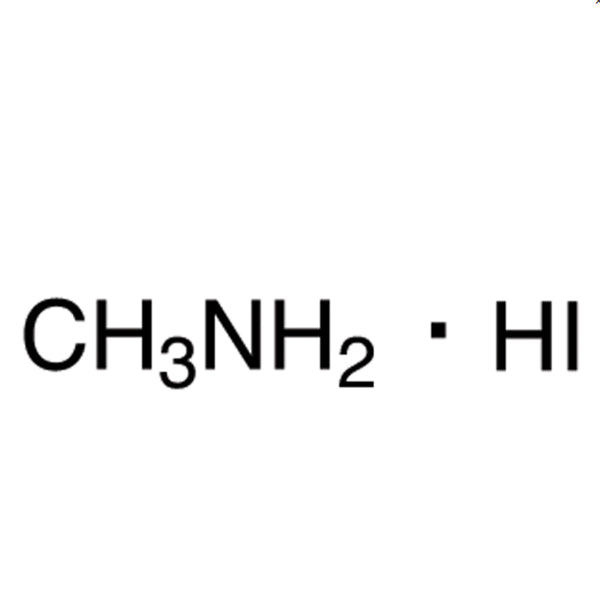
Methylamine Hydroiodide (MHI) is a chemical compound widely used in scientific research, particularly in the field of electronic materials and energy. This material plays a crucial role in the development of perovskite solar cells (PSCs), which are among the most promising technologies in renewable energy research. As a key component in the fabrication of PSCs, MHI contributes to the formation of the active layer, enhancing the efficiency of converting sunlight into electricity. Its presence in the structure of perovskite materials is essential for achieving optimal performance in photovoltaic applications.
The unique chemical properties of MHI make it a preferred choice for researchers. It exhibits chemical stability and the ability to interact effectively with both organic and inorganic materials. The low water content in this product ensures high purity and consistency, which are critical for maintaining the integrity of experimental results. This characteristic is especially important in laboratory settings where precision and accuracy are paramount. The stable nature of MHI also allows for reliable performance across multiple experimental cycles, making it a trusted material in advanced research.
In Indonesian laboratories, MHI is commonly used in studies related to renewable energy and electronic materials. Research institutions and universities across the country rely on this compound for experiments aimed at developing more efficient and environmentally friendly solar cell technologies. Its application is central to the advancement of photovoltaic research in the region, supporting the growth of sustainable energy solutions.
TCI brochures (PDF)
- Hole Transport Materials for Stable Perovskite Solar Cells TOP-HTMs 2024-02-02 · p. 4
- Surface Treatment Reagent for Perovskite Solar Cells DMPESI 2024-04-05 · p. 2
- Phenylethylamine Hydroiodides for Surface Treatment of Perovskite Layer 2024-07-23 · p. 2
- Perovskite Precursor: Lead Acetate Anhydrous 2025-01-16 · p. 1
- Perovskite Precursor for Solar Cell Purified Lead(II) Iodide 2023-12-28 · p. 2
- High Purity Perovskite Precursor Purified Lead(II) Bromide 2024-04-04 · p. 2
Related TCI products
- TCI A2902 1452099-14-7 Acetamidine Hydroiodide (Low water content)
- TCI M2589 6876-37-5 Methylamine Hydrobromide (Low water content)
- TCI I1006 101023-55-6 Imidazole Hydrobromide (Low water content)
- TCI I0970 68007-08-9 Imidazole Hydroiodide (Low water content)
- TCI F0974 879643-71-7 Formamidine Hydroiodide (Low water content)
- TCI F0973 146958-06-7 Formamidine Hydrobromide (Low water content)
- Perovskite Solar Cell Fabrication: MHI is essential for creating the active layer in PSCs, enhancing light absorption and charge transport properties.
- Energy Conversion Efficiency Testing: The compound is used to evaluate the performance of solar cells under various conditions, ensuring accurate and reproducible results.
- Organic-Inorganic Material Interaction Studies: MHI’s ability to interact with both organic and inorganic substances makes it ideal for studying material compatibility in advanced devices.
- Renewable Energy Research: It supports the development of next-generation solar technologies, contributing to the global shift towards sustainable energy solutions.
- Photovoltaic Device Optimization: MHI is used to fine-tune the composition of perovskite materials, improving the overall efficiency and stability of solar cells.
From the TCI brochure
- Reactant with Pb(OAc)2 in the proposed formation mechanism of CH3NH3PbI3 (perovskite)
| Brand | TCI |
|---|---|
| CAS number | 14965-49-2 |
| Molecular formula | — |
| Purity | — |
| Category | Materials Science > Electronic Materials > Perovskite Solar Cell (PSC) Materials |
| Pack sizes | — |
| Physical form | Solid |
| Storage | Store in a cool, dry place away from moisture and direct sunlight |
Data from the TCI brochure
| Water | < 100 ppm |
|---|
Source: TCI brochure FF070 (2025-01-16)
Methylamine Hydroiodide should be stored in a cool, dry environment to maintain its chemical stability and prevent degradation. It is recommended to use airtight containers to minimize exposure to moisture, which can affect its purity and performance. Due to its chemical nature, it should be handled with care, and appropriate personal protective equipment should be worn when working with the compound. Avoid contact with skin and eyes, and ensure proper ventilation in the laboratory to reduce any potential risks. Regular monitoring of storage conditions is advised to ensure the material remains suitable for use in research applications.
—
Produk Terkait
-
AcetamidineHydroiodide(Lowwatercontent) TCI A2902
Regular price From Rp 1.801.800,00Regular priceRp 1.275.750,00Sale price From Rp 1.801.800,00 -
MethylamineHydrobromide(Lowwatercontent) TCI M2589
Regular price From Rp 903.000,00Regular priceRp 631.050,00Sale price From Rp 903.000,00 -
ImidazoleHydrobromide(Lowwatercontent) TCI I1006
Regular price From Rp 1.351.350,00Regular priceRp 960.750,00Sale price From Rp 1.351.350,00 -
ImidazoleHydroiodide(Lowwatercontent) TCI I0970
Regular price From Rp 1.988.700,00Regular priceRp 1.405.950,00Sale price From Rp 1.988.700,00 -
FormamidineHydroiodide(Lowwatercontent) TCI F0974
Regular price From Rp 1.618.050,00Regular priceRp 1.146.600,00Sale price From Rp 1.618.050,00 -
FormamidineHydrobromide(Lowwatercontent) TCI F0973
Regular price From Rp 1.246.350,00Regular priceRp 887.250,00Sale price From Rp 1.246.350,00 -
1,3-DiaminopropaneDihydrochloride(Lowwatercontent) TCI D5253
Regular price From Rp 1.405.950,00Regular priceRp 982.800,00Sale price From Rp 1.405.950,00 -
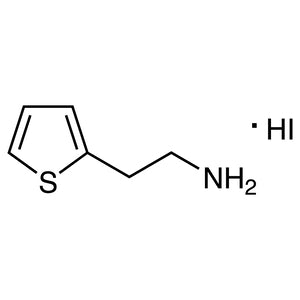
2-(Thiophen-2-yl)ethan-1-amineHydroiodide TCI A3720
Regular price From Rp 1.431.150,00Regular priceRp 1.016.400,00Sale price From Rp 1.431.150,00