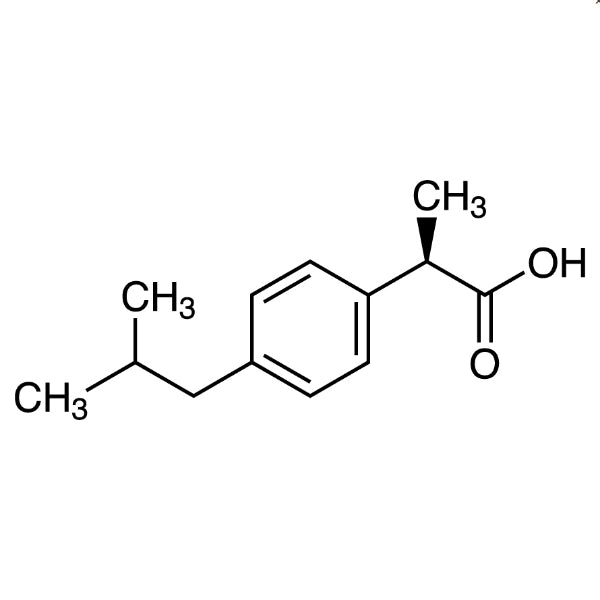
(R)-(-)-Ibuprofen is a pharmacological compound widely used in laboratory research focused on the immune system, inflammation, and allergy studies. As an active analog of ibuprofen, it plays a crucial role in understanding the molecular mechanisms underlying inflammatory responses in cells and tissues. Its strong anti-inflammatory, analgesic, and antipyretic properties make it an essential tool for investigating the biological pathways involved in immune activation and disease progression. This compound is particularly valuable for researchers aiming to explore the effects of inflammation on cellular function and immune response regulation.
The specificity of (R)-(-)-Ibuprofen’s molecular structure allows it to interact precisely with target receptors and enzymes, ensuring reliable and reproducible experimental results. Its stability under controlled conditions further enhances its utility in laboratory settings, enabling consistent performance across various research applications. The compound’s well-defined biological activity ensures that it provides accurate data, making it a preferred choice for studies requiring high precision and reliability. Its chemical properties also support its use in the development of new therapeutic agents and drug formulations.
In Indonesian laboratories, (R)-(-)-Ibuprofen is commonly used in research related to inflammatory diseases such as arthritis and asthma. It serves as a key reagent in drug development and clinical testing, supporting both basic and applied research. Its role in understanding immune responses and inflammatory mechanisms makes it an indispensable tool for scientists working in the fields of immunology and pharmacology.
- Inflammation Research: (R)-(-)-Ibuprofen is ideal for studying the molecular pathways involved in inflammatory responses due to its strong anti-inflammatory properties.
- Immune System Studies: This compound helps researchers investigate how inflammation affects immune cell function and signaling pathways.
- Allergy Research: Its ability to modulate inflammatory responses makes it useful in studying allergic reactions and immune hypersensitivity.
- Drug Development: The compound is used in the formulation and testing of new therapeutic agents due to its well-characterized pharmacological profile.
- Clinical Testing: (R)-(-)-Ibuprofen supports preclinical trials by providing a reliable model for assessing the efficacy and safety of new drugs.
| Brand | TCI |
|---|---|
| CAS number | 51146-57-7 |
| Molecular formula | — |
| Purity | — |
| Category | Life Science > Cell Biology > Immune System, Inflammation, Allergy Research |
| Pack sizes | As available from supplier |
| Physical form | Solid (as per standard chemical properties) |
| Storage | Store in a cool, dry place away from light and moisture |
(R)-(-)-Ibuprofen should be stored in a cool, dry environment to maintain its stability and prevent degradation. It is recommended to keep the compound in a tightly sealed container to minimize exposure to moisture and air. Suitable storage conditions include a controlled room temperature, ideally between 15°C and 25°C. Avoid direct sunlight and high humidity to preserve its chemical integrity. In laboratory settings, it is important to handle the compound with appropriate personal protective equipment, such as gloves and safety goggles, to ensure safety during handling and experimentation. Proper labeling and storage practices help maintain the quality and usability of the compound for research purposes.
—
Produk Terkait
-
(S)-(+)-Ibuprofen TCI I0549
Regular price From Rp 530.250,00Regular priceRp 386.400,00Sale price From Rp 530.250,00 -
Ibuprofen TCI I0415
Regular price From Rp 2.677.500,00Regular priceRp 1.887.900,00Sale price From Rp 2.677.500,00 -
4-AminosalicylicAcid TCI A0420
Regular price From Rp 822.150,00Regular priceRp 590.100,00Sale price From Rp 822.150,00 -
Sodium4-AminosalicylateDihydrate TCI A0423
Regular price From Rp 928.200,00Regular priceRp 664.650,00Sale price From Rp 928.200,00 -
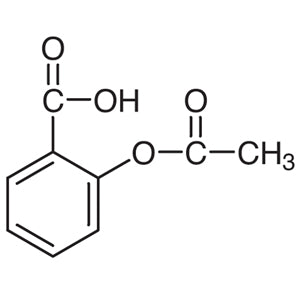
AcetylsalicylicAcid TCI A2262
Regular price From Rp 530.250,00Regular priceRp 386.400,00Sale price From Rp 530.250,00 -
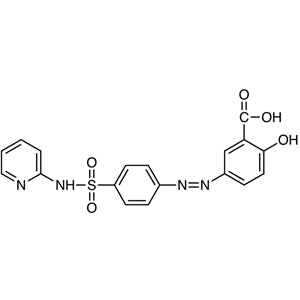
Sulfasalazine TCI S0580
Regular price Rp 3.312.750,00Regular priceRp 2.332.050,00Sale price Rp 3.312.750,00 -
QNZ TCI Q0109
Regular price From Rp 2.702.700,00Regular priceRp 1.905.750,00Sale price From Rp 2.702.700,00 -
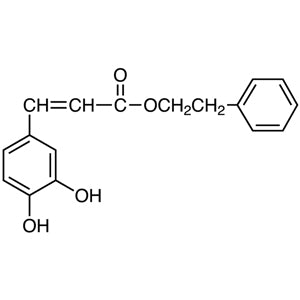
PhenethylCaffeate TCI P2088
Regular price From Rp 1.087.800,00Regular priceRp 775.950,00Sale price From Rp 1.087.800,00