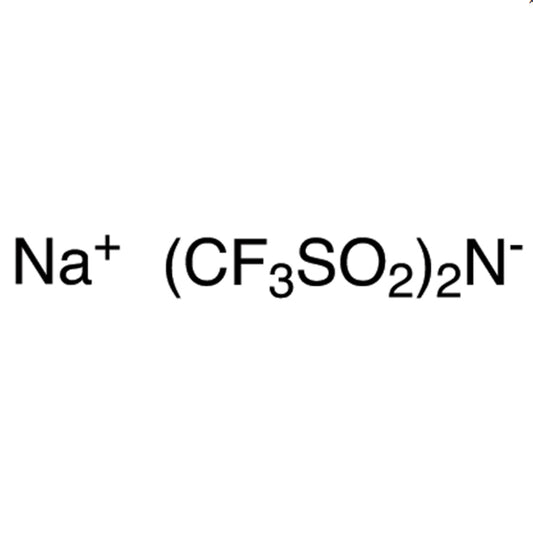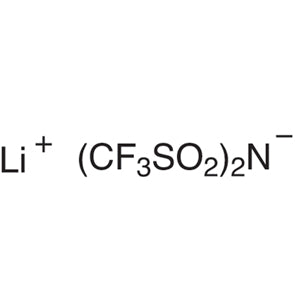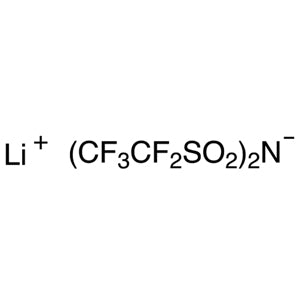
Lithium Bis(pentafluoroethanesulfonyl)imide (LiBF₄) is an inorganic salt widely used in chemical reactions, particularly in catalysis and inorganic chemistry. This compound plays a crucial role in laboratory settings by serving as an effective electrolyte in electrochemical systems. Its strong ionic properties make it a valuable component in various experimental setups, where it facilitates ion transfer and enhances reaction efficiency. Due to its stability and consistent performance, LiBF₄ is a reliable choice for researchers working on complex chemical processes that require precise control over ionic behavior.
One of the key reasons LiBF₄ is preferred is its high melting point, which ensures stability under a wide range of temperatures. Additionally, it exhibits excellent electrochemical properties, making it ideal for applications such as battery development and electroplating. The compound’s non-corrosive nature under normal conditions also contributes to its safety profile, allowing it to be used in laboratory environments with proper handling. These characteristics collectively make LiBF₄ a versatile and dependable material for both academic and industrial research.
In Indonesian laboratories, LiBF₄ is commonly used in electrochemical research and development. Its role in creating stable electrolyte solutions is vital for experiments involving voltaic cells and battery systems. The compound’s reliability and consistent performance make it a staple in chemical laboratories, supporting a variety of applications that require stable and efficient ionic behavior. Its widespread use underscores its importance in both teaching and research settings across Indonesia.
TCI brochures (PDF)
- Practical Lithium Ion Battery Electrolytes with Low Water Content 2024-10-23 · p. 1
- Lithium Electrolytes 2026-04-06 · p. 1
- Lithium Compounds for Research and Experimental Use 2026-02-10 · p. 2
- Lithium Battery Research Reagents 2026-06-04 · p. 2
- Solar Cell Materials 2026-04-21 · p. 10
- Metallic Salts 2025-11-06 · p. 13
Related TCI products
- TCI L0295 192998-62-2 Lithium (Fluorosulfonyl)(trifluoromethanesulfonyl)imide
- TCI Z0027 168106-25-0 Zinc(II) Bis(trifluoromethanesulfonyl)imide
- TCI S0989 91742-21-1 Sodium Bis(trifluoromethanesulfonyl)imide
- TCI C3263 165324-09-4 Calcium(II) Bis(trifluoromethanesulfonyl)imide
- TCI B2542 90076-65-6 Lithium Bis(trifluoromethanesulfonyl)imide
- TCI L0307 119229-99-1 Lithium Bis(nonafluorobutanesulfonyl)imide
- Electrochemical research utilizes LiBF₄ as a stable electrolyte for voltaic cell experiments due to its high ionic conductivity and thermal stability.
- Battery development benefits from LiBF₄’s ability to maintain consistent ion transfer, essential for creating efficient and reliable power storage systems.
- Electroplating processes rely on LiBF₄ to provide a stable and conductive medium, enhancing the quality and uniformity of metal coatings.
- Catalytic reactions in inorganic chemistry often incorporate LiBF₄ to facilitate ion transfer, thereby increasing reaction efficiency and selectivity.
- Analytical chemistry applications use LiBF₄ in electrochemical sensors to ensure accurate and reproducible measurements under controlled conditions.
| Brand | TCI |
|---|---|
| CAS number | 132843-44-8 |
| Molecular formula | — |
| Purity | — |
| Category | Chemistry > Catalysis and Inorganic Chemistry > Main-group Elements |
| Pack sizes | Available in standard laboratory quantities as per supplier specifications |
| Physical form | Solid powder |
| Storage | Store in a cool, dry place away from moisture and incompatible substances |
LiBF₄ should be stored in a cool, dry environment to maintain its stability and prevent degradation. It is recommended to use airtight containers to protect it from moisture and air exposure. Due to its non-corrosive nature under normal conditions, it is generally safe to handle with standard laboratory precautions. However, care should be taken to avoid direct contact with skin and eyes, and appropriate personal protective equipment should be worn during handling. The compound should be kept away from incompatible materials to ensure long-term stability and safety in the laboratory setting.
—
Product Categories
Produk Terkait
-
Lithium(Fluorosulfonyl)(trifluoromethanesulfonyl)imide TCI L0295
Regular price From Rp 2.809.800,00Regular priceRp 1.980.300,00Sale price From Rp 2.809.800,00 -
Zinc(II)Bis(trifluoromethanesulfonyl)imide TCI Z0027
Regular price From Rp 1.618.050,00Regular priceRp 1.146.600,00Sale price From Rp 1.618.050,00 -
SodiumBis(trifluoromethanesulfonyl)imide TCI S0989
Regular price From Rp 1.405.950,00Regular priceRp 998.550,00Sale price From Rp 1.405.950,00 -
Calcium(II)Bis(trifluoromethanesulfonyl)imide TCI C3263
Regular price From Rp 1.961.400,00Regular priceRp 1.387.050,00Sale price From Rp 1.961.400,00 -
LithiumBis(trifluoromethanesulfonyl)imide TCI B2542
Regular price From Rp 1.483.650,00Regular priceRp 1.053.150,00Sale price From Rp 1.483.650,00 -
LithiumBis(nonafluorobutanesulfonyl)imide TCI L0307
Regular price From Rp 1.167.600,00Regular priceRp 831.600,00Sale price From Rp 1.167.600,00 -
LithiumBis(fluorosulfonyl)imide TCI L0281
Regular price From Rp 1.644.300,00Regular priceRp 1.149.750,00Sale price From Rp 1.644.300,00 -
Barium(II)Bis(trifluoromethanesulfonyl)imide TCI B5171
Regular price From Rp 1.961.400,00Regular priceRp 1.387.050,00Sale price From Rp 1.961.400,00