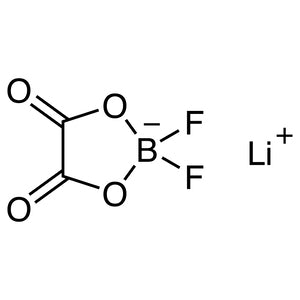
Lithium Difluoro(oxalato)borate (LiBF₂(oxalate)) is a chemical compound widely used in laboratory settings, particularly in catalysis and inorganic chemistry. This compound is valued for its ability to participate in various chemical reactions, offering high reactivity under controlled conditions. Its unique structure, composed of lithium ions and difluoro(oxalato)borate ions, makes it a versatile reagent in both organic and inorganic synthesis. The compound is commonly found in research laboratories where it serves as a catalyst or a reagent in complex chemical processes. Due to its chemical stability and reactivity, it is an essential component in many experimental protocols.
The properties of Lithium Difluoro(oxalato)borate make it a preferred choice in laboratory applications. It exhibits good solubility in organic solvents, which facilitates its use in electrochemical reactions and as a supporting electrolyte. Its ionic structure allows it to act as a charge carrier, enhancing conductivity in electrochemical systems. Additionally, the compound is chemically stable under controlled conditions, ensuring reliable performance in various experimental setups. These characteristics make it an ideal candidate for applications requiring high catalytic efficiency and electrochemical activity.
In Indonesian laboratories, Lithium Difluoro(oxalato)borate is extensively used in chemical research, especially in catalysis and electrochemistry. It is a common reagent in academic and industrial research institutions, supporting the development of new materials and chemical processes. Its role in the synthesis of organic and inorganic compounds is crucial, making it a fundamental component in the chemical toolkit of Indonesian scientists and researchers.
TCI brochures (PDF)
- Lithium Electrolytes 2026-04-06 · p. 1
- Lithium Compounds for Research and Experimental Use 2026-02-10 · p. 2
- Battery Research Reagents 2026-09-18 · p. 3
- Boron Compounds 2025-10-07 · p. 28
Related TCI products
- TCI L0367 244761-29-3 Lithium Bis(oxalate)borate
- TCI L0133 14283-07-9 Lithium Tetrafluoroborate
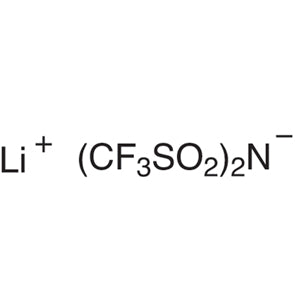
- TCI B2542 90076-65-6 Lithium Bis(trifluoromethanesulfonyl)imide
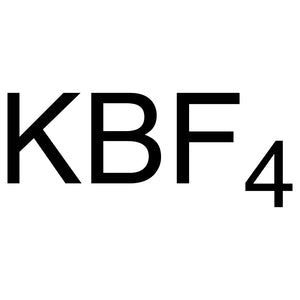
- TCI P2565 14075-53-7 Potassium Tetrafluoroborate
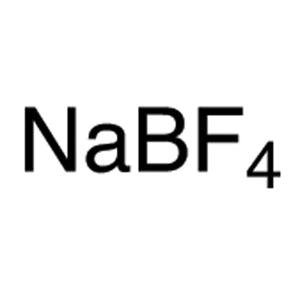
- TCI O0494 13755-29-8 Sodium Tetrafluoroborate
- TCI L0420 176719-70-3 Lithium [(Nonafluorobutyl)sulfonyl][(trifluoromethyl)sulfonyl]azanide
- Electrochemical research utilizes this compound as a supporting electrolyte due to its high ionic conductivity and stability in solution.
- Catalytic synthesis benefits from its ability to enhance reaction rates and selectivity in organic and inorganic reactions.
- Redox reactions often incorporate this material because of its redox-active properties and compatibility with various reaction conditions.
- Electrolyte preparation in battery research leverages its ionic conductivity and solubility in organic solvents.
- Precipitation processes benefit from its solubility characteristics and ability to influence crystal growth in solution.
| Brand | TCI |
|---|---|
| CAS number | 409071-16-5 |
| Molecular formula | — |
| Purity | — |
| Category | Chemistry > Catalysis and Inorganic Chemistry > Metallic Salts |
| Pack sizes | Available in various quantities as per standard laboratory supply |
| Physical form | Solid powder |
| Storage | Store in a cool, dry place away from moisture and direct sunlight |
Lithium Difluoro(oxalato)borate should be stored in a cool, dry environment to maintain its chemical stability and prevent degradation. It is recommended to use airtight containers to protect it from moisture and atmospheric humidity. Due to its ionic nature, it is advisable to store it in a well-ventilated area to avoid any potential reaction with moisture in the air. When handling, it is important to use appropriate personal protective equipment such as gloves and safety goggles to ensure safety. The compound should be kept away from incompatible materials to prevent any unwanted chemical interactions. Proper labeling and storage conditions are essential to ensure safe handling and long-term usability in laboratory settings.
—
Product Categories
Produk Terkait
-
LithiumBis(oxalate)borate TCI L0367
Regular price From Rp 1.458.450,00Regular price -
LithiumTetrafluoroborate TCI L0133
Regular price Rp 2.386.650,00Regular price -
LithiumBis(trifluoromethanesulfonyl)imide TCI B2542
Regular price From Rp 1.431.150,00Regular price -
PotassiumTetrafluoroborate TCI P2565
Regular price From Rp 610.050,00Regular price -
SodiumTetrafluoroborate TCI O0494
Regular price From Rp 505.050,00Regular price -
Lithium[(Nonafluorobutyl)sulfonyl][(trifluoromethyl)sulfonyl]azanide TCI L0420
Regular price From Rp 3.340.050,00Regular price -
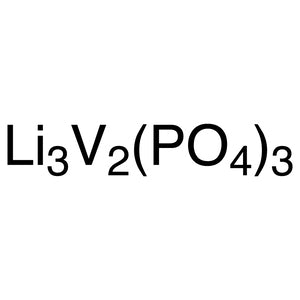
LithiumVanadiumPhosphate(Li3V2(PO4)3) TCI L0417
Regular price From Rp 3.683.400,00Regular price -
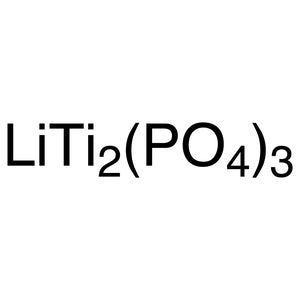
LithiumTitaniumPhosphate(LiTi2(PO4)3) TCI L0416
Regular price From Rp 3.870.300,00Regular price


![176719-70-3 Lithium [(Nonafluorobutyl)sulfonyl][(trifluoromethyl)sulfonyl]azanide - AMI Scientific](http://amiscientific.com/cdn/shop/files/TCI2510L0420.jpg?v=1767121891&width=533)