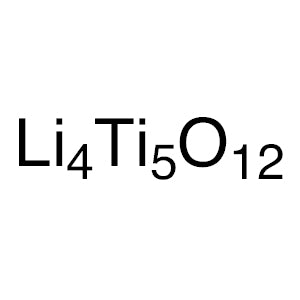
Lithium Titanate (Spinel), with the CAS number 12031-95-7, is a chemical compound widely used in laboratory settings, particularly in the fields of catalysis and inorganic chemistry. This compound is known for its unique spinel crystal structure, which contributes to its effectiveness in various chemical reactions and electrochemical processes. As a metallic salt, it plays a crucial role in facilitating oxidation and reduction reactions, making it a valuable tool for researchers and chemists. Its stability and controlled reactivity make it a reliable choice for both academic and industrial applications.
The properties of Lithium Titanate (Spinel) that make it a preferred choice include its excellent ion conductivity, thermal stability, and non-corrosive nature. These characteristics ensure that it remains effective under a wide range of experimental conditions. Additionally, its resistance to reaction with water simplifies storage and handling, which is essential in a laboratory environment. The compound’s ability to serve as an active material in lithium-ion batteries further highlights its versatility and importance in modern scientific research.
In Indonesian laboratories, Lithium Titanate (Spinel) is commonly used in research related to electrochemistry, catalysis, and material science. Its role in developing new battery technologies and improving catalytic processes is particularly significant. Due to its stability and reactivity, it is a key component in experiments aimed at advancing sustainable energy solutions and chemical innovation. Its widespread use in both academic and industrial settings underscores its importance in the scientific community.
- Electrochemical research benefits from Lithium Titanate (Spinel) due to its high ion conductivity and stability, making it ideal for battery material development.
- Catalytic applications leverage the compound’s ability to facilitate oxidation and reduction reactions, enhancing reaction efficiency in chemical processes.
- Material science experiments utilize Lithium Titanate (Spinel) for its structural properties, aiding in the creation of advanced composite materials.
- Analytical chemistry uses the compound for its controlled reactivity and stability, ensuring accurate and reproducible results in testing procedures.
- Energy storage research relies on Lithium Titanate (Spinel) for its role in lithium-ion battery technology, supporting sustainable energy solutions.
| Brand | TCI |
|---|---|
| CAS number | 12031-95-7 |
| Molecular formula | — |
| Purity | — |
| Category | Chemistry > Catalysis and Inorganic Chemistry > Metallic Salts |
| Pack sizes | Available in various quantities as per supplier specifications |
| Physical form | Solid powder |
| Storage | Store in a cool, dry place away from moisture and direct sunlight |
Lithium Titanate (Spinel) should be stored in a cool, dry environment to maintain its chemical stability and prevent degradation. It is recommended to keep the compound in airtight containers to minimize exposure to moisture, which could affect its performance. Since it is not reactive with water, it can be safely stored in standard laboratory containers, provided they are sealed to prevent contamination. General laboratory precautions include handling with gloves and appropriate personal protective equipment to ensure safety during use. The compound’s non-corrosive nature makes it suitable for use in a wide range of experimental setups without compromising the integrity of laboratory equipment.
—
Produk Terkait
-
TCI B5774 5,10-Bis(4,4,5,5-tetramethyl-1,3,2-dioxaborolan-2-yl)naphtho[1,2-c:5,6-c']bis([1,2,5]oxadiazole)
Regular price Rp 10.255.350,00Regular price -
Dihydroiodide TCI B6569
Regular price From Rp 1.936.200,00Regular price -
Trifluoromethanesulfonate TCI B7003
Regular price From Rp 1.936.200,00Regular price
![5,10-Bis(4,4,5,5-tetramethyl-1,3,2-dioxaborolan-2-yl)naphtho[1,2-c:5,6-c']bis([1,2,5]oxadiazole) - TCI B5774 - AMI Scientific](http://amiscientific.com/cdn/shop/files/TCI2510B5774.jpg?v=1769180228&width=533)