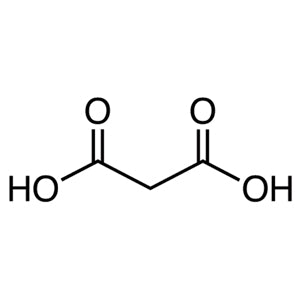
Malonic acid (TCI M0028, CAS 141-82-2) is an organic compound widely used in laboratory settings for its versatile chemical properties. As a strong acid, it plays a crucial role in organic synthesis, particularly in substitution reactions and esterification processes. Its reactivity and ability to interact with various functional groups make it an essential reagent in synthetic chemistry. Malonic acid is also commonly used as a building block for the production of other compounds with applications in pharmaceuticals, industrial processes, and research.
One of the key features of malonic acid is its ability to act as a proton donor and a pH regulator. Its molecular structure, which includes a carbonil group, enables participation in a variety of chemical reactions such as Diels-Alder reactions, catalytic processes, and hydrolysis. Additionally, malonic acid has a relatively high melting point and good solubility in organic solvents, which enhances its usability in different experimental conditions. These properties make it a preferred choice for chemists working in both academic and industrial laboratories.
In Indonesian laboratories, malonic acid is frequently used in both pure and applied chemical research. It is a staple in academic institutions and research centers where organic synthesis and analytical chemistry are conducted. Its availability and reliability make it a go-to reagent for a wide range of chemical experiments and industrial applications. Its role in supporting scientific innovation is well recognized in the local scientific community.
TCI brochures (PDF)
- Lipids 2025-12-17 · p. 8
- Organic synthesis is a key application where malonic acid is used for substitution reactions and esterification due to its strong acidic properties and reactivity.
- pH regulation in chemical processes benefits from malonic acid's ability to act as a proton donor, making it ideal for buffer solutions and acid-base titrations.
- Catalytic reactions often utilize malonic acid because of its ability to participate in various reaction mechanisms, enhancing reaction efficiency and selectivity.
- Analytical chemistry applications rely on malonic acid for its solubility and reactivity, supporting spectroscopic and chromatographic analyses.
- Industrial chemical production uses malonic acid as a precursor for synthesizing pharmaceuticals and other specialty chemicals due to its versatile functional groups.
| Brand | TCI |
|---|---|
| CAS number | 141-82-2 |
| Molecular formula | — |
| Purity | — |
| Category | Chemistry > Synthetic Reagents > Acids, Bases [Synthetic Reagents] |
| Pack sizes | Available in various quantities as per standard laboratory supply specifications |
| Physical form | Solid, crystalline |
| Storage | Store in a cool, dry place away from moisture and direct sunlight |
Malonic acid should be stored in a cool, dry place, away from moisture and direct sunlight to maintain its chemical integrity. It is recommended to use airtight containers made of glass or polyethylene to prevent contamination and degradation. Due to its acidic nature, it should be handled with appropriate personal protective equipment, such as gloves and safety goggles. In laboratory settings, it is important to ensure proper ventilation to avoid inhalation of fumes. Malonic acid is non-flammable but can cause skin and eye irritation, so careful handling is essential. Always follow standard safety protocols when working with this reagent to ensure a safe and effective laboratory environment.
—
Produk Terkait
-
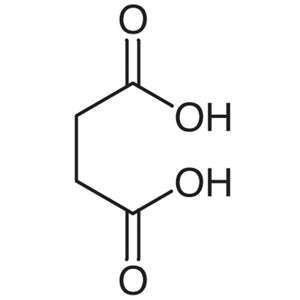
SuccinicAcid TCI S0100
Regular price From Rp 477.750,00Regular price -
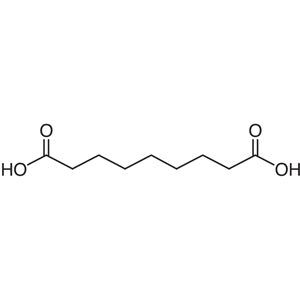
AzelaicAcid TCI A0561
Regular price From Rp 505.050,00Regular price -
AdipicAcid TCI A0161
Regular price From Rp 452.550,00Regular price -
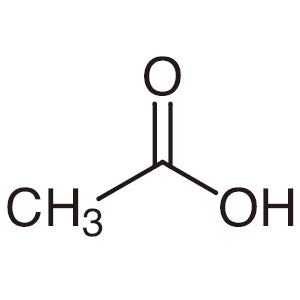
AceticAcid TCI A2035
Regular price Rp 477.750,00Regular price -
AzelaicAcid TCI A1318
Regular price From Rp 795.900,00Regular price -
TetradecanedioicAcid TCI T0704
Regular price From Rp 2.121.000,00Regular price -
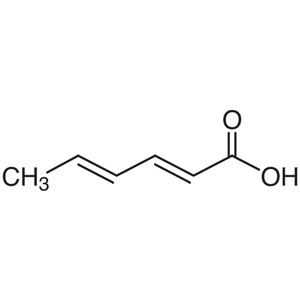
SorbicAcid TCI S0053
Regular price From Rp 452.550,00Regular price -
SebacicAcid TCI S0022
Regular price From Rp 505.050,00Regular price