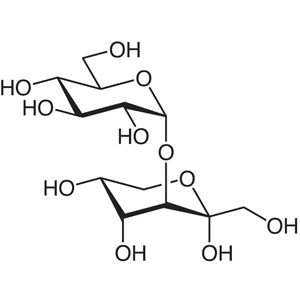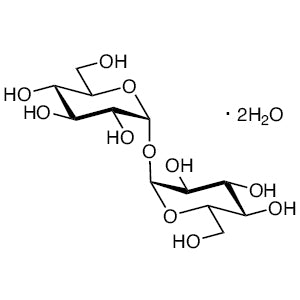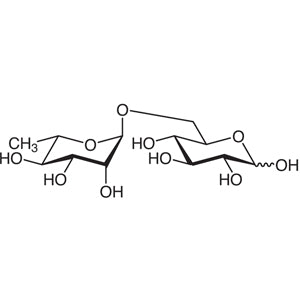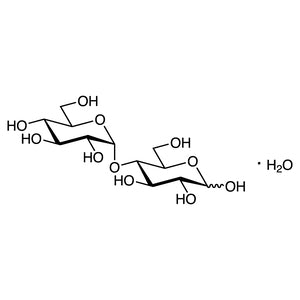
D-(+)-Maltose Monohydrate is a carbohydrate compound widely used in chemical and biochemical experiments. It is a disaccharide composed of two glucose units linked by a glycosidic bond, making it a key reducing sugar in carbohydrate metabolism studies. This compound plays a vital role in laboratory settings by serving as a substrate for enzymatic reactions and a building block for the synthesis of more complex molecules. Its presence in various research fields highlights its importance in understanding biological processes and developing new chemical compounds.
The stability of D-(+)-Maltose Monohydrate in terms of both physical and chemical properties makes it a preferred choice for high-precision experiments. It dissolves well in water, allowing for easy preparation of solutions, which is essential for many biochemical assays. The high purity of this compound ensures accurate concentration levels and consistent results, making it ideal for research that demands reliability. Its solubility and stability also contribute to its versatility in different experimental setups.
In Indonesian laboratories, D-(+)-Maltose Monohydrate is commonly used in biochemical, pharmacological, and nutritional research. It is frequently found in chemical, biological, and medical laboratories, especially in studies related to metabolism, enzyme testing, and food product development. Its widespread application underscores its value as a fundamental reagent in scientific investigations.
TCI brochures (PDF)
- Enzymatic Reaction Studies: D-(+)-Maltose Monohydrate serves as a substrate for enzymes like amylase, making it ideal for studying enzymatic activity and metabolic pathways.
- Carbohydrate Metabolism Research: Its role as a reducing sugar makes it essential for experiments analyzing sugar metabolism and glycolytic processes.
- Food Product Development: It is used in the formulation of food products to study texture, sweetness, and stability under various conditions.
- Biochemical Assays: The compound is commonly used in assays that require precise carbohydrate concentrations for accurate results.
- Nutritional Studies: It helps in analyzing the impact of carbohydrates on biological systems and metabolic responses in living organisms.
| Brand | TCI |
|---|---|
| CAS number | 6363-53-7 |
| Molecular formula | — |
| Purity | — |
| Category | Chemistry > Chemical Biology > Glycoscience |
| Pack sizes | Available in various quantities as per supplier specifications |
| Physical form | White crystalline powder |
| Storage | Store in a cool, dry place away from moisture and light |
D-(+)-Maltose Monohydrate should be stored in a cool, dry environment to maintain its stability and prevent degradation. It is recommended to keep the compound in airtight containers to avoid moisture absorption, which can affect its purity and solubility. Due to its hygroscopic nature, it is important to ensure that the storage area is free from humidity and temperature fluctuations. When handling, use appropriate personal protective equipment to avoid direct contact with skin or inhalation. It should be stored away from incompatible substances to maintain safety in the laboratory setting.
—
Product Categories
Produk Terkait
-
Xylobiose TCI X0067
Regular price From Rp 4.268.250,00Regular price -
Isomaltose TCI I0231
Regular price From Rp 1.220.100,00Regular price -
Xylosucrose TCI X0065
Regular price From Rp 2.041.200,00Regular price -
D-(+)-TrehaloseAnhydrous TCI T0832
Regular price From Rp 1.115.100,00Regular price -
D-(+)-Turanose TCI T0542
Regular price From Rp 2.279.550,00Regular price -
D-(+)-TrehaloseDihydrate TCI T0331
Regular price From Rp 505.050,00Regular price -
Rutinose TCI R0062
Regular price Rp 11.766.300,00Regular price -
PalatinoseHydrate TCI P1234
Regular price From Rp 664.650,00Regular price