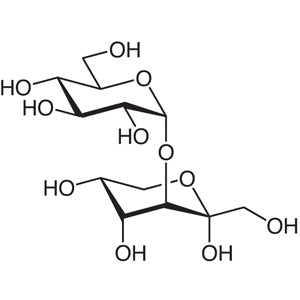
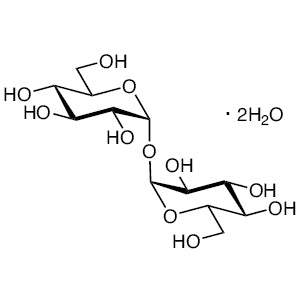
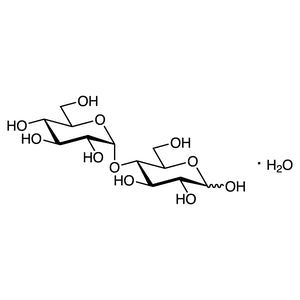
TCI R0062 90-74-4 Rutinose is a chemical compound widely used in chemical and biochemical experiments within laboratory settings. As a monosaccharide, it plays a crucial role in glycoscience research, particularly in the study of glycosides and molecular interactions. Its simple molecular structure allows it to serve as a fundamental building block in the synthesis of more complex compounds. Rutinose is also commonly used as a reagent in qualitative and quantitative analysis, making it an essential tool for researchers in various scientific disciplines.
The chemical properties of Rutinose make it a preferred choice for laboratory applications. It exhibits stability under certain conditions but is sensitive to moisture and air exposure, which requires careful handling. Its ability to form bonds with other molecules enhances its utility in reactions requiring high reactivity. Additionally, Rutinose is highly soluble in water, making it suitable for use in aqueous solutions and polar solvent-based reactions. These characteristics contribute to its versatility in both organic and biochemical experiments.
In Indonesian laboratories, Rutinose is frequently employed in biomedical, pharmacological, and organic chemistry research. It is particularly relevant for studies involving carbohydrate metabolism, drug development, and molecular interaction analysis. Its availability and reliability make it a valuable resource for scientists conducting research in these fields. The compound's consistent performance supports its use in both academic and industrial research settings.
TCI brochures (PDF)
- Biomedical research utilizes Rutinose to study carbohydrate metabolism and its impact on cellular processes.
- Pharmacological studies benefit from Rutinose as a reagent in the synthesis of complex drug molecules.
- Organic chemistry experiments often employ Rutinose due to its reactivity and solubility in polar solvents.
- Biochemical analysis relies on Rutinose for its role in qualitative and quantitative testing of molecular interactions.
- Molecular interaction studies use Rutinose to investigate binding properties and structural relationships in glycoscience.
| Brand | TCI |
|---|---|
| CAS number | 90-74-4 |
| Molecular formula | — |
| Purity | — |
| Category | Chemistry > Chemical Biology > Glycoscience |
| Pack sizes | — |
| Physical form | — |
| Storage | Store in a cool, dry place away from moisture and air exposure. |
Rutinose should be stored in a cool, dry environment to prevent degradation due to moisture and air exposure. It is recommended to use airtight containers to minimize contact with atmospheric humidity. Since Rutinose is highly soluble in water, it should be kept away from sources of moisture to maintain its chemical integrity. Laboratory personnel should handle the compound with care, using appropriate personal protective equipment to ensure safety. Proper labeling of storage containers is essential for identifying and managing the material effectively. Regular monitoring of storage conditions helps maintain the quality and usability of Rutinose in research applications.
—
Product Categories
Produk Terkait
-
Xylobiose TCI X0067
Regular price From Rp 4.320.750,00Regular priceRp 3.036.600,00Sale price From Rp 4.320.750,00 -
Xylosucrose TCI X0065
Regular price From Rp 2.093.700,00Regular priceRp 1.479.450,00Sale price From Rp 2.093.700,00 -
D-(+)-TrehaloseAnhydrous TCI T0832
Regular price From Rp 1.167.600,00Regular priceRp 831.600,00Sale price From Rp 1.167.600,00 -
D-(+)-Turanose TCI T0542
Regular price From Rp 2.332.050,00Regular priceRp 1.646.400,00Sale price From Rp 2.332.050,00 -
D-(+)-TrehaloseDihydrate TCI T0331
Regular price From Rp 557.550,00Regular priceRp 405.300,00Sale price From Rp 557.550,00 -
PalatinoseHydrate TCI P1234
Regular price From Rp 717.150,00Regular priceRp 516.600,00Sale price From Rp 717.150,00 -
D-(+)-MelibioseMonohydrate TCI M0050
Regular price From Rp 557.550,00Regular priceRp 405.300,00Sale price From Rp 557.550,00 -
D-(+)-MaltoseMonohydrate TCI M0037
Regular price From Rp 505.050,00Regular priceRp 368.550,00Sale price From Rp 505.050,00