

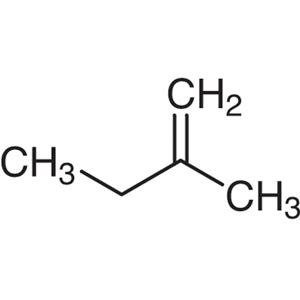
2-Methyl-1-butene is an organic compound widely used as a foundational building block in various chemical reactions. It plays a crucial role in the synthesis of both heterocyclic and non-heterocyclic compounds, making it an essential material for chemists working in research and development. Its simple molecular structure allows for versatile reactivity, enabling it to participate in a range of chemical transformations such as addition, substitution, and polymerization. This versatility makes it a valuable resource in synthetic chemistry.
The compound is known for its reactivity and chemical stability under controlled conditions. Its relatively low boiling and melting points make it easy to handle in processes like distillation and evaporation. These physical properties contribute to its popularity in laboratory settings where precise control over reaction conditions is necessary. Additionally, its ability to react with various reagents enhances its utility in complex chemical syntheses.
In Indonesian laboratories, 2-Methyl-1-butene is commonly used in organic synthesis and the development of new chemical materials. It is frequently found in university research labs and scientific institutions due to its broad applications and availability. Its role in chemical research continues to be vital for advancing scientific knowledge and innovation in the field.
Related TCI products
- TCI T0671 594-56-9 2,3,3-Trimethyl-1-butene
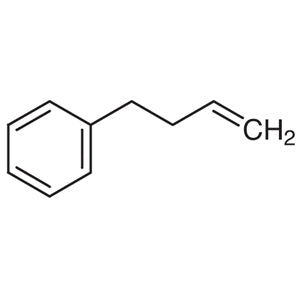
- TCI P0161 768-56-9 4-Phenyl-1-butene
- TCI P0067 513-35-9 2-Methyl-2-butene
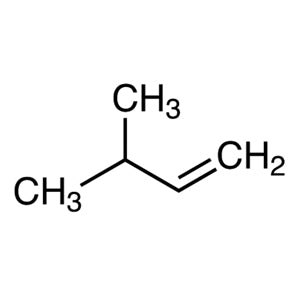
- TCI M2565 563-45-1 3-Methyl-1-butene (ca 125% in Tetrahydrofuran, ca 15mol/L)
- TCI M2563 563-45-1 3-Methyl-1-butene (ca. 15% in Dichloromethane, ca. 2.5mol/L)
- TCI M0708 513-35-9 2-Methyl-2-butene
- Organic synthesis: 2-Methyl-1-butene is widely used in the synthesis of complex organic compounds due to its reactivity and versatility in chemical reactions.
- Polymerization reactions: Its ability to undergo polymerization makes it suitable for creating various types of polymers in laboratory settings.
- Reagent compatibility: The compound is compatible with a wide range of reagents, making it a preferred choice for diverse chemical experiments.
- Teaching and research: It is commonly used in academic institutions for both teaching and research purposes, supporting educational and scientific advancements.
- Industrial chemical development: Its role in the development of new chemical materials supports innovation in the chemical industry.
| Brand | TCI |
|---|---|
| CAS number | 563-46-2 |
| Molecular formula | — |
| Purity | — |
| Category | Chemistry > Building Blocks > Non-Heterocyclic Building Blocks |
| Pack sizes | Available in various quantities as per standard laboratory supply |
| Physical form | Liquid |
| Storage | Store in a cool, dry place away from direct sunlight |
2-Methyl-1-butene should be stored in a cool, dry place, away from direct sunlight and sources of heat. It is recommended to use airtight containers to prevent exposure to air and moisture, which may affect its stability. Due to its reactivity, it should be handled with care, using appropriate personal protective equipment such as gloves and safety goggles. It is important to ensure good ventilation in the laboratory to minimize inhalation risks. Avoid mixing with incompatible substances to prevent unwanted chemical reactions. Proper storage and handling are essential to maintain the compound's integrity and ensure safe laboratory practices.
—
Produk Terkait
-
2,3,3-Trimethyl-1-butene TCI T0671
Regular price From Rp 980.700,00Regular price -
4-Phenyl-1-butene TCI P0161
Regular price From Rp 848.400,00Regular price -
2-Methyl-2-butene TCI P0067
Regular price From Rp 1.060.500,00Regular price -
3-Methyl-1-butene(ca125%inTetrahydrofuran,ca15mol/L) TCI M2565
Regular price From Rp 1.538.250,00Regular price -
3-Methyl-1-butene(ca.15%inDichloromethane,ca.2.5mol/L) TCI M2563
Regular price Rp 6.996.150,00Regular price -
2-Methyl-2-butene TCI M0708
Regular price From Rp 610.050,00Regular price -
3-Methyl-1-butene(incylinderwithoutvalve)[Tousethisproductchargedincylinder,avalveisrequiredwhichissoldseparately(ProductCode:V0030)] TCI M0177
Regular price Rp 5.274.150,00Regular price -
2-Ethyl-1-butene TCI E0067
Regular price From Rp 3.683.400,00Regular price




![563-45-1 3-Methyl-1-butene (in cylinder without valve) [To use this product charged in cylinder, a valve is required which is sold separately (Product Code:V0030)] - AMI Scientific](http://amiscientific.com/cdn/shop/files/TCI2510M0177.jpg?v=1767122381&width=533)
