1-Methylpyrrolidine is a chemical compound classified under the heterocyclic category, featuring a pyrrolidine ring with one nitrogen atom and a methyl group. This compound plays a crucial role in laboratory settings as a building block for the synthesis of complex molecules. Its versatility makes it an essential component in organic and pharmaceutical research, where it serves as a key reagent for creating bioactive compounds. In the context of Indonesian laboratories, it is widely used for research and development purposes, supporting advancements in both academic and industrial chemical applications.
The compound is known for its high reactivity and ability to form various functional groups, making it a preferred choice in nucleophilic and substitution reactions. Its polar nature and liquid state facilitate easy mixing and separation during chemical processes. Additionally, its high purity ensures accurate and consistent results in synthetic procedures. These characteristics make 1-Methylpyrrolidine a reliable and efficient reagent in laboratory workflows, particularly in the synthesis of pharmaceuticals and specialty chemicals.
In Indonesian laboratories, 1-Methylpyrrolidine is commonly utilized by researchers and educational institutions for a wide range of applications. It is integral to the development of new drugs, chemical intermediates, and other specialized compounds. Its availability and performance make it a standard reagent in both academic and industrial research environments, contributing to the advancement of chemical sciences in the region.
Related TCI products
- Organic synthesis applications benefit from 1-Methylpyrrolidine due to its ability to participate in nucleophilic reactions and form complex molecular structures.
- Pharmaceutical research utilizes this compound for the synthesis of bioactive molecules, aiding in the development of new therapeutic agents.
- Industrial chemical production relies on 1-Methylpyrrolidine as a building block for creating specialty chemicals and functional intermediates.
- Academic research in chemistry and pharmacology uses this compound to explore molecular interactions and reaction mechanisms.
- Analytical chemistry applications take advantage of its reactivity and solubility properties for compound characterization and structural analysis.
| Brand | TCI |
|---|---|
| CAS number | 120-94-5 |
| Molecular formula | — |
| Purity | — |
| Category | Chemistry > Building Blocks > Heterocyclic Building Blocks |
| Pack sizes | Available in various sizes as per standard laboratory requirements |
| Physical form | Liquid |
| Storage | Store in a cool, dry place away from light and incompatible materials |
1-Methylpyrrolidine should be stored in a cool, dry environment, away from direct sunlight and sources of heat. It is recommended to use sealed containers made of materials compatible with its chemical properties, such as glass or high-density polyethylene. Due to its reactivity, it should be kept away from strong oxidizers and incompatible substances. Proper ventilation is essential when handling this compound to minimize exposure. Laboratory personnel should wear appropriate personal protective equipment, including gloves and safety goggles, to ensure safe handling. Regular monitoring of storage conditions is advised to maintain the compound's stability and effectiveness in research applications.
—
Produk Terkait
-
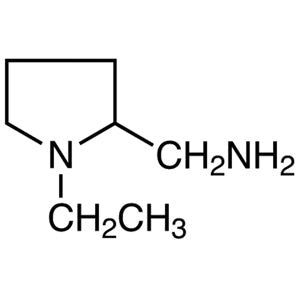
2-(Aminomethyl)-1-ethylpyrrolidine TCI A2556
Regular price From Rp 557.550,00Regular price -
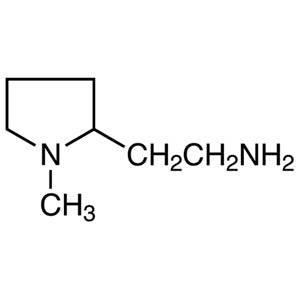
2-(2-Aminoethyl)-1-methylpyrrolidine TCI A2382
Regular price Rp 769.650,00Regular price -
1-Methylpyrrolidine-2-thione TCI M1748
Regular price Rp 2.916.900,00Regular price -
2-(2-Hydroxyethyl)-1-methylpyrrolidine TCI M0908
Regular price From Rp 3.155.250,00Regular price -
1-Ethylpyrrolidine TCI E0510
Regular price From Rp 2.068.500,00Regular price -
1,2,5-Trimethylpyrrole TCI T1939
Regular price From Rp 1.193.850,00Regular price -
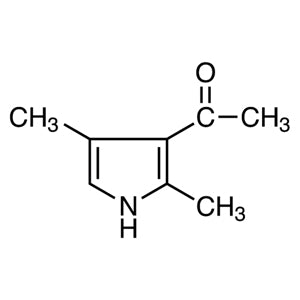
3-Acetyl-2,4-dimethylpyrrole TCI A2734
Regular price From Rp 1.724.100,00Regular price -
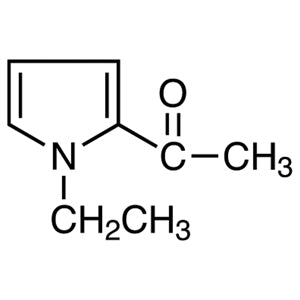
2-Acetyl-1-ethylpyrrole TCI A1977
Regular price From Rp 955.500,00Regular price