2-(2-Hydroxyethyl)-1-methylpyrrolidine is a versatile organic compound widely used in laboratory settings for the synthesis of heterocyclic compounds. As a key building block in organic chemistry, it plays a crucial role in the development of pharmaceuticals, polymers, and industrial chemicals. Its unique molecular structure allows it to participate in various chemical reactions, including substitution, reduction, and oxidation, making it an essential reagent for synthetic chemists. This compound is particularly valuable in the creation of complex molecules that require high reactivity and functional group versatility.
The compound’s polar nature enables it to dissolve in organic solvents such as ethyl acetate and acetone, which facilitates its use in a wide range of chemical reactions. Its stability under specific conditions further enhances its utility in laboratory applications. These properties make it a preferred choice for researchers aiming to develop new compounds with specific chemical functionalities. The compound’s reliability and reactivity contribute to its widespread adoption in both academic and industrial research environments.
In Indonesian laboratories, 2-(2-Hydroxyethyl)-1-methylpyrrolidine is commonly used for scientific research and the development of chemical products. It is a key component in organic synthesis projects and pharmacological studies conducted by research institutions and universities. Its availability and consistent quality make it a reliable material for local researchers working on advanced chemical applications.
Related TCI products
- Pharmaceutical synthesis due to its ability to participate in complex organic reactions and form diverse heterocyclic structures.
- Polymer development as it can act as a functional group precursor in the creation of advanced polymer materials.
- Organic chemistry research because of its reactivity in substitution and oxidation reactions, supporting the synthesis of various compounds.
- Industrial chemical production due to its utility in creating compounds with specific functional groups and chemical properties.
- Pharmacological studies as it can be used as a building block in the synthesis of drug molecules and bioactive compounds.
| Brand | TCI |
|---|---|
| CAS number | 67004-64-2 |
| Molecular formula | — |
| Purity | — |
| Category | Chemistry > Building Blocks > Heterocyclic Building Blocks |
| Pack sizes | Available in various quantities as per standard laboratory supply |
| Physical form | Liquid |
| Storage | Store in a cool, dry place away from direct sunlight |
This compound should be stored in a cool, dry environment, away from direct sunlight and sources of heat. It is recommended to use airtight containers made of glass or polyethylene to prevent contamination and maintain purity. Due to its polar nature, it is important to handle it with appropriate personal protective equipment, including gloves and safety goggles, to avoid skin contact and inhalation. It should be kept in a well-ventilated area to minimize exposure to vapors. Proper labeling of storage containers is essential for safe handling and to ensure that the compound is easily identifiable. Regular inspection of storage conditions is advised to maintain its stability and effectiveness in laboratory applications.
—
Produk Terkait
-
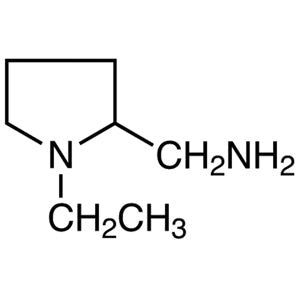
2-(Aminomethyl)-1-ethylpyrrolidine TCI A2556
Regular price From Rp 557.550,00Regular price -
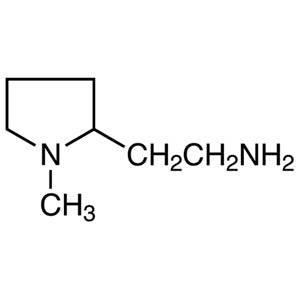
2-(2-Aminoethyl)-1-methylpyrrolidine TCI A2382
Regular price Rp 769.650,00Regular price -
1-Methylpyrrolidine-2-thione TCI M1748
Regular price Rp 2.916.900,00Regular price -
1-Methylpyrrolidine TCI M0415
Regular price From Rp 848.400,00Regular price -
1-Ethylpyrrolidine TCI E0510
Regular price From Rp 2.068.500,00Regular price -
1,4-Bis(2-hydroxyethyl)piperazine TCI B4903
Regular price From Rp 848.400,00Regular price -
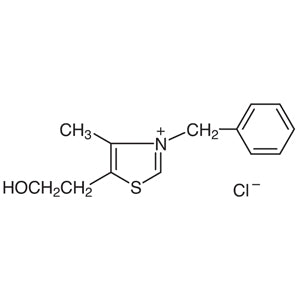
3-Benzyl-5-(2-hydroxyethyl)-4-methylthiazoliumChloride TCI B1224
Regular price Rp 2.227.050,00Regular price -
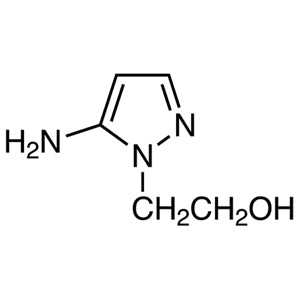
5-Amino-1-(2-hydroxyethyl)pyrazole TCI A2619
Regular price From Rp 1.353.450,00Regular price