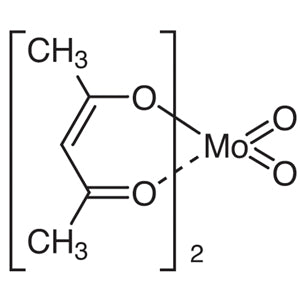
Bis(2,4-pentanedionato)molybdenum(VI) Dioxide is a chemical compound widely used in laboratory settings for catalytic and oxidation reactions. As a molybdenum complex, it plays a crucial role in activating various substrates during chemical transformations. Its unique structure enables it to act as an efficient catalyst, particularly in reactions that require oxidative activation. This compound is especially valuable in synthetic chemistry where precise control over oxidation processes is essential. Its versatility makes it a key component in many advanced chemical experiments.
The compound's stability and reactivity make it a preferred choice for researchers seeking reliable and consistent results. It exhibits high efficiency in facilitating chemical reactions, which is essential for maintaining the accuracy of experimental outcomes. Its ability to bind with different ligands enhances its applicability across a range of chemical processes. These properties contribute to its popularity among scientists working in both academic and industrial research environments. The compound's chemical uniqueness ensures that it remains a valuable tool in the field of catalysis and inorganic chemistry.
In Indonesian laboratories, Bis(2,4-pentanedionato)molybdenum(VI) Dioxide is commonly used in research focused on oxidation reactions and catalytic processes. Its role in enabling controlled and efficient chemical transformations makes it a sought-after material for both educational and industrial applications. Researchers in Indonesia rely on this compound for its reliability and performance in various experimental setups, contributing to the advancement of chemical studies in the region.
TCI brochures (PDF)
- Oxidizing Agents 2025-06-11 · p. 9
- Transition Metal Catalysts 2026-04-10 · p. 6
Related TCI products
- TCI M3401 1313-27-5 Molybdenum(VI) Oxide
- TCI V0016 3153-26-2 Bis(2,4-pentanedionato)vanadium(IV) Oxide
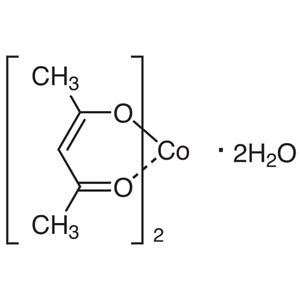
- TCI B2681 14024-48-7 Bis(2,4-pentanedionato)cobalt(II)
- TCI T0746 16092-38-9 Bis(trifluoro-2,4-pentanedionato)cobalt(II)
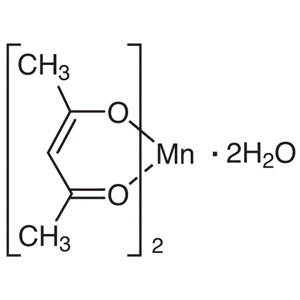
- TCI M0042 22033-51-8 Bis(2,4-pentanedionato)manganese(II) Dihydrate
- TCI I0079 14024-18-1 Tris(2,4-pentanedionato)iron(III)
- Oxidation Reactions: This compound is ideal for oxidation processes due to its ability to activate substrates and facilitate electron transfer, making it suitable for complex organic transformations.
- Catalytic Synthesis: It serves as an efficient catalyst in synthetic reactions, particularly those requiring oxidative activation, enhancing reaction efficiency and yield.
- Inorganic Chemistry Experiments: Its unique structure allows it to participate in various inorganic reactions, making it a valuable tool for studying coordination chemistry and redox processes.
- Analytical Chemistry: It is used in analytical procedures where controlled oxidation is required, ensuring accurate and reproducible results in qualitative and quantitative analyses.
- Environmental Research: Its reactivity and stability make it useful in studying oxidation mechanisms relevant to environmental chemistry and pollutant degradation.
| Brand | TCI |
|---|---|
| CAS number | 17524-05-9 |
| Molecular formula | — |
| Purity | — |
| Category | Chemistry > Catalysis and Inorganic Chemistry > Oxidation [Catalysis] |
| Pack sizes | Available in various quantities to suit different laboratory needs |
| Physical form | Solid, typically in powder or crystalline form |
| Storage | Store in a cool, dry place away from moisture and light |
This compound should be stored in a cool, dry environment to maintain its stability and prevent degradation. It is recommended to keep it in airtight containers to minimize exposure to moisture and air. Due to its chemical nature, it should be handled with care, using appropriate personal protective equipment such as gloves and safety goggles. Avoid direct contact with skin and eyes, and ensure proper ventilation when working with it. It is important to store it away from incompatible substances to prevent any potential chemical reactions. Proper storage ensures the compound remains effective and safe for use in laboratory applications.
—
Produk Terkait
-
Molybdenum(VI)Oxide TCI M3401
Regular price From Rp 557.550,00Regular priceRp 389.550,00Sale price From Rp 557.550,00 -
Bis(2,4-pentanedionato)vanadium(IV)Oxide TCI V0016
Regular price Rp 2.199.750,00Regular priceRp 1.538.250,00Sale price Rp 2.199.750,00 -
Bis(2,4-pentanedionato)cobalt(II) TCI B2681
Regular price Rp 1.696.800,00Regular priceRp 1.186.500,00Sale price Rp 1.696.800,00 -
Bis(trifluoro-2,4-pentanedionato)cobalt(II) TCI T0746
Regular price From Rp 2.597.700,00Regular priceRp 1.832.250,00Sale price From Rp 2.597.700,00 -
Bis(2,4-pentanedionato)manganese(II)Dihydrate TCI M0042
Regular price Rp 1.378.650,00Regular priceRp 963.900,00Sale price Rp 1.378.650,00 -
Tris(2,4-pentanedionato)iron(III) TCI I0079
Regular price From Rp 743.400,00Regular priceRp 519.750,00Sale price From Rp 743.400,00 -
Bis(2,4-pentanedionato)cobalt(II)Dihydrate TCI C0373
Regular price From Rp 2.041.200,00Regular priceRp 1.426.950,00Sale price From Rp 2.041.200,00 -
SeleniumDioxide TCI E1459
Regular price From Rp 848.400,00Regular priceRp 593.250,00Sale price From Rp 848.400,00