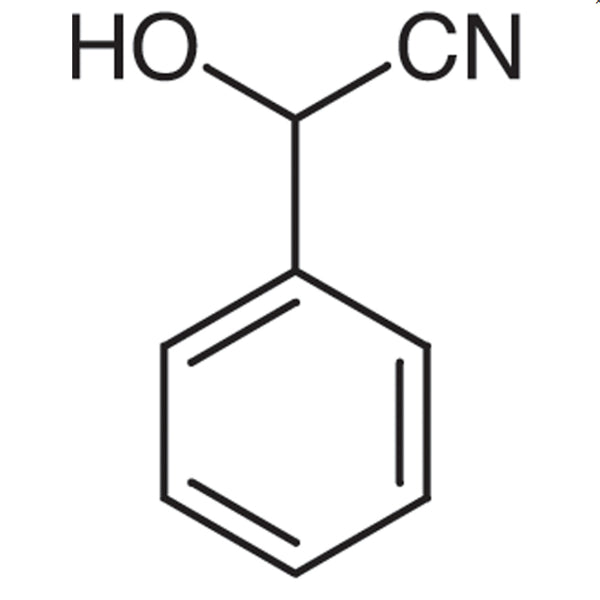
Mandelonitrile, with the CAS number 532-28-5, is a chemical compound widely used in organic synthesis as a building block. It serves as a versatile intermediate in the creation of various organic compounds, particularly those involving aromatic and heterocyclic structures. This compound plays a crucial role in laboratory settings where the synthesis of complex molecules is required. Its chemical stability and controlled reactivity make it a reliable choice for researchers working in diverse fields such as pharmaceuticals, organic chemistry, and analytical chemistry.
One of the key attributes of Mandelonitrile is its high boiling point and good solubility in organic solvents, which facilitate its use in a variety of chemical reactions. These properties allow for efficient separation and purification processes, making it ideal for both small-scale and large-scale laboratory applications. Additionally, its solid form simplifies handling and storage, enhancing its usability in routine chemical procedures. The compound’s predictable behavior under different reaction conditions further supports its application in synthetic pathways.
In Indonesian laboratories, Mandelonitrile is commonly used in scientific research, drug development, and chemical analysis. Its relevance spans across multiple disciplines, including organic chemistry, pharmaceutical sciences, and materials technology. Researchers in Indonesia rely on Mandelonitrile for its reliability and versatility, ensuring consistent results in their experiments. Its widespread use underscores its importance in both academic and industrial laboratory environments.
Related TCI products
- Organic synthesis is a primary application where Mandelonitrile is used to create complex molecules due to its reactivity and structural versatility.
- Pharmaceutical research benefits from Mandelonitrile as a precursor in the development of new drugs, especially in the synthesis of aromatic and heterocyclic compounds.
- Analytical chemistry utilizes Mandelonitrile for its solubility and stability, making it suitable for chromatographic and spectroscopic analyses.
- Material science applications include the synthesis of polymers and functional materials, leveraging Mandelonitrile’s chemical properties.
- Chemical education and training programs use Mandelonitrile to teach fundamental organic reactions and synthetic methodologies.
| Brand | TCI |
|---|---|
| CAS number | 532-28-5 |
| Molecular formula | — |
| Purity | — |
| Category | Chemistry > Building Blocks > Non-Heterocyclic Building Blocks |
| Pack sizes | Available in various quantities as per supplier specifications |
| Physical form | Solid |
| Storage | Store in a cool, dry place away from light and moisture |
Mandelonitrile should be stored in a cool, dry environment, away from direct sunlight and moisture to maintain its chemical stability. It is recommended to use airtight containers made of glass or high-density polyethylene to prevent contamination and degradation. Due to its chemical nature, it is important to handle Mandelonitrile with appropriate personal protective equipment, such as gloves and safety goggles, to ensure laboratory safety. Avoid exposure to incompatible substances, such as strong oxidizing agents, to prevent unwanted reactions. Proper labeling of storage containers is essential for safe handling and easy identification. Regular inspection of storage conditions ensures the integrity of the compound remains intact for laboratory use.
—
Produk Terkait
-
DL-4-Hydroxymandelonitrile TCI H0563
Regular price Rp 4.213.650,00Regular price -
Pimelonitrile TCI P0049
Regular price From Rp 1.167.600,00Regular price -
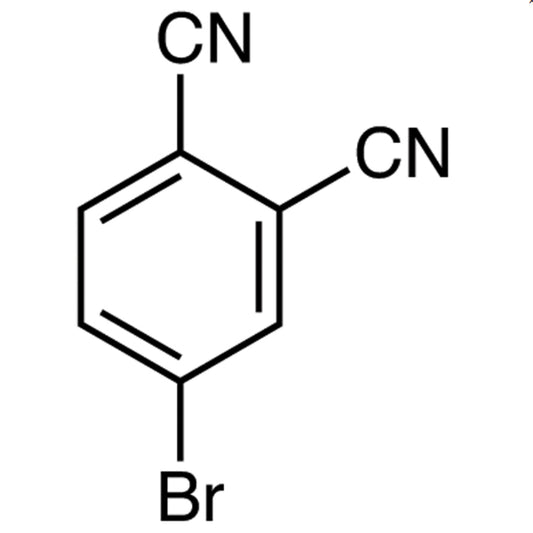
4-Bromophthalonitrile TCI B5509
Regular price From Rp 2.094.750,00Regular price -
4-Butoxyphthalonitrile TCI B1353
Regular price Rp 1.565.550,00Regular price -
(E)-3-(4-Amino-3,5-dimethylphenyl)acrylonitrileHydrochloride TCI A2982
Regular price Rp 2.174.550,00Regular price -
Tetrachloroterephthalonitrile TCI T1058
Regular price From Rp 769.650,00Regular price -
Terephthalonitrile TCI T0016
Regular price From Rp 769.650,00Regular price -
4-Pentyloxyphthalonitrile TCI P1071
Regular price From Rp 1.326.150,00Regular price