Pimelonitrile, also known as heptanedinitrile, is an aliphatic dinitrile with a nitrile group at each end of a straight carbon chain. TCI supplies it as a non-heterocyclic building block for organic synthesis. In the laboratory it serves as a bifunctional precursor. Both nitrile groups can be reduced to give a diamine, hydrolysed to give a dicarboxylic acid, or converted into other functional groups. This makes pimelonitrile useful for synthesising monomers, cyclic compounds and a range of long-chain molecules.
Chemists choose pimelonitrile because the molecule is symmetrical and its two functional groups are identical. A single type of reaction can transform both ends at once, which shortens synthetic routes and reduces the number of steps. The carbon chain between the two nitriles gives a suitable spacing for medium-chain diamines or diacids, which matter in polymer chemistry, for example in polyamides. Nitrile groups are also fairly stable in storage and have a distinctive infrared absorption, so their conversion is easy to monitor during a reaction.
In Indonesia, pimelonitrile is useful to organic chemistry and polymer chemistry laboratories at universities, and to research and development teams working on synthetic routes and new materials. Academic groups can use it for coursework, final-year projects and thesis research on nitrile transformations and bifunctional intermediates. Industrial and institutional research teams can use it to explore monomers and chain-length effects. AMI Scientific supplies TCI products to support this kind of laboratory work across the country.
Related TCI products
- Diamine synthesis: Both nitrile groups can be reduced in one step to a medium-chain diamine, which makes pimelonitrile a practical starting material when a symmetrical diamine is needed.
- Dicarboxylic acid preparation: Hydrolysing both nitrile ends gives the matching dicarboxylic acid, so researchers can reach a diacid through a single, straightforward transformation from one precursor.
- Polymer and polyamide research: The diamine and diacid derived from pimelonitrile have a chain spacing relevant to polyamide chemistry, which suits monomer development and studies of how chain length affects polymer properties.
- Synthesis of cyclic and long-chain molecules: As a bifunctional building block, pimelonitrile can link or close molecular frameworks, which supports the construction of cyclic compounds and extended aliphatic structures in organic synthesis.
- Reaction monitoring and teaching: The distinctive infrared absorption of the nitrile group lets students and researchers easily follow functional-group conversion, which makes this compound well suited to instructional and mechanistic laboratory work.
| Brand | TCI (product code P0049) |
|---|---|
| CAS number | 646-20-8 |
| Molecular formula | — |
| Purity | — |
| Category | Chemistry > Building Blocks > Non-Heterocyclic Building Blocks |
| Pack sizes | Available in the pack sizes offered by TCI; please confirm with AMI Scientific |
| Physical form | Refer to the TCI certificate of analysis and safety data sheet |
| Storage | Keep tightly closed in a cool, dry, well-ventilated place, following the TCI safety data sheet |
Store pimelonitrile in its original, tightly sealed container in a cool, dry, well-ventilated area, away from heat sources, strong acids, strong bases and oxidising agents. Keep containers clearly labelled and close them right after use so that moisture and contamination stay out. Like other organic nitriles, handle this compound with care: work in a fume hood, wear chemical-resistant gloves, safety glasses and a laboratory coat, and avoid inhaling vapours or letting it touch skin or eyes. Before use, read the TCI safety data sheet for specific hazard, first-aid and disposal guidance. Dispose of waste according to institutional procedures and local regulations.
—
Produk Terkait
-
Mandelonitrile TCI M0566
Regular price Rp 769.650,00Regular price -
DL-4-Hydroxymandelonitrile TCI H0563
Regular price Rp 4.213.650,00Regular price -
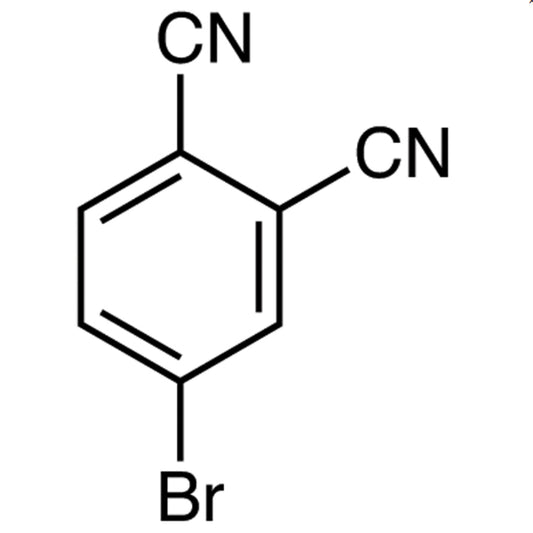
4-Bromophthalonitrile TCI B5509
Regular price From Rp 2.094.750,00Regular price -
4-Butoxyphthalonitrile TCI B1353
Regular price Rp 1.565.550,00Regular price -
(E)-3-(4-Amino-3,5-dimethylphenyl)acrylonitrileHydrochloride TCI A2982
Regular price Rp 2.174.550,00Regular price -
Tetrachloroterephthalonitrile TCI T1058
Regular price From Rp 769.650,00Regular price -
Terephthalonitrile TCI T0016
Regular price From Rp 769.650,00Regular price -
4-Pentyloxyphthalonitrile TCI P1071
Regular price From Rp 1.326.150,00Regular price