3-Methoxysalicylic Acid is a chemical compound widely used in laboratory settings for the synthesis of complex molecules. As a building block in organic chemistry, it plays a crucial role in various chemical reactions, including esterification, hydrolysis, and substitution reactions. Its versatility makes it an essential component in the development of pharmaceuticals, industrial chemicals, and other organic compounds. This compound is particularly valued for its stability and predictable reactivity, which allow researchers to control the outcome of chemical processes with precision.
The compound's molecular structure and chemical properties make it a preferred choice for organic synthesis. Its ability to participate in multiple reaction types and its compatibility with different reagents contribute to its widespread use. The stability of 3-Methoxysalicylic Acid under controlled conditions ensures reliable results in laboratory experiments. Additionally, its availability in solid form simplifies handling and storage, making it a practical option for both research and educational purposes.
In Indonesian laboratories, 3-Methoxysalicylic Acid is commonly used in organic chemistry research, the development of new compounds, and educational experiments. It is a key material in the synthesis of functional compounds such as anti-inflammatory agents and antiseptics. Its role in both academic and industrial applications highlights its importance in advancing chemical research and innovation in the region.
Related TCI products
- Drug synthesis applications benefit from 3-Methoxysalicylic Acid due to its role in creating complex organic molecules with specific functional groups.
- Organic chemistry research relies on this compound for its ability to participate in multiple reaction types, enhancing the versatility of synthetic pathways.
- Educational laboratories use it for teaching fundamental chemical reactions and synthesis techniques to students in chemistry courses.
- Industrial chemical development incorporates it as a building block for producing specialty chemicals and pharmaceutical intermediates.
- Antimicrobial compound research utilizes its structural properties to design new antiseptic and anti-inflammatory agents.
| Brand | TCI |
|---|---|
| CAS number | 877-22-5 |
| Molecular formula | — |
| Purity | — |
| Category | Chemistry > Building Blocks > Non-Heterocyclic Building Blocks |
| Pack sizes | Available in various quantities as per standard laboratory supply formats |
| Physical form | Solid |
| Storage | Store in a cool, dry place away from direct sunlight and moisture |
3-Methoxysalicylic Acid should be stored in a cool, dry environment to maintain its chemical stability. It is recommended to keep the compound in airtight containers to prevent moisture absorption and contamination. Proper labeling of storage containers is essential for safe handling and identification. Laboratory personnel should wear appropriate personal protective equipment, such as gloves and safety goggles, when working with this compound. It should be stored away from incompatible substances to avoid any potential chemical reactions. Regular inspection of storage conditions ensures the integrity and usability of the material in research applications.
—
Produk Terkait
-
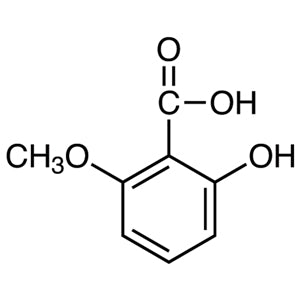
6-MethoxysalicylicAcid TCI M1941
Regular price From Rp 557.550,00Regular priceRp 405.300,00Sale price From Rp 557.550,00 -
4-MethoxysalicylicAcid TCI M1795
Regular price From Rp 955.500,00Regular priceRp 683.550,00Sale price From Rp 955.500,00 -
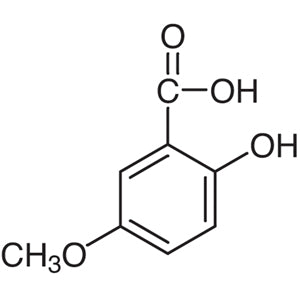
5-MethoxysalicylicAcid TCI M1254
Regular price From Rp 1.033.200,00Regular priceRp 738.150,00Sale price From Rp 1.033.200,00 -
5-Allyl-3-methoxysalicylaldehyde TCI A2104
Regular price From Rp 928.200,00Regular priceRp 648.900,00Sale price From Rp 928.200,00 -
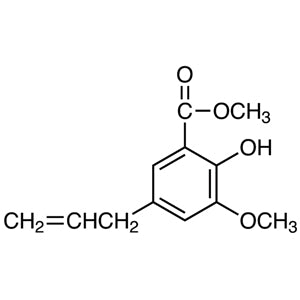
Methyl5-Allyl-3-methoxysalicylate TCI M2204
Regular price Rp 1.801.800,00Regular priceRp 1.275.750,00Sale price Rp 1.801.800,00 -
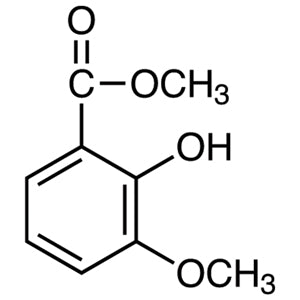
Methyl3-Methoxysalicylate TCI M2167
Regular price From Rp 822.150,00Regular priceRp 590.100,00Sale price From Rp 822.150,00 -
Methyl5-Methoxysalicylate TCI M2127
Regular price Rp 2.041.200,00Regular priceRp 1.442.700,00Sale price Rp 2.041.200,00 -
Methyl4-Methoxysalicylate TCI M1797
Regular price From Rp 769.650,00Regular priceRp 553.350,00Sale price From Rp 769.650,00