![(S)-2-[(1-Methyl-2-pyrrolidinyl)methyl]isoindoline Dihydrochloride - AMI Scientific](http://amiscientific.com/cdn/shop/files/TCI2510M1995.jpg?v=1767125873&width=1946)
![(S)-2-[(1-Methyl-2-pyrrolidinyl)methyl]isoindoline Dihydrochloride - AMI Scientific](http://amiscientific.com/cdn/shop/files/TCI2510M1995.jpg?v=1767125873&width=1445)
(S)-2-[(1-Methyl-2-pyrrolidinyl)methyl]isoindoline Dihydrochloride is a chiral amine compound that combines two structurally important frameworks: an N-methylated pyrrolidine ring carrying a stereocenter of S configuration, together with an isoindoline framework that is bicyclic and comparatively rigid. The material is supplied as the dihydrochloride salt, the form obtained by protonating both basic nitrogen atoms with hydrochloric acid. In the laboratory it is classified as an organocatalyst, meaning a catalyst built from a small organic molecule that operates without requiring any transition metal at all within its catalytic cycle.
The principal appeal of this compound lies in the combination of rigidity and chirality it offers. The isoindoline framework imposes a well-defined steric environment around the reaction centre, while the stereocenter of the pyrrolidine unit determines which molecular face a substrate can more readily approach, so that the product tends to form in a single configuration. The dihydrochloride salt form is chosen because it is generally easier to handle, weigh, and store than the corresponding free base, which tends to be more sensitive to air. Before use, the catalyst is normally liberated from its salt form.
In Indonesian laboratories, this reagent is typically found in synthetic organic chemistry groups at universities and research institutes that work on asymmetric methodology, as well as in pharmaceutical and fine chemical research settings where a single enantiomer of a product is required. It is ordered as a specialty catalyst in small quantities for method development and screening work rather than as a bulk commodity chemical, and it is usually handled by researchers already familiar with anhydrous and air-sensitive technique.
TCI brochures (PDF)
- Asymmetric Organocatalysts 2025-06-12 · p. 8
- Asymmetric Synthesis 2026-03-18 · p. 8
Related TCI products
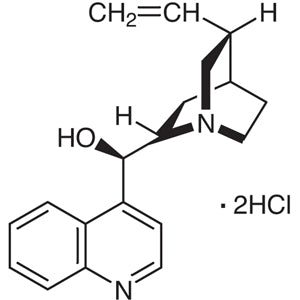
- TCI C0348 24302-67-8 Cinchonidine Dihydrochloride
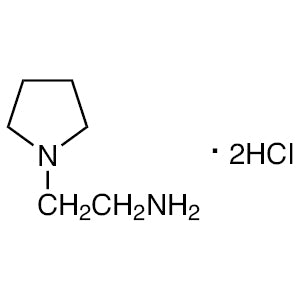
- TCI A3393 65592-36-1 2-(1-Pyrrolidinyl)ethanamine Dihydrochloride
- TCI P2428 10282-30-1 4-(1-Pyrrolidinyl)benzonitrile
- TCI P2105 389621-81-2 4-[(1-Pyrrolidinyl)carbonyl]phenylboronic Acid (contains varying amounts of Anhydride)
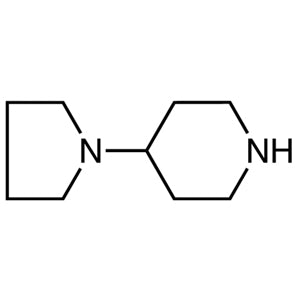
- TCI P1932 5004-07-9 4-(1-Pyrrolidinyl)piperidine
- TCI M3533 328086-60-8 Methyl N-(tert-Butoxycarbonyl)-3-[(3S)-2-oxo-3-pyrrolidinyl]-L-alaninate
- Asymmetric organocatalysis — the defined S stereocenter of the pyrrolidine unit biases which molecular face a substrate approaches, so reactions tend to deliver product in one configuration without any transition metal in the catalytic cycle.
- Enantioselective methodology development — the rigid isoindoline framework provides a firm steric environment around the reaction centre, making the compound useful for research groups screening and optimising new asymmetric transformations.
- Chiral amine catalysis research — with two basic nitrogen atoms available after liberation from the salt, this secondary amine scaffold suits studies of amine-mediated activation in small-molecule catalysis.
- Metal-free synthetic routes — because it functions entirely as a small organic molecule, this catalyst supports work where transition metal residues in the product must be avoided for downstream reasons.
- Structure-activity studies of catalyst scaffolds — the combination of a bicyclic rigid framework with a flexible methylene-linked chiral pyrrolidine makes it a useful reference point when comparing organocatalyst designs.
| Brand | TCI |
|---|---|
| CAS number | — |
| Molecular formula | — |
| Purity | — |
| Category | Chemistry > Catalysis and Inorganic Chemistry > Organocatalysts [Catalysis] |
| Pack sizes | — |
| Physical form | — |
| Storage | store in a tightly closed container as recommended by the manufacturer; refer to the product label and the accompanying safety data sheet for the specific conditions |
- Product code: M1995
- Chemical name: (S)-2-[(1-Methyl-2-pyrrolidinyl)methyl]isoindoline Dihydrochloride
- Chemical form: dihydrochloride salt, obtained by protonating both basic nitrogen atoms with hydrochloric acid
Keep the material in its original tightly closed container, protected from moisture, and stored under the conditions stated on the product label and in the manufacturer's safety data sheet. The dihydrochloride salt form is generally easier to handle, weigh, and store than the corresponding free base, which is more sensitive to air, but the container should still be closed promptly after each use. Weigh and transfer the solid in a fume hood using clean, dry spatulas and glassware, and avoid introducing moisture into the stock bottle. Wear safety glasses, gloves, and a laboratory coat when handling the compound. Where the catalyst is to be liberated from its salt form before use, carry out that step according to the established laboratory procedure. Dispose of residues and contaminated consumables through the laboratory's chemical waste stream.
—
Produk Terkait
-
CinchonidineDihydrochloride TCI C0348
Regular price Rp 1.458.450,00Regular price -
2-(1-Pyrrolidinyl)ethanamineDihydrochloride TCI A3393
Regular price Rp 1.881.600,00Regular price -
4-(1-Pyrrolidinyl)benzonitrile TCI P2428
Regular price From Rp 1.220.100,00Regular price -
4-[(1-Pyrrolidinyl)carbonyl]phenylboronicAcid(containsvaryingamountsofAnhydride) TCI P2105
Regular price From Rp 1.724.100,00Regular price -
4-(1-Pyrrolidinyl)piperidine TCI P1932
Regular price From Rp 4.664.100,00Regular price -
MethylN-(tert-Butoxycarbonyl)-3-[(3S)-2-oxo-3-pyrrolidinyl]-L-alaninate TCI M3533
Regular price From Rp 2.386.650,00Regular price -
Isoindoline TCI I0751
Regular price From Rp 2.597.700,00Regular price -
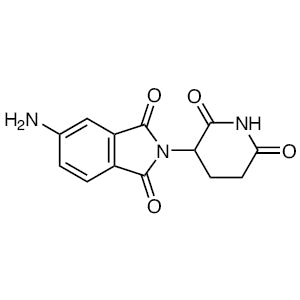
5-Amino-2-(2,6-dioxopiperidin-3-yl)isoindoline-1,3-dione TCI A3455
Regular price From Rp 2.386.650,00Regular price

![389621-81-2 4-[(1-Pyrrolidinyl)carbonyl]phenylboronic Acid (contains varying amounts of Anhydride) - AMI Scientific](http://amiscientific.com/cdn/shop/files/TCI2510P2105.jpg?v=1768206136&width=533)
![328086-60-8 Methyl N-(tert-Butoxycarbonyl)-3-[(3S)-2-oxo-3-pyrrolidinyl]-L-alaninate - AMI Scientific](http://amiscientific.com/cdn/shop/files/TCI2510M3533.jpg?v=1767128385&width=533)