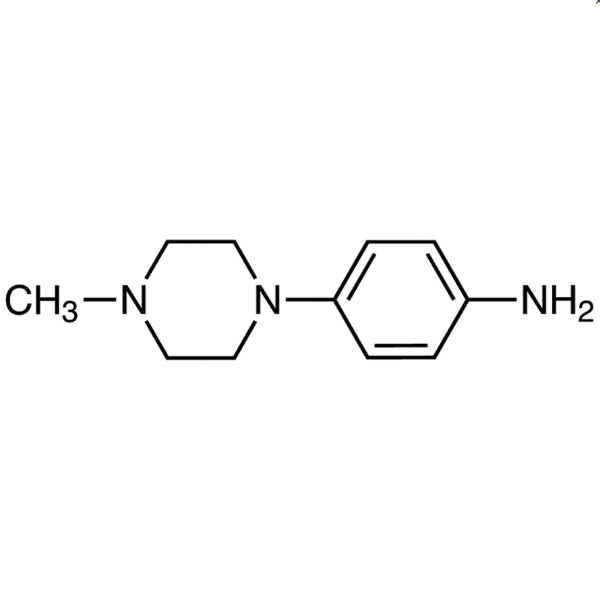
4-(4-Methyl-1-piperazinyl)aniline is a chemical compound widely used in organic synthesis reactions, particularly in the formation of heterocyclic compounds. As a building block in chemical synthesis, it plays a crucial role in the development of complex molecular structures. Its unique molecular structure, featuring both an amine group and a piperazine ring, allows it to participate in various chemical reactions, making it a versatile component in synthetic chemistry. This compound is essential for researchers aiming to modify molecular frameworks and create new functional groups.
The compound's reactivity and stability make it a preferred choice in laboratory settings. Its ability to form stable intermediates and react with a variety of functional groups enhances its utility in synthetic pathways. The presence of the piperazine ring adds structural complexity, which is beneficial in the design of pharmaceuticals and industrial chemicals. These properties contribute to its popularity among chemists working on advanced synthesis projects.
In Indonesian laboratories, 4-(4-Methyl-1-piperazinyl)aniline is commonly used in organic chemistry research, especially in the synthesis of heterocyclic compounds and the development of new chemical materials. Its availability and reliability make it a go-to reagent for researchers involved in drug discovery and chemical innovation. The compound is also utilized in academic and industrial research settings where precise chemical synthesis is required.
Related TCI products
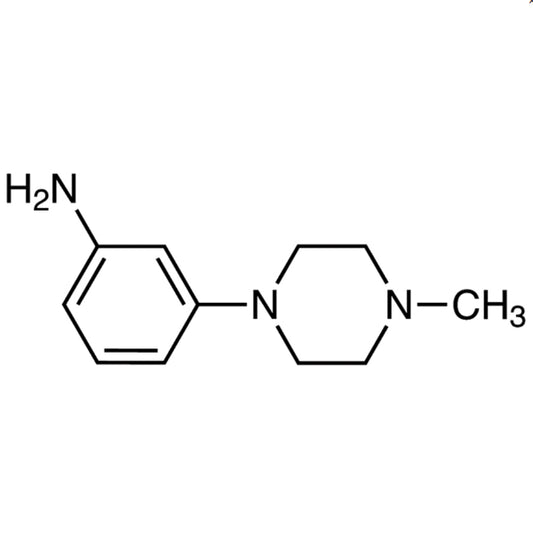
- TCI A2714 148546-99-0 3-(4-Methyl-1-piperazinyl)aniline
- TCI P2449 68104-63-2 4-(1-Piperazinyl)benzonitrile
- TCI P2448 111373-03-6 2-(1-Piperazinyl)benzonitrile
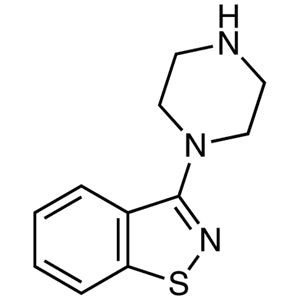
- TCI P2064 87691-87-0 3-(1-Piperazinyl)-1,2-benzisothiazole
- TCI P1890 70918-74-0 2-(1-Piperazinylcarbonyl)-1,4-benzodioxane Hydrochloride
- TCI P1836 70918-00-2 2-(1-Piperazinylcarbonyl)-1,4-benzodioxane
- Organic synthesis of heterocyclic compounds due to its reactive amine and piperazine groups, enabling the formation of complex molecular structures.
- Pharmaceutical research for the development of new drugs, as its molecular framework can be modified to target specific biological activities.
- Industrial chemical production where stable and functional chemical intermediates are required for the synthesis of various chemical products.
- Academic research in chemical modification of molecular frameworks, supporting the creation of novel compounds with desired properties.
- Drug discovery projects that require the synthesis of bioactive molecules with specific functional groups and structural features.
| Brand | TCI |
|---|---|
| CAS number | 16153-81-4 |
| Molecular formula | — |
| Purity | — |
| Category | Chemistry > Building Blocks > Heterocyclic Building Blocks |
| Pack sizes | Available in various quantities as per standard chemical supply practices |
| Physical form | Solid or liquid, depending on the specific formulation |
| Storage | Store in a cool, dry place away from direct sunlight and moisture |
This compound should be stored in a cool, dry environment, away from direct sunlight and moisture. It is recommended to use airtight containers to prevent exposure to air and humidity, which can affect its stability. Proper labeling of containers is essential for safe handling and identification. Laboratory personnel should wear appropriate personal protective equipment, such as gloves and goggles, when handling the compound. It should be kept in a well-ventilated area to minimize inhalation risks. Regular monitoring of storage conditions ensures the compound remains in optimal condition for use in chemical experiments.
—
Produk Terkait
-
3-(4-Methyl-1-piperazinyl)aniline TCI A2714
Regular price From Rp 1.008.000,00Regular price -
4-(1-Piperazinyl)benzonitrile TCI P2449
Regular price From Rp 2.597.700,00Regular price -
2-(1-Piperazinyl)benzonitrile TCI P2448
Regular price Rp 2.068.500,00Regular price -
3-(1-Piperazinyl)-1,2-benzisothiazole TCI P2064
Regular price From Rp 1.035.300,00Regular price -
2-(1-Piperazinylcarbonyl)-1,4-benzodioxaneHydrochloride TCI P1890
Regular price From Rp 1.538.250,00Regular price -
2-(1-Piperazinylcarbonyl)-1,4-benzodioxane TCI P1836
Regular price Rp 1.405.950,00Regular price -
4-(4-Methylpiperazinyl)benzoicAcid TCI M2267
Regular price From Rp 1.167.600,00Regular price -
4-(4-Methylpiperazinyl)benzaldehyde TCI M1624
Regular price From Rp 2.518.950,00Regular price