![536753-86-3 2-Methyldibenzo[f,h]quinoxaline - AMI Scientific](http://amiscientific.com/cdn/shop/files/TCI2510M3005.jpg?v=1768819226&width=1946)
![536753-86-3 2-Methyldibenzo[f,h]quinoxaline - AMI Scientific](http://amiscientific.com/cdn/shop/files/TCI2510M3005_cc3d3726-3749-49e7-963e-4ae75c5b4c48.jpg?v=1769056924&width=1946)
![536753-86-3 2-Methyldibenzo[f,h]quinoxaline - AMI Scientific](http://amiscientific.com/cdn/shop/files/TCI2510M3005.jpg?v=1768819226&width=1445)
![536753-86-3 2-Methyldibenzo[f,h]quinoxaline - AMI Scientific](http://amiscientific.com/cdn/shop/files/TCI2510M3005_cc3d3726-3749-49e7-963e-4ae75c5b4c48.jpg?v=1769056924&width=1445)
TCI M3005 is 2-Methyldibenzo[f,h]quinoxaline, a fused heteroaromatic compound that combines a quinoxaline core with a phenanthrene system, together with a methyl group at the 2-position. The compound is recognised as a ligand for functional metal complexes, and in particular as a cyclometalating ligand in iridium(III) and platinum(II) complexes that are widely studied in the field of light-emitting materials. In materials science laboratories, it serves as a starting material for assembling phosphorescent emitters used in organic light-emitting diode, or OLED, device research.
The property that makes this compound so valuable is its extended, planar fused aromatic system carrying two nitrogen atoms on the quinoxaline ring. That combination produces low-energy acceptor orbitals, so the resulting metal complexes tend to emit light in the long-wavelength region, from orange through to red. The nitrogen atoms provide strong coordination points toward the metal centre, while the dibenzo framework gives the structure rigidity that helps suppress non-radiative energy loss. The methyl group at the 2-position serves to tune the electronic properties while also improving handling characteristics of the ligand and its complexes.
In Indonesian laboratories, this compound is typically used in university and institutional research groups working on organic electronics, photophysics, and coordination chemistry. It is normally handled at synthesis scale in a fume hood, using standard organometallic and Schlenk techniques for the complexation step, and is ordered as a building block for a defined research programme rather than as a bulk consumable. Documentation of lot and catalogue identity is usually maintained for reproducibility in published work.
TCI brochures (PDF)
- Ligands 2025-12-01 · p. 17
- Cyclometalating ligand synthesis for iridium(III) complexes, where the two quinoxaline nitrogen atoms offer strong coordination points to the metal centre and the fused framework sets the emission wavelength.
- Preparation of platinum(II) coordination complexes, since the planar fused aromatic system of the ligand matches the geometry requirements of square-planar platinum centres used in emissive materials research.
- Development of orange to red phosphorescent emitters, because the low-energy acceptor orbitals of the extended aromatic system push complex emission toward the long-wavelength region of the spectrum.
- OLED device research at laboratory scale, where the compound acts as a defined starting material for assembling the phosphorescent dopants evaluated in experimental device stacks.
- Photophysical and structure-property studies, as the methyl substituent at the 2-position allows researchers to tune electronic behaviour and compare results against unsubstituted analogues of the same scaffold.
| Brand | TCI |
|---|---|
| CAS number | 536753-86-3 |
| Molecular formula | — |
| Purity | — |
| Category | Materials Science > Material Building Blocks > Ligands for Functional Metal Complexes |
| Pack sizes | available in the research-scale pack sizes listed for this catalogue item; please refer to the product listing for currently offered options. |
| Physical form | — |
| Storage | store in a cool, dry place in a tightly closed container, away from light and moisture. |
- Chemical name: 2-Methyldibenzo[f,h]quinoxaline
Store the container tightly closed in a cool, dry and well-ventilated area, protected from light and moisture, and keep it separate from strong oxidising agents. The original supplier container is the most suitable storage vessel; if transfer is required, use clean, dry amber glass with a chemically resistant closure and label it with the full chemical name, CAS number and date. Handle the solid in a fume hood, avoid generating dust, and wear safety glasses, gloves and a laboratory coat. Allow sealed containers to reach room temperature before opening to prevent moisture condensation. Consult the manufacturer's safety data sheet before first use and dispose of waste through your institution's chemical waste route.
—
Produk Terkait
-
Benzo[g]quinoxaline TCI B4540
Regular price Rp 2.068.500,00Regular priceRp 1.461.600,00Sale price Rp 2.068.500,00 -
Quinoxaline1,4-Dioxide TCI Q0110
Regular price Rp 2.411.850,00Regular priceRp 1.702.050,00Sale price Rp 2.411.850,00 -
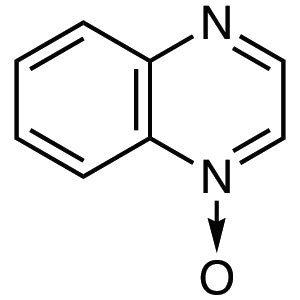
Quinoxaline1-Oxide TCI Q0108
Regular price Rp 1.670.550,00Regular priceRp 1.183.350,00Sale price Rp 1.670.550,00 -
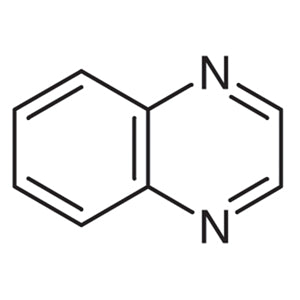
Quinoxaline TCI Q0020
Regular price Rp 1.590.750,00Regular priceRp 1.127.700,00Sale price Rp 1.590.750,00 -
6H-Indolo[2,3-b]quinoxaline TCI I1098
Regular price Rp 1.856.400,00Regular priceRp 1.313.550,00Sale price Rp 1.856.400,00 -
5,8-Dibromo-2,3-bis(4-methoxyphenyl)quinoxaline TCI D4653
Regular price Rp 3.630.900,00Regular priceRp 2.554.650,00Sale price Rp 3.630.900,00 -
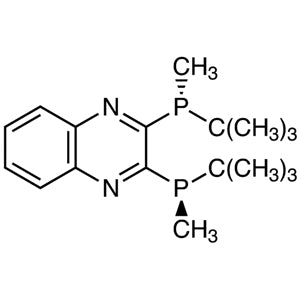
(S,S)-(+)-2,3-Bis(tert-butylmethylphosphino)quinoxaline TCI B5302
Regular price Rp 3.683.400,00Regular priceRp 2.591.400,00Sale price Rp 3.683.400,00 -
(R,R)-(-)-2,3-Bis(tert-butylmethylphosphino)quinoxaline TCI B5301
Regular price Rp 5.274.150,00Regular priceRp 3.703.350,00Sale price Rp 5.274.150,00
![260-50-4 Benzo[g]quinoxaline - AMI Scientific](http://amiscientific.com/cdn/shop/files/TCI2510B4540.jpg?v=1767091332&width=533)

![243-59-4 6H-Indolo[2,3-b]quinoxaline - AMI Scientific](http://amiscientific.com/cdn/shop/files/TCI2510I1098.jpg?v=1767120775&width=533)