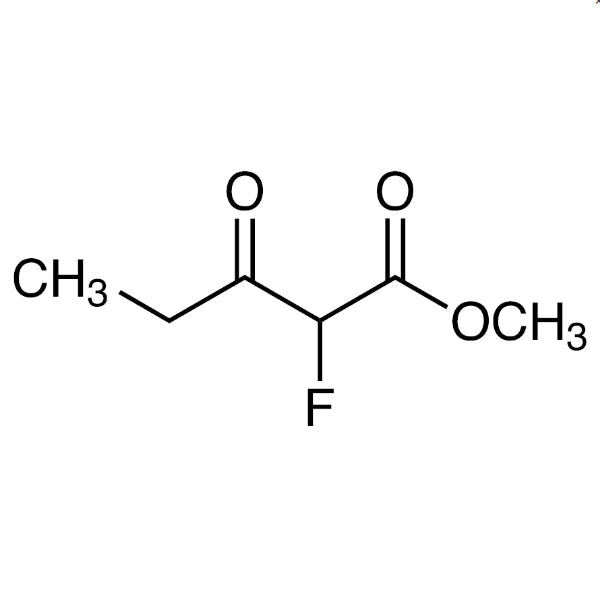
Methyl 2-Fluoro-3-oxopentanoate is a chemical compound widely used in organic synthesis reactions within laboratory settings. As a fluorinated building block, it plays a crucial role in the development of complex molecular structures. Its unique fluorine substitution at the second carbon position contributes to its reactivity and functional versatility. This compound is particularly valuable in the synthesis of pharmaceuticals, specialty chemicals, and advanced materials due to its ability to participate in various reaction mechanisms. Its presence in the chemical toolkit of researchers enhances the possibility of creating novel compounds with specific functional groups.
The compound’s chemical properties, including its stability and reactivity, make it a preferred choice for synthetic chemists. The fluorine atom introduces polarity and alters the electronic environment of the molecule, which can influence reaction pathways and product selectivity. Additionally, its ability to undergo substitution, esterification, and electrophilic reactions makes it adaptable to a wide range of synthetic strategies. The presence of a carbonyl group further enhances its utility in functional group transformations. These characteristics position it as a reliable and versatile reagent in both academic and industrial research environments.
In Indonesian laboratories, this compound is commonly used by researchers working in pharmaceutical development, material science, and organic chemistry. Its application in the synthesis of fluorinated compounds aligns with the growing demand for advanced chemical products in the region. The compound is often selected for its predictable behavior and compatibility with standard laboratory procedures, making it an essential component in the chemical synthesis process.
- Organic synthesis is a primary application where this compound serves as a versatile building block for creating complex molecular structures.
- Pharmaceutical research benefits from its use in the development of fluorinated compounds, which are often required for drug discovery and optimization.
- Material science applications leverage its fluorine content to design new materials with enhanced properties such as hydrophobicity and thermal stability.
- Analytical chemistry utilizes it as a standard reference for testing and characterizing fluorinated compounds in various sample matrices.
- Environmental studies employ it to investigate the behavior and degradation of fluorinated substances in different ecosystems.
| Brand | TCI |
|---|---|
| CAS number | 180287-02-9 |
| Molecular formula | — |
| Purity | — |
| Category | Chemistry > Building Blocks > Fluorinated Building Blocks |
| Pack sizes | Available in standard laboratory quantities as per supplier specifications |
| Physical form | Liquid |
| Storage | Store in a cool, dry place away from direct sunlight and incompatible materials |
This compound should be stored in a cool, dry environment, away from direct sunlight and sources of heat. It is recommended to keep it in a tightly sealed container made of inert materials such as glass or polyethylene to prevent contamination and evaporation. Due to its chemical reactivity, it should be handled with appropriate personal protective equipment, including gloves and safety goggles. It is important to ensure good ventilation in the workspace to minimize exposure. Avoid contact with incompatible substances such as strong bases or oxidizing agents. Proper labeling and storage conditions help maintain the compound's stability and safety during laboratory use.
—
Produk Terkait
-
2-Bromo-4'-fluoro-3'-(trifluoromethyl)acetophenone TCI B5213
Regular price From Rp 505.050,00Regular price -
4-Bromo-2-fluoro-N-methylbenzamide TCI B5074
Regular price From Rp 1.035.300,00Regular price -
2-Bromo-4-fluoro-6-nitroaniline TCI B4872
Regular price Rp 1.140.300,00Regular price -
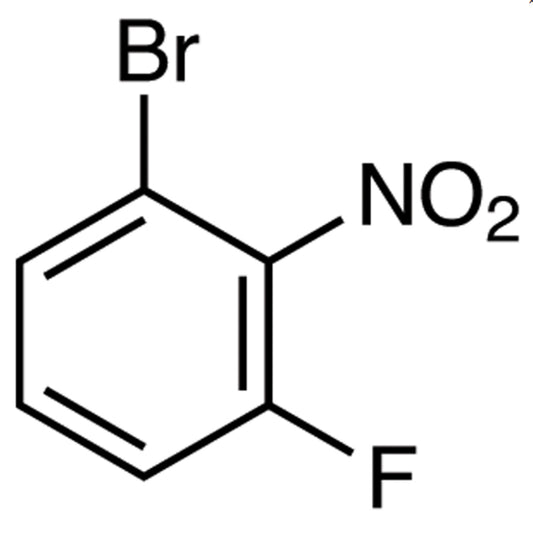
1-Bromo-3-fluoro-2-nitrobenzene TCI B4842
Regular price From Rp 1.273.650,00Regular price -
N2-(tert-Butoxycarbonyl)-4-fluoro-1,2-phenylenediamine TCI B4237
Regular price From Rp 980.700,00Regular price -
N1-(tert-Butoxycarbonyl)-4-fluoro-1,2-phenylenediamine TCI B4236
Regular price From Rp 1.326.150,00Regular price -
1-Bromo-3-fluoro-4-(trifluoromethoxy)benzene TCI B3808
Regular price From Rp 689.850,00Regular price -
4-Bromo-2-fluoro-1-nitrobenzene TCI B3062
Regular price From Rp 1.538.250,00Regular price