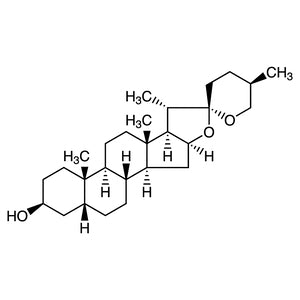
Smilagenin is a naturally occurring compound classified as a flavonoid, widely utilized in laboratory settings for its diverse biological activities. It plays a crucial role in life science research, particularly in the study of active compounds derived from plants used in pharmaceutical applications. This compound is essential for investigating the mechanisms of action of plant-based substances, offering insights into their therapeutic potential. Smilagenin is commonly employed in biochemical and pharmacological studies to explore its effects on cellular processes and its interactions with biological systems.
Smilagenin is valued for its chemical stability and solubility in organic solvents such as ethyl acetate and ethanol, making it a reliable choice for various experimental procedures. Its thermal stability further enhances its usability across different laboratory conditions, ensuring consistent results. These properties allow researchers to easily obtain, process, and store Smilagenin for a wide range of chemical and biochemical experiments. The compound's versatility supports its application in multiple research fields, contributing to the advancement of scientific knowledge.
In Indonesian laboratories, Smilagenin is extensively used in pharmacological, biochemical, and phytochemical research. It is a key component in the development of plant-based pharmaceutical products and in the exploration of the health benefits and healing properties of natural substances. Many research institutions and universities in Indonesia rely on Smilagenin to conduct experiments that aim to uncover new therapeutic applications and improve understanding of natural compounds.
- Pharmacological research benefits from Smilagenin's ability to study plant-derived compounds for potential therapeutic applications.
- Biochemical experiments utilize Smilagenin to investigate its antioxidant and anti-inflammatory properties in cellular systems.
- Phytochemical studies rely on Smilagenin to analyze the chemical composition and biological activity of plant extracts.
- Cellular research employs Smilagenin to examine its effects on specific cell types and biological pathways.
- Drug development projects use Smilagenin to explore the potential of natural compounds in creating new pharmaceutical formulations.
| Brand | TCI |
|---|---|
| CAS number | 126-18-1 |
| Molecular formula | — |
| Purity | — |
| Category | Life Science > Biochemicals and Reagents > Crude Medicine Ingredients for Research and Experimental Use |
| Pack sizes | Available in various quantities as per supplier specifications |
| Physical form | Solid |
| Storage | Store in a cool, dry place away from direct sunlight |
Smilagenin should be stored in a cool, dry environment to maintain its chemical stability and prevent degradation. It is recommended to keep the compound in a tightly sealed container to minimize exposure to moisture and air. Suitable storage conditions include a controlled temperature range of 15-25°C, ensuring optimal preservation of its properties. Laboratory personnel should handle Smilagenin with care, using appropriate personal protective equipment when necessary. Due to its solubility in organic solvents, it is important to store it away from incompatible materials. Proper labeling and safe handling practices are essential to ensure the integrity of the compound and the safety of laboratory operations.
—
Product Categories
- Biochemicals and ReagentsCrude Medicine Ingredients for Research and Experimental Use
- Biochemicals and ReagentsSteroidsPhytosteroids [Steroids]
- Cell BiologyCell Signaling and NeuroscienceCytokines, Growth Factors and Hormones
- Cell BiologyNutrition ResearchPhytochemicals
- Pharmaceutical Development and Drug Discovery ResearchCrude Medicine Ingredients for Research and Experimental Use
Produk Terkait
-
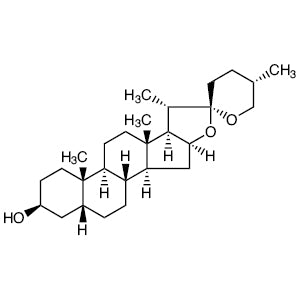
Sarsasapogenin TCI A3192
Regular price From Rp 2.359.350,00Regular price -
beta-SitosterolAcetate(containsCampesterolAcetate) TCI S0221
Regular price From Rp 2.359.350,00Regular price -
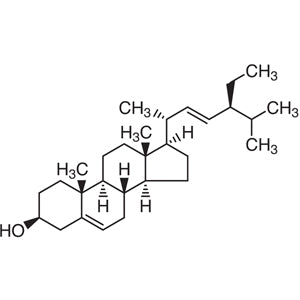
Stigmasterol TCI S0088
Regular price From Rp 875.700,00Regular price -
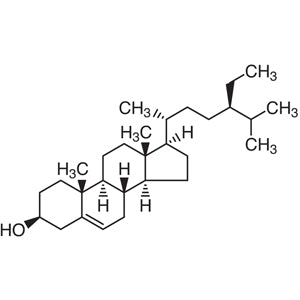
beta-Sitosterol(containsCampesterol) TCI S0040
Regular price Rp 1.510.950,00Regular price -
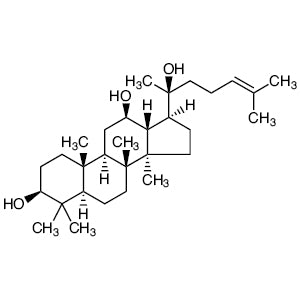
(20S)-Protopanaxadiol TCI P2651
Regular price Rp 5.935.650,00Regular price -
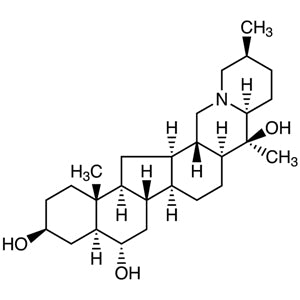
Peimine TCI P2610
Regular price From Rp 1.565.550,00Regular price -
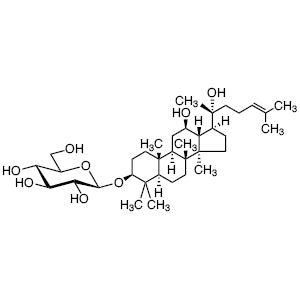
20(S)-GinsenosideRg3 TCI G0568
Regular price Rp 2.545.200,00Regular price -
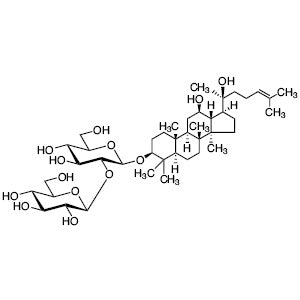
20(R)-GinsenosideRh2 TCI G0567
Regular price From Rp 4.240.950,00Regular price