

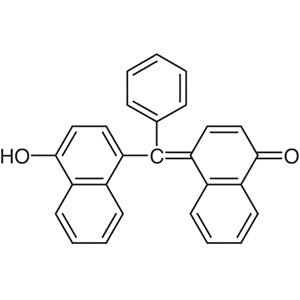
p-Naphtholbenzein is a coloured organic compound used primarily as an acid–base indicator in analytical laboratories. It belongs to the triphenylmethane family of indicators and carries a naphthol group, so its electronic structure changes as the acidity of its surroundings changes, and that change appears to the eye as a clear shift in colour. Its role in the laboratory is to mark the endpoint of a titration, particularly in titrations where an ordinary aqueous indicator cannot be used. The compound is supplied by TCI and sits within the Chemistry > Building Blocks > Non-Heterocyclic Building Blocks category.
This indicator is widely recognised in non-aqueous titration practice, that is, titration carried out in organic solvents such as glacial acetic acid. The property that makes it the preferred choice is its firm, contrasting colour change in non-aqueous media, where many conventional indicators fail to work because they are insoluble or do not show a clear transition. Its solubility in organic solvents makes it a natural partner for the titration of weak bases using perchloric acid in glacial acetic acid, a standard procedure in the analysis of pharmaceutical raw materials.
In Indonesian laboratories, the material arrives as a solid and is normally dissolved first into a low-concentration indicator solution, so that a single pack can support a large number of determinations over an extended period. This working pattern suits pharmaceutical quality-control laboratories, university teaching and research laboratories, and industrial analytical laboratories that run routine non-aqueous titrations and need a dependable visual endpoint.
- Non-aqueous acid–base titration: the indicator dissolves readily in organic solvents and gives a decisive colour transition in media where conventional aqueous indicators cannot function at all.
- Titration of weak bases with perchloric acid in glacial acetic acid: this is the classic pairing for the compound, giving a clearly visible endpoint in a strongly non-aqueous system.
- Pharmaceutical raw material analysis: non-aqueous titration is a standard procedure for assaying such materials, and this indicator provides the endpoint signal that procedure depends on.
- Preparation of stock indicator solutions: because the solid is dissolved into a low-concentration working solution, one pack supports a long series of routine determinations without frequent reordering.
- Analytical chemistry teaching and training: the sharp, high-contrast colour change makes the endpoint easy for students to read, illustrating indicator behaviour in non-aqueous titration clearly.
| Brand | TCI |
|---|---|
| CAS number | 145-50-6 |
| Molecular formula | — |
| Purity | — |
| Category | Chemistry > Building Blocks > Non-Heterocyclic Building Blocks |
| Pack sizes | available in standard TCI catalogue pack sizes; please confirm the option you require when ordering |
| Physical form | solid, normally dissolved into a dilute indicator solution before use |
| Storage | keep in the closed original container, protected from light and moisture |
Store the material in its closed original container in a cool, dry place away from direct sunlight, and keep it separate from strong acids and oxidising agents. Amber glass or tightly sealed chemical-resistant containers are suitable, both for the solid and for any prepared indicator solution, which should be clearly labelled with its contents and preparation date. Handle the powder in a well-ventilated area or a fume hood to avoid raising dust, and wear a laboratory coat, safety goggles, and gloves. Avoid inhalation and contact with skin and eyes, and wash hands thoroughly after handling. Consult the manufacturer's safety data sheet before use and dispose of residues in accordance with laboratory chemical waste procedures.
—
Produk Terkait
-
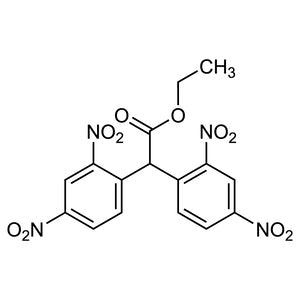
EthylBis(2,4-dinitrophenyl)acetate TCI B0817
Regular price Rp 1.458.450,00Regular price -
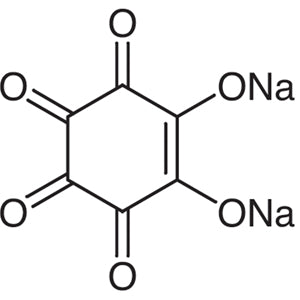
DisodiumRhodizonate TCI R0019
Regular price From Rp 610.050,00Regular price -
4-Nitrophenol TCI N0220
Regular price From Rp 505.050,00Regular price -
2-Nitrophenol TCI N0219
Regular price From Rp 584.850,00Regular price -
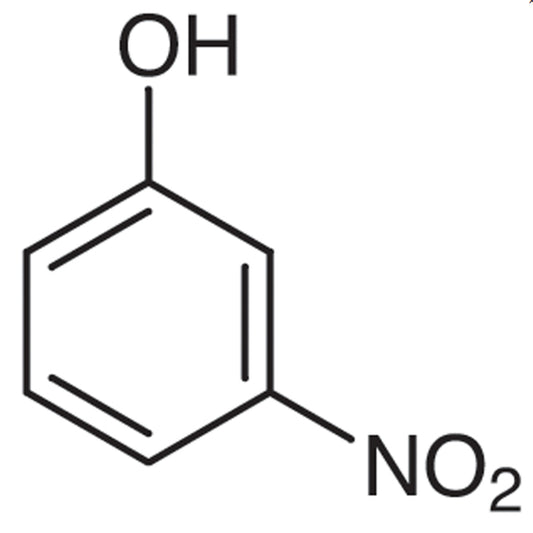
3-Nitrophenol TCI N0217
Regular price From Rp 2.332.050,00Regular price -
5'-Isopropyl-2'-methylindophenolSodiumSalt[RedoxIndicator] TCI M0408
Regular price Rp 1.167.600,00Regular price -
2,4-Dinitrophenol(wettedwithca.20%Water)(unitweightondryweightbasis) TCI D0109
Regular price From Rp 743.400,00Regular price -
ChlorophenolRedSodiumSalt TCI C0247
Regular price From Rp 769.650,00Regular price


![5418-43-9 5'-Isopropyl-2'-methylindophenol Sodium Salt [Redox Indicator] - AMI Scientific](http://amiscientific.com/cdn/shop/files/TCI2510M0408.jpg?v=1768361315&width=533)
