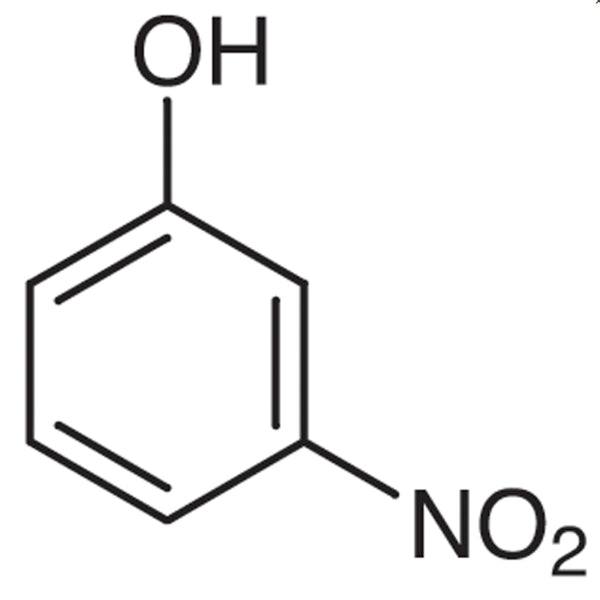

3-Nitrophenol is a chemical compound widely used in various chemical reactions, particularly in the synthesis of aromatic and heterocyclic compounds. As a key building block in chemical research, it serves as a fundamental reagent for the development of complex molecules such as pharmaceuticals, pesticides, and industrial chemicals. In laboratory settings, 3-Nitrophenol plays a crucial role in substitution and oxidation reactions, making it an essential component in synthetic pathways. Its versatility and reactivity make it a valuable tool for chemists working on diverse projects.
One of the main reasons 3-Nitrophenol is preferred is its solubility in common organic solvents like ethyl acetate and acetone, which simplifies its use in various reaction conditions. Additionally, its stable nature under normal conditions ensures reliability during experiments. The compound also has a relatively high boiling point, which facilitates heating and drying processes in the laboratory. These physical and chemical properties contribute to its widespread use in both academic and industrial research.
In Indonesian laboratories, 3-Nitrophenol is commonly used in both pure and applied chemical research. It is a popular choice for researchers requiring aromatic compounds with nitro substitutions for experimental purposes. Its availability and consistent quality make it a trusted material for a wide range of chemical applications, supporting both educational and industrial research initiatives.
TCI brochures (PDF)
- Titration Reagents and TLC Stains 2026-05-07 · p. 11
Related TCI products
- Synthetic chemistry research - 3-Nitrophenol is ideal for creating complex aromatic compounds and heterocyclic structures due to its reactivity and solubility.
- Pharmaceutical development - The compound is used in the synthesis of various medicinal compounds, contributing to drug discovery and formulation.
- Pesticide formulation - Its chemical properties make it suitable for the production of agricultural chemicals and insecticides.
- Industrial chemical production - 3-Nitrophenol is a key reagent in the manufacturing of various industrial chemicals and dyes.
- Analytical chemistry - It serves as a reference standard for spectroscopic and chromatographic analysis due to its stability and well-defined properties.
| Brand | TCI |
|---|---|
| CAS number | 554-84-7 |
| Molecular formula | — |
| Purity | — |
| Category | Chemistry > Building Blocks > Non-Heterocyclic Building Blocks |
| Pack sizes | Available in various quantities as per standard laboratory supply |
| Physical form | Solid |
| Storage | Store in a cool, dry place away from direct sunlight and incompatible materials |
3-Nitrophenol should be stored in a cool, dry environment to maintain its stability and prevent degradation. It is recommended to use airtight containers made of glass or high-density polyethylene to avoid contamination and exposure to moisture. Due to its reactivity, it should be handled with care, using appropriate personal protective equipment such as gloves and safety goggles. Avoid contact with strong oxidizing agents and keep it away from heat sources. Proper ventilation is essential when working with this compound to minimize inhalation risks. Regular monitoring of storage conditions ensures the compound remains safe and effective for laboratory use.
—
Produk Terkait
-
4-Nitrophenol TCI N0220
Regular price From Rp 505.050,00Regular priceRp 352.800,00Sale price From Rp 505.050,00 -
2-Nitrophenol TCI N0219
Regular price From Rp 584.850,00Regular priceRp 408.450,00Sale price From Rp 584.850,00 -
2,4-Dinitrophenol(wettedwithca.20%Water)(unitweightondryweightbasis) TCI D0109
Regular price From Rp 743.400,00Regular priceRp 519.750,00Sale price From Rp 743.400,00 -
2-Bromo-4-methoxy-6-nitrophenol TCI B4723
Regular price From Rp 557.550,00Regular priceRp 405.300,00Sale price From Rp 557.550,00 -
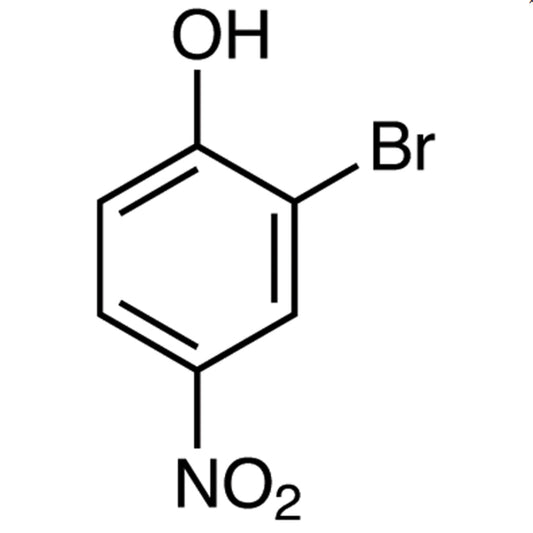
2-Bromo-4-nitrophenol TCI B3918
Regular price From Rp 2.625.000,00Regular priceRp 1.835.400,00Sale price From Rp 2.625.000,00 -
4-Bromo-2-nitrophenol TCI B2363
Regular price From Rp 1.035.300,00Regular priceRp 723.450,00Sale price From Rp 1.035.300,00 -
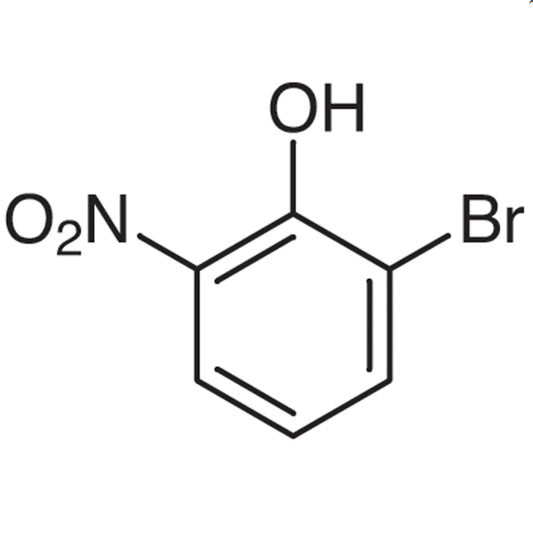
2-Bromo-6-nitrophenol TCI B2203
Regular price From Rp 1.378.650,00Regular priceRp 963.900,00Sale price From Rp 1.378.650,00 -
4-tert-Butyl-2-nitrophenol TCI B1812
Regular price From Rp 1.008.000,00Regular priceRp 704.550,00Sale price From Rp 1.008.000,00