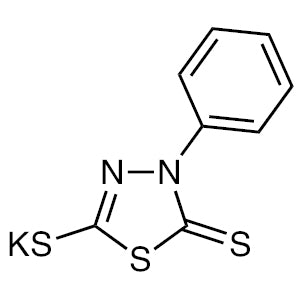
Nitron (TCI N0211, CAS 2218-94-2) is a chemical compound widely used as a building block in the synthesis of heterocyclic compounds. It plays a crucial role in laboratory settings where the creation of complex molecular structures is required. Its high reactivity makes it an essential tool for chemists working on the development of new organic compounds. Nitron is particularly valuable in the field of heterocyclic chemistry due to its ability to participate in various chemical reactions, enabling the formation of rings such as pyridine and thiazole.
The chemical properties of Nitron make it a preferred choice for laboratory use. It is highly reactive, allowing it to interact with a wide range of functional groups, which enhances its versatility in synthetic applications. Its molecular structure is simple yet effective, contributing to its efficiency in chemical reactions. Additionally, Nitron exhibits good stability under certain conditions, which simplifies its handling and storage. These characteristics make it a reliable and efficient reagent for chemical synthesis processes.
In Indonesian laboratories, Nitron is commonly used in research and development activities focused on organic chemistry. It is a key component in the synthesis of heterocyclic compounds, supporting both academic and industrial applications. Its availability and effectiveness have made it a popular choice among researchers and chemists in Indonesia. The compound’s role in facilitating complex chemical reactions has solidified its importance in the laboratory environment.
Related TCI products
- TCI B4509 979-88-4 Bicinchoninic Acid Disodium Salt
- TCI B1124 6336-51-2 Bismuthiol II
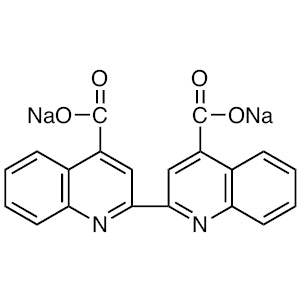
- TCI B1077 63451-34-3 2,2'-Bicinchoninic Acid Dipotassium Salt [for Determination of Cu]
- TCI A0956 1750-12-5 4-Amino-3-hydrazino-5-mercapto-1,2,4-triazole [for Determination of Aldehydes]
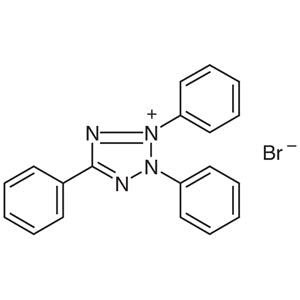
- TCI T0814 1096-80-6 2,3,5-Triphenyltetrazolium Bromide
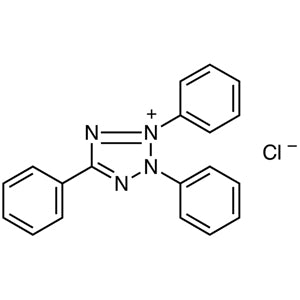
- TCI T0520 298-96-4 2,3,5-Triphenyltetrazolium Chloride
- Heterocyclic Compound Synthesis: Nitron is ideal for creating complex ring structures due to its high reactivity and ability to form stable intermediates.
- Organic Reactions: Its versatility allows it to participate in various organic reactions, making it suitable for a wide range of chemical transformations.
- Research and Development: Nitron supports innovation in chemical research by enabling the synthesis of new compounds with unique properties.
- Industrial Chemistry: It is used in the production of pharmaceuticals and other specialty chemicals due to its effectiveness in synthetic pathways.
- Teaching and Education: Nitron is commonly used in academic settings to demonstrate key chemical reactions and synthetic techniques.
| Brand | TCI |
|---|---|
| CAS number | 2218-94-2 |
| Molecular formula | — |
| Purity | — |
| Category | Chemistry > Building Blocks > Heterocyclic Building Blocks |
| Pack sizes | Available in various quantities as per supplier specifications |
| Physical form | Solid (as per standard product description) |
| Storage | Store in a cool, dry place away from moisture and direct sunlight |
Nitron should be stored in a cool, dry environment to maintain its stability and reactivity. It is recommended to keep it in a sealed container to prevent exposure to moisture and air, which could affect its chemical properties. Suitable containers for storage include glass or high-density polyethylene (HDPE) bottles, which provide a barrier against environmental factors. In laboratory settings, it is important to handle Nitron with care, using appropriate personal protective equipment such as gloves and safety goggles. Due to its reactive nature, Nitron should be stored away from incompatible substances to ensure safety. Proper labeling and storage conditions are essential for maintaining the integrity of the compound and ensuring safe laboratory practices.
—
Produk Terkait
-
BicinchoninicAcidDisodiumSalt TCI B4509
Regular price From Rp 955.500,00Regular price -
BismuthiolII TCI B1124
Regular price From Rp 955.500,00Regular price -
2,2'-BicinchoninicAcidDipotassiumSalt[forDeterminationofCu] TCI B1077
Regular price From Rp 1.565.550,00Regular price -
4-Amino-3-hydrazino-5-mercapto-1,2,4-triazole[forDeterminationofAldehydes] TCI A0956
Regular price From Rp 1.670.550,00Regular price -
2,3,5-TriphenyltetrazoliumBromide TCI T0814
Regular price Rp 477.750,00Regular price -
2,3,5-TriphenyltetrazoliumChloride TCI T0520
Regular price From Rp 610.050,00Regular price -
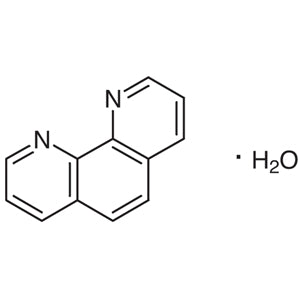
1,10-PhenanthrolineMonohydrate TCI P0221
Regular price From Rp 505.050,00Regular price -
1,10-PhenanthrolineHydrochlorideMonohydrate TCI P0081
Regular price Rp 1.644.300,00Regular price
![63451-34-3 2,2'-Bicinchoninic Acid Dipotassium Salt [for Determination of Cu] - AMI Scientific](http://amiscientific.com/cdn/shop/files/TCI2510B1077_501acb84-bbbd-4643-86c9-ab685c4638df.jpg?v=1767231122&width=533)
![1750-12-5 4-Amino-3-hydrazino-5-mercapto-1,2,4-triazole [for Determination of Aldehydes] - AMI Scientific](http://amiscientific.com/cdn/shop/files/TCI2510A0956.jpg?v=1767080402&width=533)