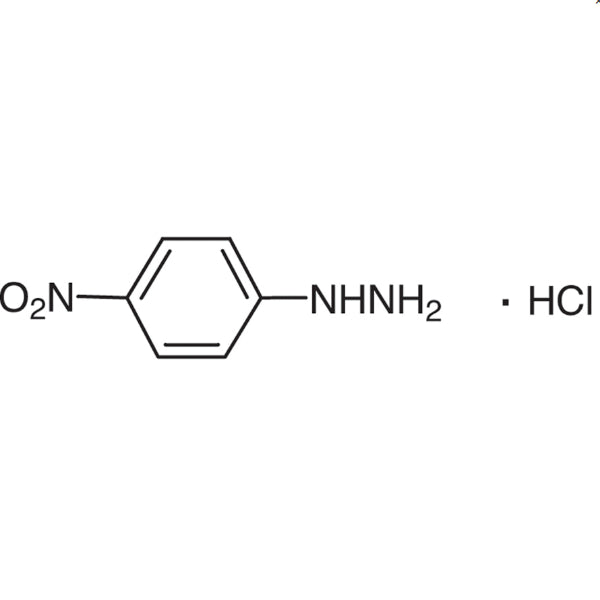

4-Nitrophenylhydrazine Hydrochloride is a chemical compound widely used in laboratory settings for its ability to identify and isolate various types of carbonyl compounds. As a key reagent in chemical reactions, it plays a crucial role in the synthesis of hydrazones through reactions with ketones and aldehydes. This compound is particularly valuable in analytical chemistry due to its reactivity and specificity, making it an essential tool for structural analysis. Its applications span across multiple research areas, including organic synthesis and qualitative analysis, where it helps in the detection of functional groups.
The compound's chemical properties make it a preferred choice for laboratory use. It exhibits good solubility in organic solvents such as ethylamine and acetone, which enhances its utility in various synthetic and analytical procedures. Its stability under controlled conditions ensures reliable results, while its sensitivity to moisture and air necessitates careful handling. These characteristics allow it to be used effectively in both routine and specialized experiments, contributing to its widespread adoption in chemical research.
In Indonesian laboratories, 4-Nitrophenylhydrazine Hydrochloride is commonly used in chemical research and analysis. It is a staple in academic and industrial settings, supporting studies in organic chemistry and analytical techniques. Its role in identifying carbonyl compounds makes it indispensable for students and researchers alike, facilitating the development of new compounds and the validation of existing ones.
Related TCI products
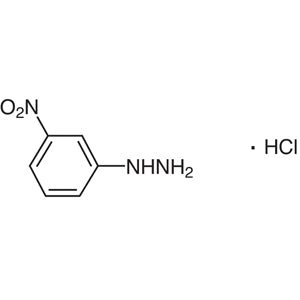
- TCI N0232 636-95-3 3-Nitrophenylhydrazine Hydrochloride
- TCI N0231 6293-87-4 2-Nitrophenylhydrazine Hydrochloride
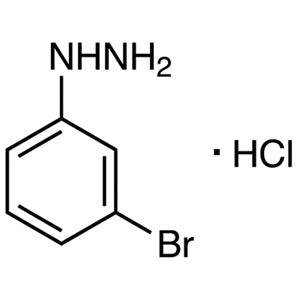
- TCI B3847 27246-81-7 3-Bromophenylhydrazine Hydrochloride
- TCI B2147 50709-33-6 2-Bromophenylhydrazine Hydrochloride
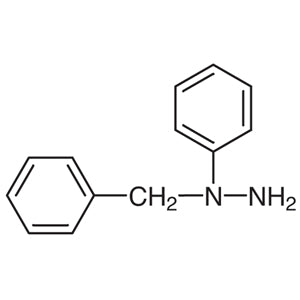
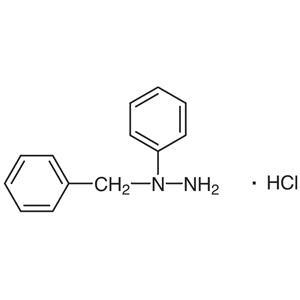
- TCI B1157 614-31-3 1-Benzyl-1-phenylhydrazine
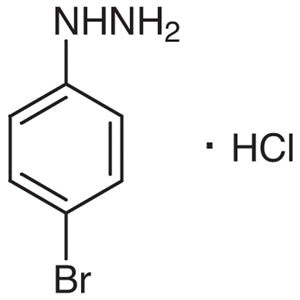
- TCI B0635 622-88-8 4-Bromophenylhydrazine Hydrochloride
- Used in organic synthesis for the formation of hydrazones, offering high reactivity and specificity for carbonyl compounds.
- Applied in analytical chemistry for the detection and identification of ketones and aldehydes through colorimetric reactions.
- Employed in structural analysis to determine the presence of carbonyl groups in complex molecules.
- Utilized in qualitative analysis to differentiate between various functional groups in organic compounds.
- Integrated into research projects involving spectroscopic and chromatographic techniques for compound characterization.
| Brand | TCI |
|---|---|
| CAS number | 636-99-7 |
| Molecular formula | — |
| Purity | — |
| Category | Chemistry > Building Blocks > Non-Heterocyclic Building Blocks |
| Pack sizes | Available in various quantities as per supplier specifications |
| Physical form | Solid in powder form |
| Storage | Store in a cool, dry place away from moisture and air exposure |
4-Nitrophenylhydrazine Hydrochloride should be stored in a cool, dry environment to maintain its chemical stability. It is recommended to keep the compound in airtight containers to prevent exposure to moisture and air, which can degrade its effectiveness. Due to its sensitivity, it should be handled with care using appropriate personal protective equipment. In laboratory settings, it is important to store it away from incompatible substances to ensure safety. Regular inspection of storage conditions is advised to maintain the integrity of the compound. Proper labeling and documentation of storage locations are also essential for safe laboratory practices.
—
Produk Terkait
-
3-NitrophenylhydrazineHydrochloride TCI N0232
Regular price From Rp 1.140.300,00Regular price -
2-NitrophenylhydrazineHydrochloride TCI N0231
Regular price Rp 4.559.100,00Regular price -
3-BromophenylhydrazineHydrochloride TCI B3847
Regular price Rp 2.491.650,00Regular price -
2-BromophenylhydrazineHydrochloride TCI B2147
Regular price From Rp 2.279.550,00Regular price -
1-Benzyl-1-phenylhydrazine TCI B1157
Regular price Rp 2.782.500,00Regular price -
4-BromophenylhydrazineHydrochloride TCI B0635
Regular price From Rp 1.590.750,00Regular price -
1-Benzyl-1-phenylhydrazineHydrochloride TCI B0434
Regular price From Rp 1.565.550,00Regular price -
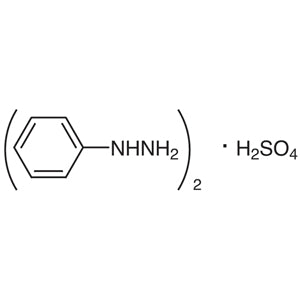
PhenylhydrazineSulfate TCI P0186
Regular price Rp 1.246.350,00Regular price