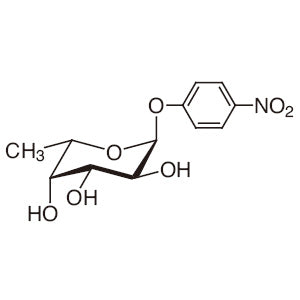
![2492-87-7 4-Nitrophenyl beta-D-Glucopyranoside Monohydrate [Substrate for beta-D-Glucosidase] - AMI Scientific](http://amiscientific.com/cdn/shop/files/TCI2510N0235.jpg?v=1767129472&width=1946)
![2492-87-7 4-Nitrophenyl beta-D-Glucopyranoside Monohydrate [Substrate for beta-D-Glucosidase] - AMI Scientific](http://amiscientific.com/cdn/shop/files/TCI2510N0235.jpg?v=1767129472&width=1445)
4-Nitrophenyl beta-D-Glucopyranoside Monohydrate is a chemical compound widely used as a substrate for beta-D-glucosidase in biochemical experiments. This compound plays a crucial role in enzyme activity assays, where it serves as a colorimetric indicator. When reacted with active beta-D-glucosidase, it produces a distinct yellow color, making it an essential tool for visual detection in laboratory settings. Its application spans various fields, including metabolic studies, enzyme kinetics, and structural analysis of carbohydrates.
The compound is favored for its high purity, stability, and specificity in reacting with beta-D-glucosidase. These properties ensure accurate and reproducible results in enzymatic assays. Its molecular structure is well-defined, allowing for precise and reliable measurements. The compound’s reactivity and consistency make it a preferred choice for researchers aiming to study enzyme mechanisms and biochemical pathways. Its reliability in producing consistent color changes enhances the accuracy of experimental data.
In Indonesian laboratories, 4-Nitrophenyl beta-D-Glucopyranoside Monohydrate is commonly used in biomedical research, pharmacology, and organic chemistry. It supports studies on enzyme activity, metabolic processes, and analytical techniques. Its widespread use in academic and research institutions underscores its importance in advancing scientific understanding and developing new analytical methods.
TCI brochures (PDF)
- Reagents for Glyco Chemistry & Biology 5th Edition · p. 36
- Reagents for Biological Research 2025-03-11 · p. 22
Related TCI products
- TCI N0493 3767-28-0 4-Nitrophenyl alpha-D-Glucopyranoside [Substrate for alpha-D-Glucosidase]
- TCI N0620 2001-96-9 4-Nitrophenyl beta-D-Xylopyranoside [Substrate for beta-Xylosidase]
- TCI N0619 10357-27-4 4-Nitrophenyl alpha-D-Mannopyranoside [Substrate for alpha-Mannosidase]
- TCI N0618 10344-94-2 4-Nitrophenyl beta-D-Glucuronide [Substrate for beta-Glucuronidase]
- TCI N0616 3150-24-1 4-Nitrophenyl beta-D-Galactopyranoside [Substrate for beta-Galactosidase]
- TCI N0492 7493-95-0 4-Nitrophenyl alpha-D-Galactopyranoside [Substrate for alpha-D-Galactosidase]
- Enzyme Activity Assays – This compound is ideal for measuring beta-D-glucosidase activity due to its clear color change upon enzymatic reaction.
- Metabolic Studies – It is used to investigate carbohydrate metabolism and enzyme kinetics in biological systems.
- Structural Analysis of Glucose – Its reactivity allows for the identification and analysis of glucose-based compounds in biochemical research.
- Biochemical Research – It supports experiments on enzyme mechanisms and substrate specificity in various biological contexts.
- Analytical Chemistry – It is employed in colorimetric methods for detecting and quantifying enzyme activity in laboratory settings.
| Brand | TCI |
|---|---|
| CAS number | 2492-87-7 |
| Molecular formula | — |
| Purity | — |
| Category | Chemistry > Chemical Biology > Glycoscience |
| Pack sizes | Available in standard laboratory quantities |
| Physical form | Solid, crystalline powder |
| Storage | Store in a cool, dry place away from light |
This compound should be stored in a cool, dry environment, away from direct sunlight and moisture to maintain its stability and reactivity. It is recommended to use airtight containers to prevent contamination and degradation. Due to its chemical nature, it should be handled with appropriate personal protective equipment, such as gloves and safety goggles. Proper ventilation is advised during handling to minimize exposure. The compound is not hazardous under normal storage conditions but should be kept out of reach of children and not mixed with incompatible substances. Regular inspection of storage conditions ensures the compound remains suitable for use in laboratory experiments.
—
Product Categories
- GlycoscienceEnzyme, Lectin, Antibody [Glycoscience]Glycohydrases and Related Reagents [Glycoscience]
- GlycoscienceGlyco Building BlocksProtected Sugars [Oligosaccharides by Component Sugar]
- GlycoscienceGlyco Building BlockspNP(para-Nitorophenyl) Glycoseides [Glyco Building Blocks]
- GlycoscienceMonosaccharides [Glycoscience]Glucoses [Glycoscience]
- Biochemicals and ReagentsCarbohydrates
Produk Terkait
-
4-Nitrophenylalpha-D-Glucopyranoside[Substrateforalpha-D-Glucosidase] TCI N0493
Regular price From Rp 2.147.250,00Regular price -
4-Nitrophenylbeta-D-Xylopyranoside[Substrateforbeta-Xylosidase] TCI N0620
Regular price Rp 2.041.200,00Regular price -
4-Nitrophenylalpha-D-Mannopyranoside[Substrateforalpha-Mannosidase] TCI N0619
Regular price Rp 4.902.450,00Regular price -
4-Nitrophenylbeta-D-Glucuronide[Substrateforbeta-Glucuronidase] TCI N0618
Regular price Rp 1.776.600,00Regular price -
4-Nitrophenylbeta-D-Galactopyranoside[Substrateforbeta-Galactosidase] TCI N0616
Regular price From Rp 1.961.400,00Regular price -
4-Nitrophenylalpha-D-Galactopyranoside[Substrateforalpha-D-Galactosidase] TCI N0492
Regular price Rp 1.298.850,00Regular price -
5-Bromo-4-chloro-3-indolylbeta-D-Glucopyranoside TCI B5393
Regular price From Rp 1.220.100,00Regular price -
4-Nitrophenylalpha-L-Fucopyranoside TCI N0392
Regular price From Rp 1.565.550,00Regular price
![3767-28-0 4-Nitrophenyl alpha-D-Glucopyranoside [Substrate for alpha-D-Glucosidase] - AMI Scientific](http://amiscientific.com/cdn/shop/files/TCI2510N0493.jpg?v=1767129938&width=533)
![2001-96-9 4-Nitrophenyl beta-D-Xylopyranoside [Substrate for beta-Xylosidase] - AMI Scientific](http://amiscientific.com/cdn/shop/files/TCI2510N0620.jpg?v=1767130146&width=533)
![10357-27-4 4-Nitrophenyl alpha-D-Mannopyranoside [Substrate for alpha-Mannosidase] - AMI Scientific](http://amiscientific.com/cdn/shop/files/TCI2510N0619.jpg?v=1767130142&width=533)
![10344-94-2 4-Nitrophenyl beta-D-Glucuronide [Substrate for beta-Glucuronidase] - AMI Scientific](http://amiscientific.com/cdn/shop/files/TCI2510N0618.jpg?v=1767130139&width=533)
![3150-24-1 4-Nitrophenyl beta-D-Galactopyranoside [Substrate for beta-Galactosidase] - AMI Scientific](http://amiscientific.com/cdn/shop/files/TCI2510N0616.jpg?v=1767130131&width=533)
![7493-95-0 4-Nitrophenyl alpha-D-Galactopyranoside [Substrate for alpha-D-Galactosidase] - AMI Scientific](http://amiscientific.com/cdn/shop/files/TCI2510N0492.jpg?v=1767129934&width=533)