


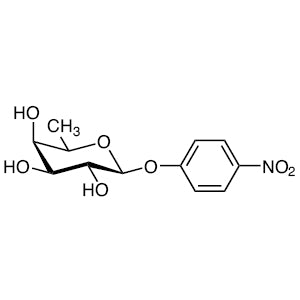
4-Nitrophenyl alpha-L-Fucopyranoside is a chemical compound widely used in chemical biology research, particularly in the study of glycosides and molecular interactions. This compound serves as a substrate or reagent in enzymatic reactions, enabling the identification of enzymes involved in glycosylation processes. Its role in laboratory settings is critical for analyzing carbohydrate structures and developing glycan-based pharmaceuticals. Due to its chemical specificity, it allows for selective and accurate reactions, making it a valuable tool in biochemical studies.
The compound’s high purity and stability under controlled laboratory conditions make it a preferred choice for researchers. It maintains its integrity during various analytical methods such as ELISA, HPLC, and spectroscopy, ensuring reliable and reproducible results. Its resistance to degradation further enhances its utility in long-term experiments and multiple analytical applications. These properties contribute to its widespread use in both academic and industrial research environments.
In Indonesian laboratories, 4-Nitrophenyl alpha-L-Fucopyranoside is commonly utilized in research related to metabolic diseases, infections, and vaccine development. Its availability and consistent performance make it a go-to material for scientists working in chemical biology and pharmacology. It supports a wide range of experimental protocols, contributing to the advancement of biomedical research in the region.
TCI brochures (PDF)
- Reagents for Glyco Chemistry & Biology 5th Edition · p. 16
- Reagents for Biological Research 2025-03-11 · p. 22
Related TCI products
- TCI N0619 10357-27-4 4-Nitrophenyl alpha-D-Mannopyranoside [Substrate for alpha-Mannosidase]
- TCI N0493 3767-28-0 4-Nitrophenyl alpha-D-Glucopyranoside [Substrate for alpha-D-Glucosidase]
- TCI N0492 7493-95-0 4-Nitrophenyl alpha-D-Galactopyranoside [Substrate for alpha-D-Galactosidase]
- TCI N0774 1226-39-7 4-Nitrophenyl beta-D-Fucopyranoside
- TCI N0235 2492-87-7 4-Nitrophenyl beta-D-Glucopyranoside Monohydrate [Substrate for beta-D-Glucosidase]
- TCI N0620 2001-96-9 4-Nitrophenyl beta-D-Xylopyranoside [Substrate for beta-Xylosidase]
- Metabolic Disease Research: This compound is used to study the role of glycosylation in metabolic disorders, offering insights into enzyme activity and substrate specificity.
- Infectious Disease Studies: It aids in analyzing carbohydrate-based interactions that are crucial for pathogen recognition and immune response mechanisms.
- Vaccine Development: The compound supports the investigation of glycan structures involved in antigen presentation and immune system activation.
- Enzymatic Activity Assays: Its use as a substrate enables precise measurement of enzyme activity in glycosylation pathways, enhancing the accuracy of biochemical analyses.
- Structural Carbohydrate Analysis: It facilitates the identification and characterization of complex carbohydrate structures, supporting glycoscience research.
| Brand | TCI |
|---|---|
| CAS number | 10231-84-2 |
| Molecular formula | — |
| Purity | — |
| Category | Chemistry > Chemical Biology > Glycoscience |
| Pack sizes | Available in various quantities as per standard laboratory requirements |
| Physical form | Solid powder |
| Storage | Store in a cool, dry place away from direct light |
This compound should be stored in a cool, dry environment, away from direct sunlight and sources of heat. It is recommended to use airtight containers to prevent moisture absorption and contamination. Due to its chemical nature, it should be handled with appropriate personal protective equipment, such as gloves and safety goggles, to ensure laboratory safety. Avoid exposure to incompatible substances and ensure proper ventilation when working with the compound. Regular monitoring of storage conditions is advised to maintain its stability and effectiveness for research applications.
—
Product Categories
- GlycoscienceApplications Using Glyco-materialsGlyco-chemical Analysis [Applications Using Glyco-materials]
- GlycoscienceEnzyme, Lectin, Antibody [Glycoscience]Glycohydrases and Related Reagents [Glycoscience]
- GlycoscienceEnzyme, Lectin, Antibody [Glycoscience]Lectin [Glycoscience]
- GlycoscienceGlyco Building BlocksProtected Sugars [Oligosaccharides by Component Sugar]
- GlycoscienceGlyco Building BlockspNP(para-Nitorophenyl) Glycoseides [Glyco Building Blocks]
- GlycoscienceMonosaccharides [Glycoscience]Fucoses [Glycoscience]
- Biochemicals and ReagentsCarbohydrates
Produk Terkait
-
4-Nitrophenylalpha-D-Mannopyranoside[Substrateforalpha-Mannosidase] TCI N0619
Regular price Rp 4.902.450,00Regular price -
4-Nitrophenylalpha-D-Glucopyranoside[Substrateforalpha-D-Glucosidase] TCI N0493
Regular price From Rp 2.147.250,00Regular price -
4-Nitrophenylalpha-D-Galactopyranoside[Substrateforalpha-D-Galactosidase] TCI N0492
Regular price Rp 1.298.850,00Regular price -
4-Nitrophenylbeta-D-Fucopyranoside TCI N0774
Regular price Rp 4.743.900,00Regular price -
4-Nitrophenylbeta-D-GlucopyranosideMonohydrate[Substrateforbeta-D-Glucosidase] TCI N0235
Regular price From Rp 2.359.350,00Regular price -
4-Nitrophenylbeta-D-Xylopyranoside[Substrateforbeta-Xylosidase] TCI N0620
Regular price Rp 2.041.200,00Regular price -
4-Nitrophenylbeta-D-Glucuronide[Substrateforbeta-Glucuronidase] TCI N0618
Regular price Rp 1.776.600,00Regular price -
4-Nitrophenylbeta-D-Galactopyranoside[Substrateforbeta-Galactosidase] TCI N0616
Regular price From Rp 1.961.400,00Regular price
![10357-27-4 4-Nitrophenyl alpha-D-Mannopyranoside [Substrate for alpha-Mannosidase] - AMI Scientific](http://amiscientific.com/cdn/shop/files/TCI2510N0619.jpg?v=1767130142&width=533)
![3767-28-0 4-Nitrophenyl alpha-D-Glucopyranoside [Substrate for alpha-D-Glucosidase] - AMI Scientific](http://amiscientific.com/cdn/shop/files/TCI2510N0493.jpg?v=1767129938&width=533)
![7493-95-0 4-Nitrophenyl alpha-D-Galactopyranoside [Substrate for alpha-D-Galactosidase] - AMI Scientific](http://amiscientific.com/cdn/shop/files/TCI2510N0492.jpg?v=1767129934&width=533)
![2492-87-7 4-Nitrophenyl beta-D-Glucopyranoside Monohydrate [Substrate for beta-D-Glucosidase] - AMI Scientific](http://amiscientific.com/cdn/shop/files/TCI2510N0235.jpg?v=1767129472&width=533)
![2001-96-9 4-Nitrophenyl beta-D-Xylopyranoside [Substrate for beta-Xylosidase] - AMI Scientific](http://amiscientific.com/cdn/shop/files/TCI2510N0620.jpg?v=1767130146&width=533)
![10344-94-2 4-Nitrophenyl beta-D-Glucuronide [Substrate for beta-Glucuronidase] - AMI Scientific](http://amiscientific.com/cdn/shop/files/TCI2510N0618.jpg?v=1767130139&width=533)
![3150-24-1 4-Nitrophenyl beta-D-Galactopyranoside [Substrate for beta-Galactosidase] - AMI Scientific](http://amiscientific.com/cdn/shop/files/TCI2510N0616.jpg?v=1767130131&width=533)