
![24807-55-4 3-Nitro-1,2,4-triazole [Coupling Agent] - AMI Scientific](http://amiscientific.com/cdn/shop/files/TCI2510N0477.jpg?v=1767129907&width=1946)
![24807-55-4 3-Nitro-1,2,4-triazole [Coupling Agent] - AMI Scientific](http://amiscientific.com/cdn/shop/files/TCI2510N0477.jpg?v=1767129907&width=1445)
3-Nitro-1,2,4-triazole is a chemical compound widely used as a coupling agent in various organic chemical reactions. This versatile reagent plays a crucial role in facilitating the interaction between molecules that would otherwise not react under normal conditions. Its ability to bridge two reactive species makes it an essential tool in synthetic chemistry, particularly in the development of complex molecular structures. This compound is commonly employed in laboratory settings where precise control over chemical reactions is required.
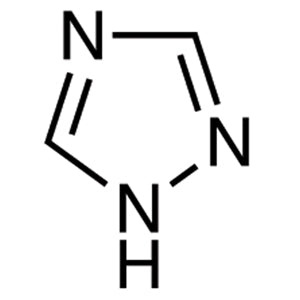
The compound's unique heterocyclic structure and high reactivity make it a preferred choice for chemists. It exhibits stability under specific reaction conditions and can form bonds with a variety of functional groups, enhancing its utility in different synthetic pathways. Its reactivity allows it to participate in coupling, substitution, and redox reactions, making it a valuable reagent in both academic and industrial research. Due to its versatility, it is often selected for applications requiring high precision and control.
In Indonesian laboratories, 3-Nitro-1,2,4-triazole is extensively used in organic chemistry, pharmaceutical research, and materials science. It supports the development of new compounds, molecular modifications, and the synthesis of complex chemical structures. Its relevance in these fields underscores its importance as a key reagent in modern chemical research.
TCI brochures (PDF)
- Condensing Agents 2025-11-18 · p. 5
- Nucleosides, Nucleotides, Nucleic Acids and Related Reagents 2026-03-23 · p. 14
Related TCI products
- TCI T0340 288-88-0 1,2,4-Triazole
- TCI T1985 2232-08-8 1-(p-Toluenesulfonyl)imidazole
- TCI B0249 6066-82-6 N-Hydroxysuccinimide [Coupling Reagent for Peptide]
- TCI C2325 41864-22-6 1,1'-Carbonyldi(1,2,4-triazole)
- TCI B1089 41840-28-2 2-(tert-Butoxycarbonylthio)-4,6-dimethylpyrimidine [Boc Agent for Peptides Synthesis]
- TCI B1043 54925-64-3 1-(tert-Butyldimethylsilyl)imidazole [tert-Butyldimethylsilylating Agent]
- Organic chemistry research benefits from this compound's ability to facilitate coupling reactions, enabling the synthesis of complex molecules with high efficiency.
- Pharmaceutical development relies on its reactivity and stability, allowing for the creation of novel drug compounds through targeted chemical modifications.
- Materials science applications utilize its functional group compatibility to design new polymers and advanced chemical materials with tailored properties.
- Synthetic pathway optimization leverages its versatility in redox and substitution reactions, enhancing reaction yields and selectivity in laboratory settings.
- Compound modification studies benefit from its ability to interact with multiple functional groups, supporting the design of new molecular architectures.
| Brand | TCI |
|---|---|
| CAS number | 24807-55-4 |
| Molecular formula | — |
| Purity | — |
| Category | Chemistry > Building Blocks > Heterocyclic Building Blocks |
| Pack sizes | Available in standard laboratory quantities |
| Physical form | Solid |
| Storage | Store in a cool, dry place away from light |
This compound should be stored in a cool, dry environment, away from direct light and sources of heat. It is recommended to use airtight containers to prevent moisture absorption and contamination. Due to its reactivity, it should be handled with care, using appropriate personal protective equipment such as gloves and safety goggles. It is important to ensure proper ventilation in the laboratory when working with this material. Avoid contact with incompatible substances, and follow standard laboratory safety protocols to minimize risk. Always store it in a designated chemical storage area to maintain safety and compliance with laboratory regulations.
—
Product Categories
- Building BlocksHeterocyclic Building BlocksNon-Halogenated Heterocyclic Building Blocks
- Chemical BiologyNucleic Acid ChemistryCoupling Activators and Condensing Agents [Nucleic Acid Synthesis]
- Synthetic ReagentsCoupling [Synthetic Reagents]Active Esters, Additives [Coupling Reagents]
- Pharmaceutical Development and Drug Discovery Research ReagentsNucleic Acid ChemistryCoupling Activators and Condensing Agents [Nucleic Acid Synthesis]
Produk Terkait
-
1,2,4-Triazole TCI T0340
Regular price From Rp 717.150,00Regular price -
1-(p-Toluenesulfonyl)imidazole TCI T1985
Regular price From Rp 1.087.800,00Regular price -
N-Hydroxysuccinimide[CouplingReagentforPeptide] TCI B0249
Regular price From Rp 1.936.200,00Regular price -
1,1'-Carbonyldi(1,2,4-triazole) TCI C2325
Regular price From Rp 1.696.800,00Regular price -
2-(tert-Butoxycarbonylthio)-4,6-dimethylpyrimidine[BocAgentforPeptidesSynthesis] TCI B1089
Regular price From Rp 1.008.000,00Regular price -
1-(tert-Butyldimethylsilyl)imidazole[tert-ButyldimethylsilylatingAgent] TCI B1043
Regular price From Rp 2.439.150,00Regular price -
1-(Dimethylisopropylsilyl)imidazole[DimethylisopropylsilylatingAgent] TCI D1596
Regular price From Rp 2.068.500,00Regular price -
1-(Dimethylethylsilyl)imidazole[DimethylethylsilylatingAgent] TCI D1516
Regular price From Rp 1.749.300,00Regular price

![6066-82-6 N-Hydroxysuccinimide [Coupling Reagent for Peptide] - AMI Scientific](http://amiscientific.com/cdn/shop/files/TCI2510B0249.jpg?v=1767085300&width=533)

![41840-28-2 2-(tert-Butoxycarbonylthio)-4,6-dimethylpyrimidine [Boc Agent for Peptides Synthesis] - AMI Scientific](http://amiscientific.com/cdn/shop/files/TCI2510B1089_7b65c1b0-ca0b-4b1a-822b-5b995d7e14c0.jpg?v=1767231194&width=533)
![54925-64-3 1-(tert-Butyldimethylsilyl)imidazole [tert-Butyldimethylsilylating Agent] - AMI Scientific](http://amiscientific.com/cdn/shop/files/TCI2510B1043_62a593eb-d572-4812-b0c7-1817f56f84d9.jpg?v=1767230995&width=533)
![1-(Dimethylisopropylsilyl)imidazole [Dimethylisopropylsilylating Agent] (CAS 81452-04-2) - TCI D1596 - AMI Scientific](http://amiscientific.com/cdn/shop/files/TCI2510D1596.jpg?v=1767103310&width=533)
![1-(Dimethylethylsilyl)imidazole [Dimethylethylsilylating Agent] (CAS 62365-34-8) - TCI D1516 - AMI Scientific](http://amiscientific.com/cdn/shop/files/TCI2510D1516.jpg?v=1767103171&width=533)